

Joe Cobb was born with both Georgia and baseball in his blood. He is related to both the Detroit Tigers legend Ty Cobb and to Thomas Willis Cobb, the founder of the suburban Atlanta county where the Braves now play.
It is only natural for him to have a deep affinity to both baseball and his home state. His team has always been the Atlanta Braves. “I cannot emphasize enough how deep my love for the Braves has been my entire life,” he said from his home in suburban Atlanta.
Cobb remembers attending games going back when he was six years old. His favorite player growing up was Dale Murphy. The business executive admits his attire has too much Braves gear to be healthy for a grown man, and he cannot remember a month in any summer growing up, or recently, when he wasn’t at a game, listening to a game on the radio, or at least talking about the games with his family or friends.
But now he’s done with it. All of that affection, fandom, and dedication went out the window last week when Major League Baseball made the decision to move the All-Star Game out of Atlanta in reaction to a dubious interpretation of the state’s new election reform law.
“I am not done because of me,” says Cobb. “I am done because of all of the small businesses that have lost the equivalent to Christmas. This is for the Uber drivers, street vendors, food trucks, breweries, restaurants, parking lot attendants who were all depending on this three-day event to bolster their income.”
“I am also done because this decision was based on a lie,” he adds. “And it was made by corporate executives based in New York City who live in the wealthiest zip codes in the country, making decisions based not on the loyalty of their fan base, but instead under pressure from either their employees or the fear they won’t be invited to the next cocktail party if they didn’t do it.”
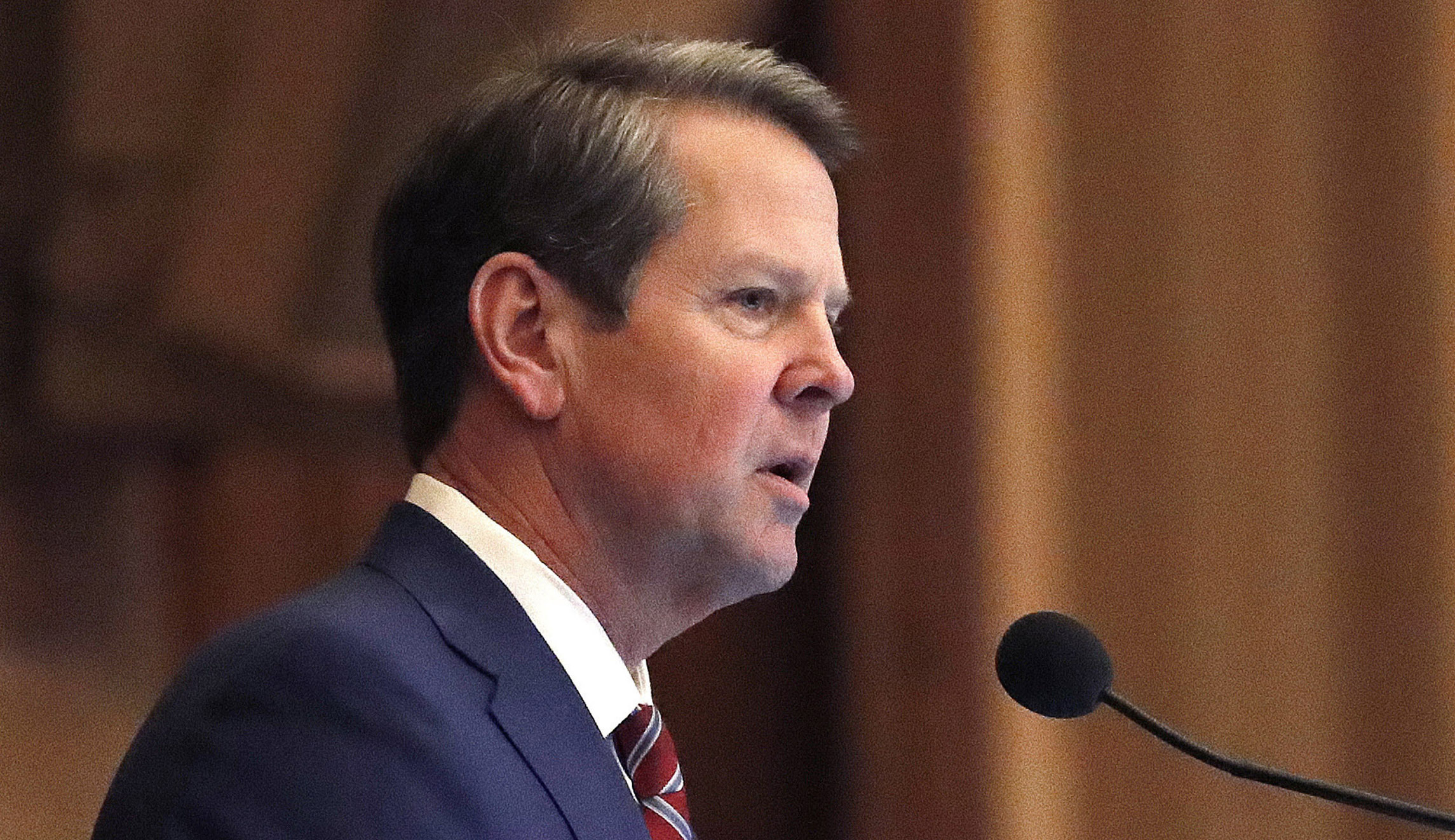
In an interview from his office in the state capitol, Georgia Gov. Brian Kemp told me this week that MLB’s choice is hurting local small businesses who were already preparing for the weekendlong event in July.
“The economic impact they have had on local businesses, in particular, the small mom and pop shops, is one of the things that’s been so frustrating for me because, as a small business owner myself, I know how devastating this would be,” Kemp said.
“If you think about the industries that have been hit the hardest in Georgia because of COVID … it’s the business travel, the tourism, and then all the service industry tied to them like small restaurants, taverns, the hotel, lodging folks, caterers, and event people,” he said. “I mean, those are all the folks, to me, that are going to be just at a big loss here because Major League Baseball pulled the rug out from under them. It is all very unfortunate.”
Cobb tells me he has read the law. “I was a history teacher for two decades, he says. “And even though I didn’t live through Jim Crow, I have a pretty good understanding what it is. And, in fact, my daughter was asking me about it, and I said, ‘Jim Crow, that’s snarling dogs. They would hang a lynched body outside of the voting place to convince people of color not to come there and vote. That’s Jim Crow.’”
Cobb, a libertarian who held little regard for former President Donald Trump’s persona, had drifted far enough away from Republicanism that he found himself voting in last year’s Democratic presidential primary. But now, Kemp has earned his support simply by refusing to give in to the corporate pressure that came not just from MLB but also from Coke and Delta Air Lines.
On Tuesday, MLB announced it was moving the game and the draft to Denver “in response to the passage last month of S.B. 202, a Georgia law that President Joe Biden recently criticized, saying that it will restrict voting access for residents of the state.”
Last week Biden called the new law “Jim Crow on steroids” and backed MLB’s threat to move the game out of Atlanta. Jim Crow laws enforcing racial segregation were in effect in state and local elections in some southern states between 1890 and 1965.
Nothing in the law promotes or enforces racial segregation or discrimination in the polling place.
MLB’s decision will fall hard on minority-owned businesses in Cobb County, Georgia, where the Braves’ stadium is located. The county is 28% black, with over 31,000 small businesses owned by minorities. Compare that to Denver’s black population of only 9.8%, where only about 18,000 small businesses are owned by minorities.
Kemp said that MLB’s decision to pull out of metropolitan Atlanta doesn’t just hurt Republicans — it hurts everyone. “It is just the hypocrisy here that continues to be elevated with every decision that Major League Baseball is making,” he said. “Quite honestly, Delta and Coca-Cola coming out like they did early helped influence that, along with other high and mighty corporate CEOs or former CEOs that are living in states that have more restrictive laws than we do. That they’re targeting and asking people to boycott our small business people in our state is outrageous.”
Last week, both Delta and Coca-Cola, two of Georgia’s largest companies, said the new voting laws were unacceptable and do not reflect their values.
All of these corporate giants are the commanding curators of our culture, whose influence is vast but whose ideals are rarely in touch with their fan or customer bases. Sometimes, these corporations’ younger employees, who lack a culturally diverse experience with people who resemble typical consumers, are given an outsize say in what the corporation does, due to fears among senior management about what sort of damage can befall their brands based on the latest trends or outrages on social media.
Before the start of the season, MLB commissioner Rob Manfred said in a statement that the league would use its platform to push actively for social change. But sports leagues have a way of losing fans when they become social justice organizations. Both the NBA and NFL used their organizations as social justice platforms in the past few years. Both have suffered a loss of interest and viewership as a consequence, according to polling.
Kemp told me he believes that this is already generating a huge local backlash.
“I can tell you the vibe out there on the ground. People are furious,” he said. “I’m not talking about just Republicans. I mean, look, I hate this has happened to our state, especially with the bill that we have. It’s very unfair. If we had taken something away, if we were restricting voting, if we were being suppressive or whatever, I wouldn’t have a leg to stand on. But that’s not what happened here. I mean, we are still going to have secure, accessible, fair elections. It’s easy to vote and hard to cheat in Georgia.”
“But I will tell you,” he went on, “it has awoken people that normally don’t pay attention to politics — more soft Republicans, center, folks in the middle, left-of-center folks that are just like, ‘It’s ridiculous that our kids are going to grow up in a culture where them playing rec-league sports when they’re eight, 10 years old is going to get political.”
Kendell Cameron says he is one of those sleeping giants. For him, baseball was spring, anticipation, aspiration, time with his father and his friends as they all have enjoyed the family’s season tickets for decades, “I’ve also been to playoff games and World Series games,” he tells me. “My oldest son’s first baseball game, I’ve got a picture of me holding him up with Greg Maddux’s picture in the background against the Astros in the playoffs. My son was, I think, gosh, a year old, a year-and-a-half old. We’ve been die-hard fans for as long as I can remember.”
The 52-year-old executive at a Fortune 500 company, who lives in suburban Atlanta, has attended at least one Braves game “every year of my life since 1982.” He and some friends were picking their tickets for their games this year when MLB made its decision to abandon Atlanta.
“I immediately changed my plans,” he says. “They made their decision. I’ll make mine.”
“I’m not going to do it,” he goes on. “I’m not going to spend my money going to see my favorite team. I have been to a Braves game every year of my life since 1982. I saw Bruce Sutter after he came up from the Cardinals at the end of his career in the playoffs for the Braves. Joe Torre was the manager.”
Cameron says his problem is with MLB and not the Braves. “But I don’t have the opportunity to directly impact Major League Baseball,” he says. “I can only indirectly impact them, so I will.”
Cameron describes himself as basically conservative, although not much of a Trump fan. But he does believe in free markets.
“I believe the businesses should have the right and should exercise the right to make decisions that are in what they consider to be their best interest,” he says. “You want to hold an event here? You don’t want to hold an event here? As a capitalist, I’m kind of like, ‘OK, knock yourself out.'”
Cameron’s problem, he says, is that these corporations that he also thinks are way out of touch with their consumers are basing their decisions on bad information. “I would be willing to guess that Manfred or anybody else in the Major League Baseball could not quote the key provisions of that bill if their lives depended on it,” he said. “I think that what they did was regurgitate talking points, and there’s pressure from media entities, there’s pressure from Stacey Abrams, and there is pressure from within their own organizations. They’re afraid of what the Twitterverse will do. Their decision is not rooted in truth, and they’re taking the All-Star Game away from a community — where the park is,” which probably has a much higher concentration of minority residents than the county’s overall 28%. “That is not what social justice is supposed to look like,” he remarks.
Cameron adds, “If your point of view is to support the minority community, and our goal for the minority community is to create some type of equity, how do you create equity in a minority community by taking $100 million-plus of opportunity out from an area that has been suffering under a pandemic for a year?”
Kemp likewise stated that none of this makes sense or is rooted in fact. “Somebody is lying to you,” he said. “I’ll tell this to the small business people. I’ve told people, voters are smart. They may be busy. They may not pay attention all the time, but they are smart. They know that somebody is lying to them right now, and it is not me, and it is not the Legislature that passed this bill. It’s a good bill. It’s providing more access, but also making sure that we fix mechanical problems that we in saw the process to have a secure election.”
Kemp said he is not going to back down under any amount of corporate pressure. “I’m not going to waver, because I know what the truth is. I know how much work went into this bill. I know how many different proposals were out there. Some of them were good. Some of them were bad, but at the end of the day, there was a lot of work put in that made this process work. We have a good bill here. I believe that’s what we’re supposed to do.”
