

Last year, Democratic presidential candidate Hillary Clinton was asked a simple question: What was your proudest moment as secretary of state? Posed at a women’s forum, it was hardly hostile in intent. Clinton was unable to answer, and the resulting New York Times headline was brutal: “Hillary Clinton Struggles to Define a Legacy in Progress.”
A number of prominent Democrats have tried to ride to her rescue with attempts at filling out her résumé, but it’s a thankless job. Not long ago, for example, national security adviser Susan Rice named the Trans-Pacific Partnership one of Clinton’s top accomplishments. But the candidate recently abandoned her support of the trade deal, most likely as a strategy to shore up union backing.
Stay informed.Stay ahead.
Join Washington Examiner for unlimited access to the news, analysis, and commentary that matter most.
Already a member? Log in
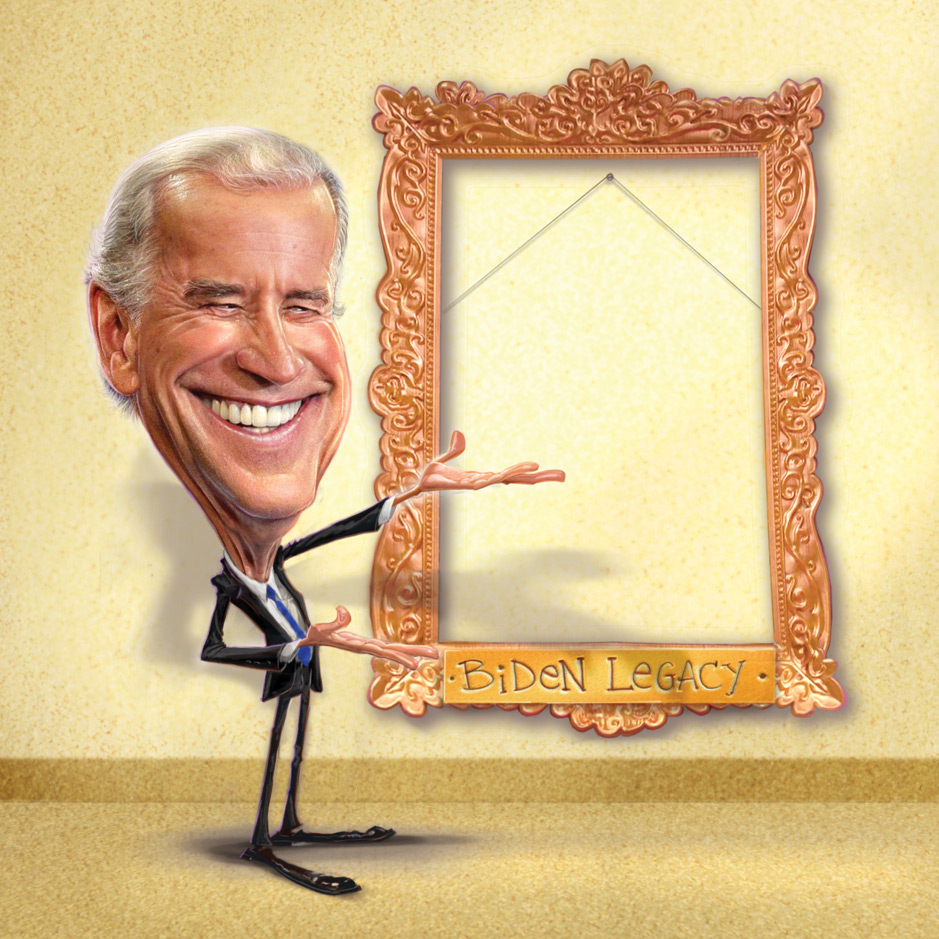
Such vulnerabilities have been stirring support for Vice President Joe Biden to enter the race. But after her strong debate performance, a host of prominent pundits are suddenly saying there’s no need for a centrist challenge to Clinton. That may not matter to Biden. What might ultimately drive Biden into the race, ironically, is the same issue that’s tripped up Hillary: After nearly half a century in national politics, becoming president is the only shot Biden’s got at securing a real legacy.
Biden spent 36 years in the Senate beginning in 1972, and if you blinked, you’d miss the highlight reel. After campaigning for school integration, during his first Senate term he became perhaps best known as one of the few ostensible liberals to oppose mandatory busing. The policy of busing kids long distances has a spotty record of success in achieving equality, but explaining this to a race-obsessed Democratic base is going to be awkward. An August Politico story—“How a Young Joe Biden Turned Liberals Against Integration”—makes the case that Biden’s flip-flop singlehandedly changed Congress’s attitude.
Biden was later a prominent mouthpiece in support of Jimmy Carter’s ill-advised rapprochement plans with the Soviets. He was particularly vocal in his support of the 1979 SALT II treaty, which was controversial from the get-go. The Senate debate over ratifying the treaty was still going on six months after Carter signed it, at which point the Soviets invaded Afghanistan. SALT II was a dead letter, leaving supporters such as Biden with egg on their faces.
In the eighties, Biden was known for two things. First, he presided over Robert Bork’s Supreme Court confirmation hearings. The year before Biden took over the chairmanship of the Senate Judiciary Committee, Antonin Scalia had been confirmed by a vote of 98-0. Biden initially pledged support for Bork. “Say the administration sends up Bork, and, after our investigations, he looks a lot like Scalia. I’d have to vote for him, and if the [special interest] groups tear me apart, that’s the medicine I’ll have to take,” he told the Philadelphia Inquirer.
But under Biden’s leadership, the Bork confirmation hearings were a circus of unprecedented and unjustified personal attacks. They succeeded in keeping Bork’s powerful legal mind off the Court, hugely consequential to conservatives and liberals both. As a practical political matter, it didn’t affect the immediate balance of power on the Court. Similar tactics failed to derail the next conservative nominee, Clarence Thomas. But Biden’s legacy is such that even liberals now use the term “borking” as a pejorative. It’s not a stretch to accuse him of wrecking the judicial nomination process—Biden is the reason once-routine judicial appointments now bring Congress to a halt.
It’s probably not coincidental that the grandstanding involved in the Bork hearings served to elevate Biden’s national profile as he ran for president in 1988. This brings us to Biden’s second notable episode of the ’80s. He soon got all the attention he could handle, none of it good. He was caught plagiarizing British Labour leader Neil Kinnock. More than that, really: Biden appropriated Kinnock’s hardscrabble life story as his own. It was a particularly bizarre thing to do considering Biden’s own story—he lost his wife and child in a car accident shortly after he was elected to the Senate at age 30—is plenty affecting. Biden maintained he merely forgot to acknowledge Kinnock once, but Maureen Dowd, then a New York Times reporter, documented two other instances of his using Kinnock without attribution. Soon it was revealed that Biden had also borrowed significant chunks from speeches by Hubert Humphrey and Robert Kennedy. Biden tried to blame aide Pat Caddell for using the Humphrey remarks and claimed the RFK plagiarism was an innocent mix-up. The excuses became downright laughable when it emerged Biden was given an F in a course in law school for plagiarizing five entire pages. Biden’s plagiarism problem appears to be pathological.
For politicians, however, being pathological is more of a feature than a bug. Biden soldiered on, and the ’90s brought his sole signature legislative accomplishment. In 36 years in the Senate, Biden drafted and passed one piece of legislation, the 1994 Violent Crime Control and Law Enforcement Act. One part of this sweeping legislation, the Violence Against Women Act, provided new federal resources for women who had been victimized and is potentially a credit to Biden politically. Even this, however, has a mixed legacy. A significant part of the act was gutted by the Supreme Court for violating the Fourteenth Amendment. The law would have allowed women to sue men in federal court for civil damages even after they had been cleared of criminal charges.
As for the rest of the Violent Crime Control and Law Enforcement Act, when looked at through a contemporary lens, there’s something for everyone to hate. The law contained the later-repealed and much-derided federal assault weapons ban, sure to endear Biden to voters in such swing states as Colorado, where they recalled two state legislators in 2013 for passing new gun restrictions.
Biden’s legislation also contained a new “three strikes, you’re out” provision that is now regularly blamed for prison overcrowding and has subsequently caused Bill Clinton and California governor Jerry Brown to renounce their previous support of the law. If the Black Lives Matter movement demands more restraint from law enforcement, well, Biden has to explain he put 100,000 more cops on the streets. Don’t like the death penalty? The law created 60 new capital offenses.
The rest of Biden’s Senate career is primarily notable for his vote to invade Iraq. If you discount Lindsey Graham and Rick Santorum, whose odds of winning the GOP nomination are in Powerball territory, the only presidential candidates in 2016 who voted to invade Iraq will be Democrats.
This brings us to Biden’s legacy as vice president, insofar as the phrase “legacy as vice president” doesn’t induce snickering. An Atlantic article in 2012 quite seriously asked, “Joe Biden: The Most Influential Vice President in History?” In retrospect, the article vacillates between wild overstatements about what had already been achieved and wishcasting about the future impact of the Obama-Biden presidency. Yet it wasn’t wrong in noting Biden’s significance:
First, let’s take Biden’s management of the Iraqi handover. “I’ll bet you my vice presidency [Iraqi president Nuri al-Maliki will extend the SOFA [Status of Forces Agreement],” Biden famously said during negotiations. Of course, Maliki did not extend the SOFA, and the resulting lack of a major U.S. military presence in Iraq is frequently cited as allowing the rise of ISIS.
As for Afghanistan, President Obama just announced he’s halting the withdrawal there. If Biden’s view of how to manage that war is dominant in the administration, it seems relevant to mention the following: The total number of American casualties in Afghanistan under Bush was 569. Under Obama-Biden, it’s currently 2,165.
But Biden’s role in financial reform deserves special mention. That’s because Jeff Connaughton, a former lobbyist and investment banker who worked for Biden off and on for over 30 years, wrote a scathing memoir about his former boss, The Payoff: Why Wall Street Always Wins. According to Connaughton, Biden played a significant role in stymieing financial reform and the prosecution of corrupt Wall Street executives who caused the 2008 crash. This was in spite of the fact the legislative effort to rein in Wall Street was led by Ted Kaufman, Biden’s former chief of staff, handpicked successor to finish his Senate term, and subsequent chair of the congressional oversight panel established by TARP. In Connaughton’s telling, it’s hard to judge whether the White House was being subservient to Wall Street, simply out of their depth, or both. Regardless, it’s damning: “Unfortunately for America, Obama and Biden (who pledged in his 1972 campaign never to own a stock or a bond) were both financially illiterate,” writes Connaughton. (Biden still disingenuously claims he doesn’t own a stock or bond, but there’s a fair number of them on his financial disclosure forms under his wife’s name.)
It would be a mistake, however, to survey the wreckage and conclude it will have much effect on Biden’s chances of being president. His checkered legacy may not matter much in contrast to his formidable political skill. He has few peers in American history, having been elected to the Senate and White House nine times in a row after controversies that would have destroyed less skillful politicians. But vying to be the first female president, Hillary Clinton at least has some idea of what her legacy could be. Biden’s just another old white man with a knack for failing up, at the end of his political career. If he wants to be remembered for anything positive besides being an affable guy from Delaware, he’s got no choice but to run for president. Only then will he have one last shot at accomplishing something—anything—grand.
Mark Hemingway is a senior writer at The Weekly Standard.
