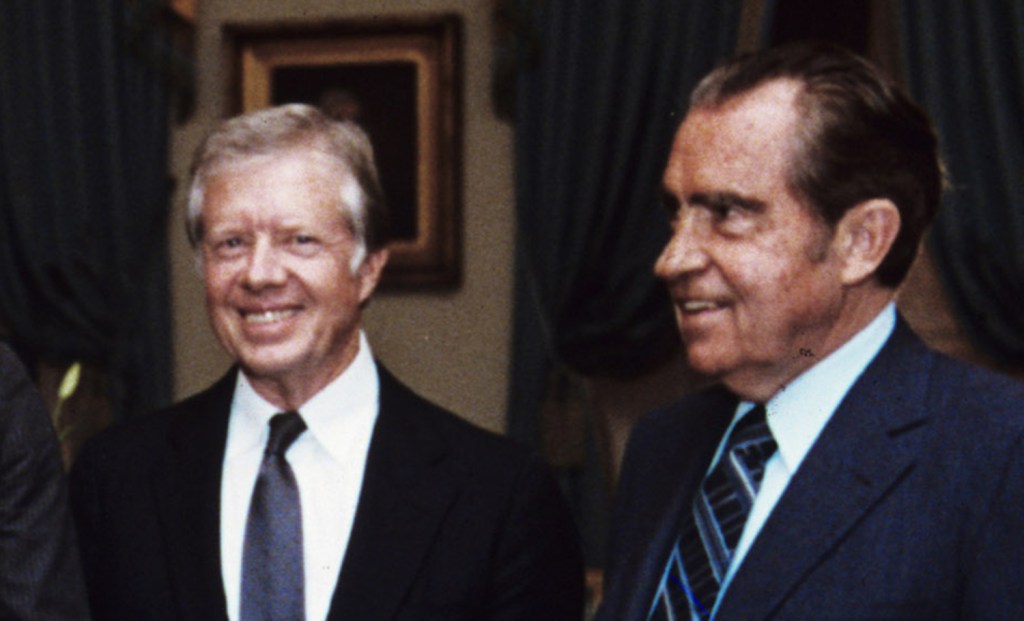
After nearly a century of public service, Jimmy Carter has entered home hospice care, signaling that the end is near for America’s longest living president. While Carter’s lackluster tenure in the White House has been largely overshadowed by his post-presidential philanthropy, conservatives in particular ought to recognize that it was Carter who began to tackle the inflation crisis that Richard Nixon created.
Per my estimation, the most dangerous and damaging thing Nixon ever did to win reelection was not Watergate. Rather, it was his decision to blow up the Bretton Woods agreement unilaterally to finance an American expansion painted by the press as prosperity. In one weekend and without diplomatic discussion, Nixon took the world off of the gold standard — valued at $35 per ounce of gold since after World War II — to devalue the U.S. dollar intentionally. Nixon, who had already browbeaten his handpicked Federal Reserve chairman into submission and lax monetary policy, decided to enact disastrous wage and price controls, sacrificing price stability at the altar of ephemeral “full employment.” All in all, the money supply was expanding at twice the rate of real economic expansion under Nixon’s first term.