

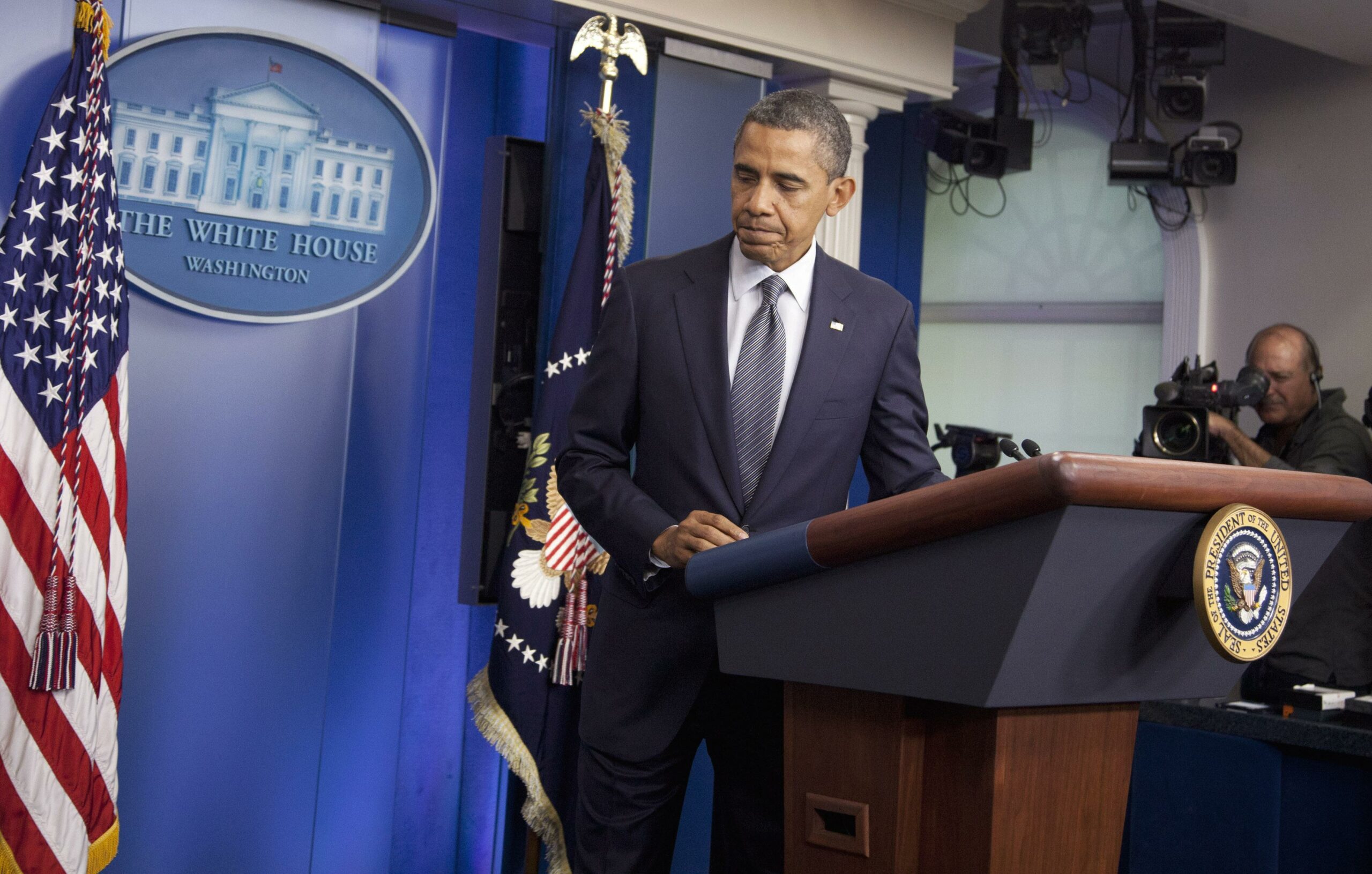
President Obama last week announced the impending end of the nine-year-old Iraq War and the successful conclusion of a U.S.-supported military mission in Libya. They were the latest in a string of foreign policy successes for the president that included the killing of Osama bin Laden in May and the thwarting of a plot to assassinate a Saudi ambassador on U.S. soil earlier this month.
But those notches in Obama’s win column are unlikely to provide much of a boost to the president’s re-election chances, political analysts said, because voters remain focused on the lingering recession and persistent joblessness and are still waiting for evidence that Obama is doing something about them.
“The economy is so overwhelming,” said Matt Bennett, vice president of Third Way, a centrist group with close ties to the White House. “If this were a moment of prosperity, [Obama’s foreign policy successes] could be a game changer, but the economy is such a dominant part of the discussion that anything else is secondary.”
Obama’s announcement Friday that U.S. forces would withdraw from Iraq at the end of the year was in keeping with a promise he made in the 2008 campaign to “bring the war in Iraq to a responsible end,” as the president himself reminded voters. And the killing of Libyan dictator Moammar Gadhafi effectively validated Obama’s decision to join a NATO-led mission in Libya for which he was so harshly criticized on Capitol Hill.
“Foreign policy is Obama’s strongest suit now with the end of the Iraq War, the killing of bin Laden and the death of Gadhafi,” said Darrell West, vice president of governance studies for the Brookings Institution.
Voters, however, aren’t focused on foreign policy.
“The metric in 2012 — unlike 2004 or even 2008 — is likely to be almost completely economic, as it was for George H.W. Bush in 1992,” said Bill Galston, a former policy adviser to President Clinton.
Bush in 1992 began his re-election bid amid stratospheric approval ratings that followed the successful Persian Gulf War only to have that support evaporate as voter attention turned toward the nation’s ailing economy as Election Day neared. Clinton went on to defeat Bush with a simple message: “It’s the economy, stupid.”
The one advantage Obama’s string of foreign policy successes provides in a campaign focused on domestic matters is that his Republican challenger, whoever that turns out to be, won’t be able to portray the Democrat as weak on defense.
“In every election going back to the Cold War, page one of Republican playbook is to attack Democrats for being weak on security,” Bennett said. “They have always been able to make the case that they are tougher on security and that Democrats are afraid of using force and therefore unable to protect the country.”
Republicans won’t have that argument this election cycle, he said. Those now in the running for the GOP nomination have limited, if any, foreign policy experience, according to Edward Grefe, a long-time Republican political strategist.
“I haven’t heard [Republican candidates] come up with a single foreign policy plan that has really resonated with anyone,” Grefe said.
