

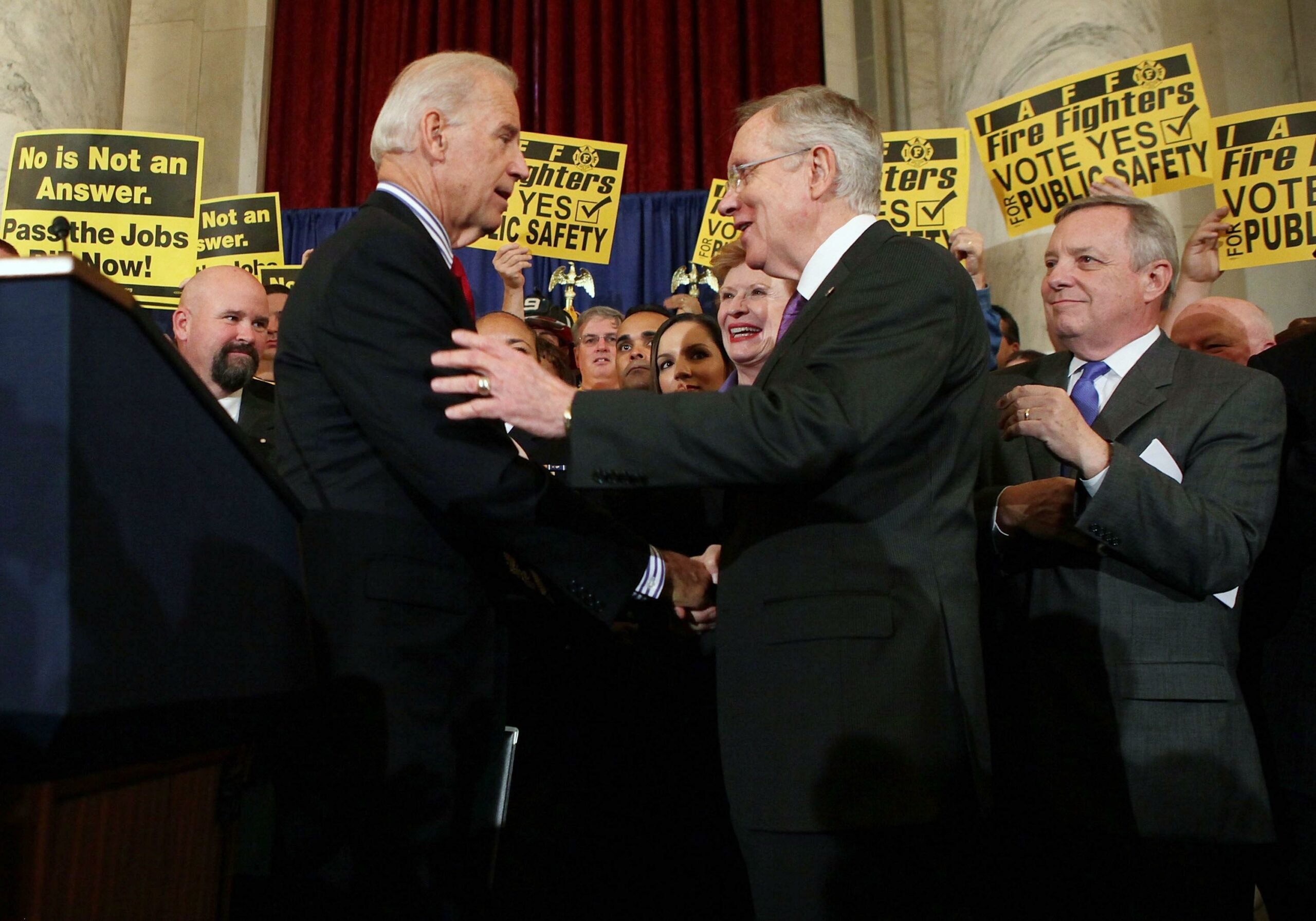
Republican and Democratic lawmakers have so far failed to agree on any aspect of President Obama’s jobs proposal, but that may finally change this week.
Lawmakers and Obama agree that a new rule requiring the government to hold back 3 percent of its payments to contractors, government vendors and Medicare providers should be repealed before it even takes effect in 2013. The rule was devised to crack down on federal contractors who fail to pay taxes, but there’s a consensus now that the provision is a possible jobs killer in a down economy.
In contrast to the bitter partisan impasse that has characterized the debate over jobs creation since Obama first proposed his $447 billion jobs package, legislation that would repeal the rule easily cleared a House committee last week with bipartisan support and will be taken up by the full House by Thursday.
“Three percent sounds like a small number but it can have a huge impact if you are a small business or if you are in an industry, like the construction industry, for instance, where your profit margin is at or even less than 3 percent,” said Steve Lutes, the director of the Corporate Leadership Advisory Council at the U.S. Chamber of Commerce.
“It’s asking these companies to float the government an interest-free loan when they are already struggling,” Lutes said. “Cash flow is for day-to-day operation but it’s also for growing business.”
The newfound agreement on one jobs proposal, however, doesn’t mean that Congress will actually approve the rule repeal let alone find consensus on other job-creation proposals.
Even if the House approves the rule repeal, it would have to clear the Senate and lawmakers in that chamber say they must find some way to pay for the change before approving it. The Congressional Budget Office determined that repealing the rule would cost the treasury $11.2 billion in anticipated revenue over the next decade.
Republican senators tried last week to push through a bill that would repeal the withholding rule and make up for the lost revenue by further slashing domestic spending. But Democrats who control the chamber blocked the measure and Obama threatened to veto any similar proposals, saying that spending had already been deeply slashed to reduce the budget deficit.
The difficulty in passing the repeal measure, even though both parties essentially agree on it, underscores the difficulty Congress is having when it comes to moving any significant plan to boost the economy.
Republicans and a few Democrats blocked Obama’s original jobs package. Senate Democrats are now trying to pass it piecemeal, but getting nowhere. Last week, they failed to win enough votes to bring to the floor a bill that would have provided $35 billion to retain teachers, firefighters and police officers and pay for it by imposing a surcharge on those earning $1 million or more a year. Opponents said it was too costly and raised taxes on small businesses.
When the Senate returns from a weeklong recess, Democrats will try again with a $50 billion bill to improve the nation’s infrastructure. The bill would also spend $10 billion to create an “infrastructure bank” for future projects. But that legislation also would be paid for with a 0.7 percent tax on those earning $1 million or more.
