

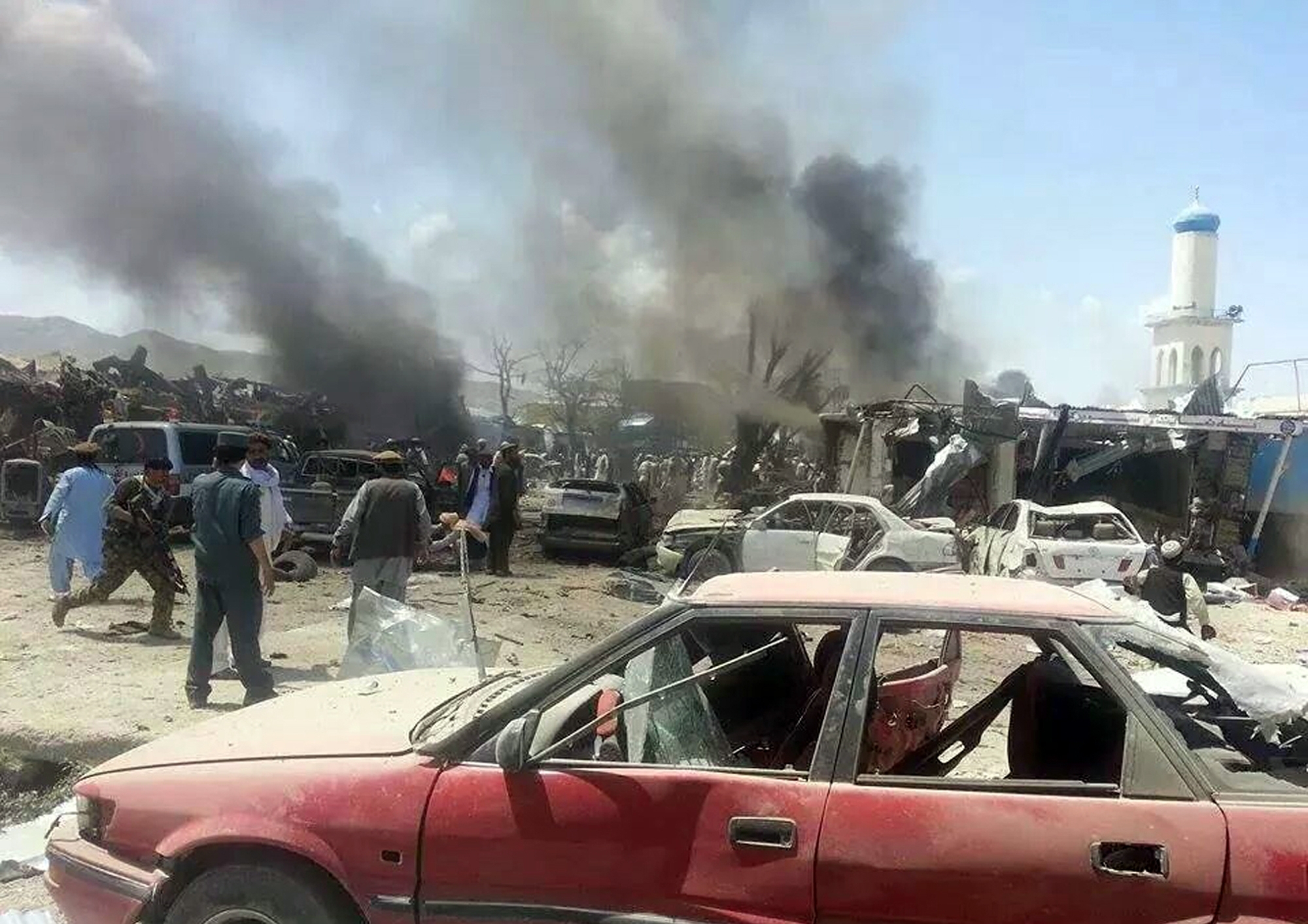
A record number of civilians were killed in Afghanistan between July and September due to a drastic increase in terrorist attacks, according to a report issued Oct. 30.
More than 4,300 civilian casualties were reported during the time period, according to the report from SIGAR, the Special Inspector General for Afghanistan Reconstruction — an increase of more than 40% over the previous year. These numbers, originally collected by the United Nations, represent a record high through the quarter. The increase highlights the continued political tension in Afghanistan.
Recommended Stories



“Civilian casualties in Afghanistan rose significantly during the quarter due to a high number of terrorist and insurgent attacks prior to the presidential elections that included the use of [improvised] explosive devices (IEDs),” SIGAR officials wrote in an email to reporters.
The Taliban, the Islamic State Khorasan, and other groups that oppose the Afghan government were responsible for a majority of the deaths, according to the quarterly report. Nearly half of the casualties were attributed to the Taliban alone. United Nations data showed a more than 70% increase in the casualties caused by IEDs compared to the same period last year.
The rise in casualties occurred while the U.S. engaged in peace talks with Taliban leaders. Zalmay Khalilzad, the U.S. envoy to Afghanistan, reported on Aug. 31 that the two sides were “at the threshold of an agreement” to move forward with peace talks, but a Taliban attack that killed a U.S. soldier led President Trump to suspend talks on Sept. 7. Three weeks later, Afghans went to the polls for the country’s fourth presidential election since the U.S. invasion in 2001.
Several high-profile attacks have taken place in Afghanistan this year.
A suicide bombing in the capital of Kabul killed 92 people in August. ISIS took credit for the bombing, which was the deadliest attack in the city in over a year.
Another attack in Kabul claimed by the Taliban killed at least 40 people in July. The attackers initiated the assault with a truck bomb and followed up by shooting first responders.
A coordinated Taliban attack on a military outpost in January killed 126 Afghan security personnel. Similar to the Kabul attack, the assault began when a car bomb rammed through the gates of a military checkpoint and detonated. Two Taliban gunmen then fired on personnel inside the compound, and were killed by security forces.
Among the report’s other findings is that reintegration programs so far have not helped former fighters merge into civil society.
“Programs specifically targeting Taliban insurgents did not weaken the insurgency to any substantial degree or contribute meaningfully to parallel reconciliation efforts,” reads the report signed by Special Inspector General John F. Sopko.
