

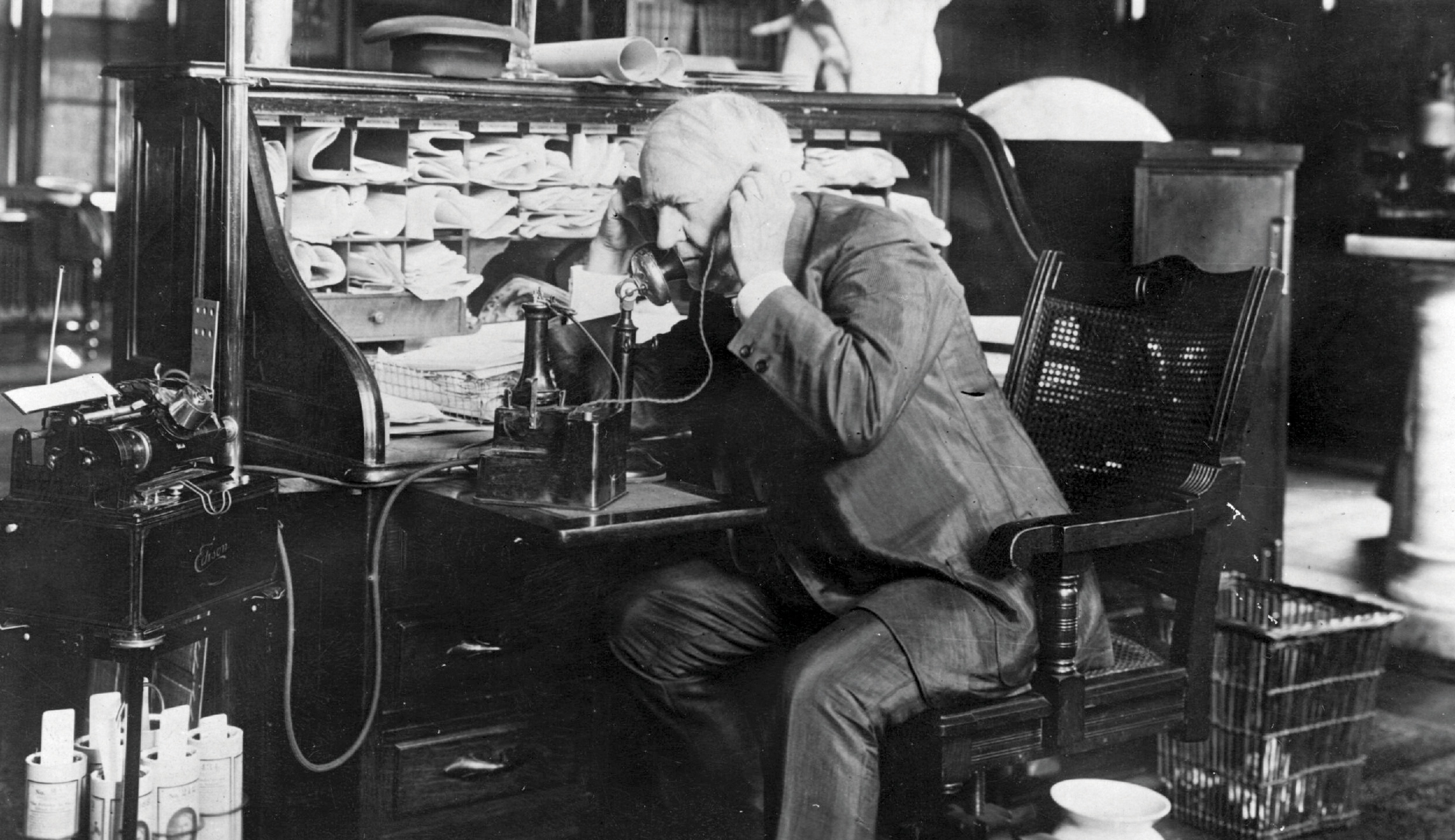
The late Anglo-American writer Edmund Morris published one short book on Ludwig van Beethoven and two ambitious political biographies: a magisterial three-volume life of Theodore Roosevelt, which is likely to remain the preeminent account of Roosevelt’s life and works, and an authorized biography of President Ronald Reagan, which ended up as a curious, semifictional version of Reagan’s career and something of a mess. Edison, which Morris finished shortly before his death last spring at 79, falls somewhere between the two.
The book is a wise, well-informed, and largely compelling account of Thomas Alva Edison’s long life (1847-1931) and enduring influence on the modern world. It also begins with his death and works its way backward, decade by decade, to his birth and upbringing in the small-town Midwest of mid-19th-century America. Morris is very good at explaining, in accessible terms, the complicated mind and technical achievements of a man who was deliberately difficult to know but whose life’s work transformed the world we inhabit.
Stay informed.Stay ahead.
Join Washington Examiner for unlimited access to the news, analysis, and commentary that matter most.
Already a member? Log in
