

Gov. Arnold Schwarzenegger’s victory in solving California’s budget debacle without a tax increase has buoyed the hopes of Republican gubernatorial hopefuls running on platforms of fiscal responsibility.
In the face of a veto threat from Schwarzenegger, the state’s Democratic legislature agreed to deep cuts in spending and a handful of accounting tricks to close the $26 billion dollar shortfall. But experts expect that the crisis will resurface later this year as tax revenues continue to fall amid mounting unemployment.
Recommended Stories

The Republicans looking to succeed the term-limited Schwarzenegger have swooped in on the budget crisis, citing their own low-tax solutions to stimulate the world’s eighth-largest economy. Since voters overwhelmingly rejected tax increases in a May referendum, Republican candidates including technology tycoons Meg Whitman and Steve Poizner and former Rep. Tom Campbell have been playing up their small-government credentials.
“The majority of people still want to cut taxes, the problem is where do you cut? Californians don’t want to cut education, law enforcement or health care — but they do want to cut,” Stephen Kinney, a pollster with Public Opinion Strategies, said. “That’s why laying off state employees is very popular.”
It’s a pivot from the recent trend in the state. Republicans, especially Schwarzenegger, once tried to accentuate their support for government programs in an effort to distance themselves from the sagging national GOP brand. But the crippling budget shortfall, including $682 million in IOUs paid to citizens and state contractors, has changed the game.
“The budget crisis is the entire background of this race,” said Bruce Cain, who teaches political science at the University of California at Berkeley.
Former Ebay Chief Executive Officer Whitman served as the national campaign co-chairwoman for John McCain in 2008. Poizner, California’s insurance commissioner, is one of two Republicans currently elected to statewide office. Campbell, dean of the business school at Berkeley, was a five-term congressman who left office in 2001.
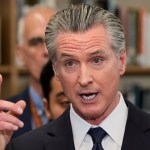
The Democratic field is expected to include Attorney General Jerry Brown and San Francisco Gavin Newsom. Newsom is open to some tax increases and Brown, who has not officially declared his candidacy, hasn’t laid out his plan. But it is in the Republican primary where tax policy will take center stage.
“I think the people of California spoke loud and clear on May 19 when they rejected the extension of the tax increase,” said Whitman spokesman Mitch Zak. “What they said was ‘No new taxes,’ and Meg has been consistent on that. We need to create jobs.”
It’s territory all three Republican contenders are hoping to occupy, and Poizner has already been trying to nick at Whitman’s credentials as a job creator. Campbell, meanwhile, has been touting his own record as state finance director under Schwarzenegger in an era of balanced budgets. But a proposal for a massive one-year gas tax increase may cost him support of tax-hating primary voters.
“After all Arnold’s unfulfilled promises, many think the pendulum will swing back towards people who are more experienced, especially as voters become risk averse as the budget situation deteriorates,” Cain said. “Only masochists need apply.”
