
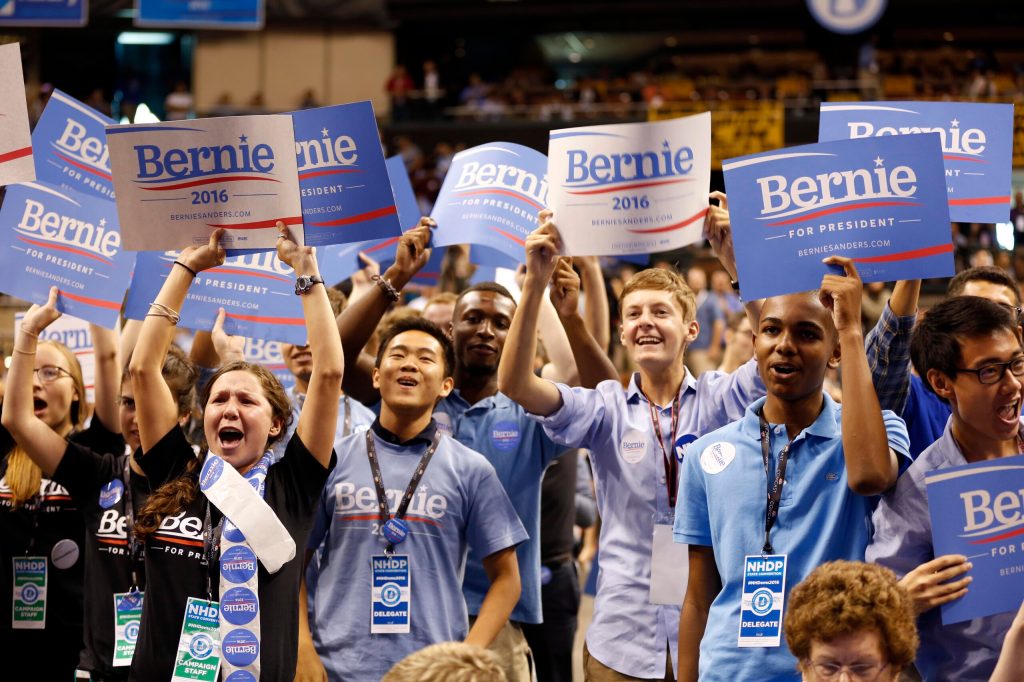
In retrospect, the rise of “Feel the Bern” and “Make America Great Again” shouldn’t be all that surprising.
Recommended Stories

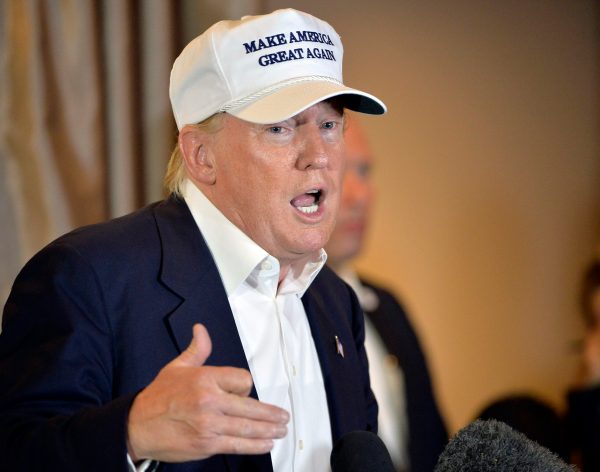
Voters haven’t felt optimistic about the direction of the country for at least seven years, an unprecedented streak for this telltale indicator of American public opinion. Combine that with the pervasive fear that things won’t get any better for their children, and the belief that no one in Washington is listening, and its no wonder Democrats are flirting with Independent Sen. Bernie Sanders or that Republicans are considering ideological apostate Donald Trump.
“The wrong track is a national evaluation,” Republican pollster Frank Luntz said Monday. “Expectations for your children is a personal evaluation, and when that goes negative you have chaos.”
“It’s not just the right track/wrong track, but complete disgust with our institutions, that is driving our political debate,” Democratic pollster Margie Omero added. “This is probably why people are turning to outsiders, with little experience or policy gravitas.”
Sanders, an avowed socialist from Vermont who is not even a member of the Democratic Party, has taken liberal America by storm. He is packing arenas from coast to coast and slowly but surely creeping up on one-time presumed Democratic presidential nominee Hillary Clinton. Trump wasn’t a Republican until recently, and still holds many positions anathema to conservatives, such as support for tax hikes and government-run health care. But he has owned the GOP field since June.
Some of this can be explained. On the left, Clinton’s plummeting poll numbers are a victim of an ongoing scandal about the private email server she used during her tenure as President Obama’s first secretary of state. In the Republican primary, Trump is benefiting partly from the crowded primary field and partly from his celebrity status (the vast majority of voters are supporting a candidate other than the New York billionaire businessman/entertainer.)
But pollsters on the right and the left — many of whom still expect voters to gravitate to more conventional candidates by the time the primaries get underway in February — say there is more afoot here than, in Clinton’s case, scandal, and Trump’s fame.
David Winston, a Republican pollster who is not affiliated with any of the 2016 contenders, pointed to a unique confluence of voters’ attitudes about domestic politics that have created a perfect storm for outsiders to flourish. That includes the durability of Americans’ pessimism about the state of the country, concern that their is little hope for a brighter future for their kids, and palpable frustration that their elected leaders are ignoring them.
Both this past August, and in February of 2013, Winston polled 1,000 registered voters nationally to ask them the following: “In thinking about the role of people like you in the political and public policy discourse about issues, do you think your voice is heard effectively?” In August, only 28 percent answered in the affirmative, while a whopping 71 percent said no. The results were virtually identical to those in Winston’s 2013 poll. Winston said that the impact of this data point is under-appreciated — and shouldn’t be.
“Part of the reason people don’t feel as though their voices are being heard is that the political discourse is off on the wrong topic,” he said. “That includes the media. At the recent [CNN] debate, how many questions were there about the economy? Not very many.”
The evidence confirming Americans’ anxiety and dissatisfaction is everywhere.
Less than 30 percent of American think the country is headed in the right direction, with more than 60 percent think it’s headed south, according to the RealClearPolitics.com polling average. That indicator has not been close to right side up since at least June of 2009, a few months after President Obama took office. In Gallup’s measuring, Americans haven’t been satisfied with the direction of the country in more than a decade.
Omero pointed to recent Gallup research showing that 75 percent of American adults perceived government corruption as widespread, up from 66 percent in 2009. It’s not just the politicians people are unhappy with, it’s the institutions they serve. But the gut punch to the so-called political class, the reason so many voters appear willing to gamble on a novice in the White House, is that for perhaps the first time in history, Americans don’t believe that their children and grandchildren will have a better life than theirs.
In a June CNN poll, 54 percent said they were “better off financially or worse off financially than [their] parents were when they were [their] age?” At the same time, 63 percent of them answered “no” to this: “Looking to the future, do you think most children in this country will grow up to be better off?” Only 34 percent said “yes.” It’s only gotten worse since the midterm elections.
In an exit poll from 2014, 48 percent of voters said they expected the next generation to have a worse life than today, with only 22 percent saying it would be better and 27 percent saying it would be about the same. All of this negativity has boosted Sanders and Trump because they, more so than the other candidates in their respective primaries, have acknowledged it and given voice to it.
“They get my fear; they get my anger,” Luntz said, in explaining why voters have flocked to those two unorthodox candidates. “Not only do they express what I’m thinking … they say what I’m feeling, and feeling is more important in politics today than thinking.”
Disclosure: The author’s wife worked as an adviser to Scott Walker.