The Washington Post is up to its old, awful, anti-Christian tricks.
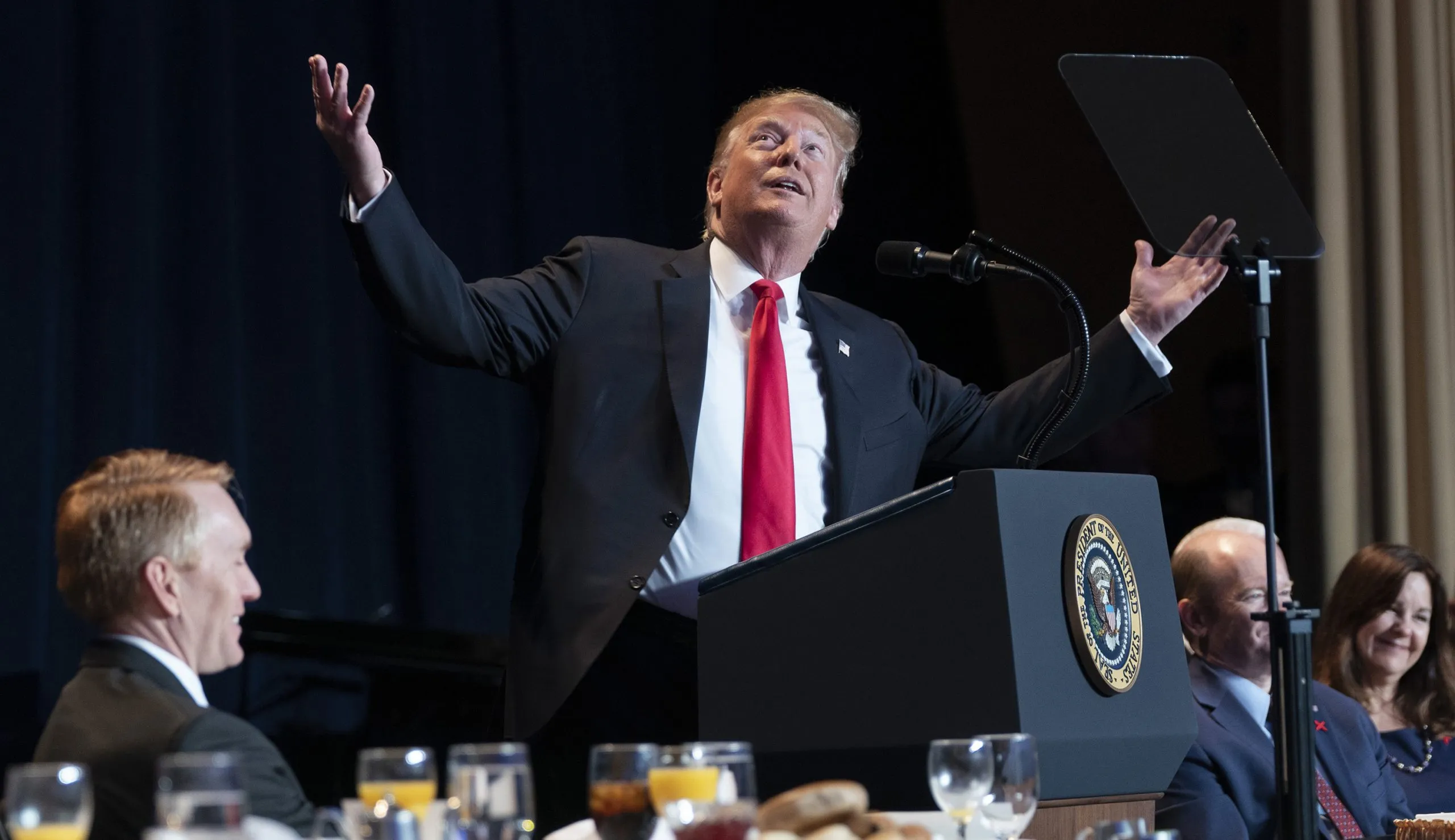
Twenty six-years, to the week, after being forced to retract a front-page description of evangelical worshippers as “poor, uneducated and easy to command,” the Post ran this online headline Feb. 7: “At the National Prayer Breakfast, Trump is likely to play on white evangelicals’ fears.”
These are, of course, familiar tropes from the media — namely that traditional-values Christians, white ones, of course, because they don’t want to deal with the diversity of Christians, are driven by fear, and so stupid that they’re easy for political leaders to manipulate or “play on.”
The article’s actual text takes a while to reach that point explicitly. But after numerous paragraphs of insinuating as much, reporters Sarah Pulliam Bailey and Julie Zauzmer give us the thoughts of Kristin Du Mez, “a historian at Calvin College, who has a forthcoming book on evangelical masculinity and militarism.”
Paraphrasing at first, the reporters write that “conservative evangelicals are used to seeing male leaders like Trump who promise to protect them against malevolent outside forces, according to Du Mez. Men like radio host James Dobson, the late Jerry Falwell Sr., and former megachurch pastor Mark Driscoll ‘built their own religious empires by provoking a sense of danger and embattlement, and then offering fearful followers their own brand of truth and ‘protection.””
If you missed the point, the article continues: “So not only have some of these same evangelical leaders like Dobson, Falwell and Driscoll stoked fears about feminists or non-Christians, ‘we also have them primed to look to a strong man who embodies a God-given militant masculinity to rescue them from these dangers,’ Du Mez said.”
In other words, we are being told white evangelicals want to be guilty of toxic masculinity but are really fear-filled wimps looking to truly toxic men for protection from bogeymen.
Yeah. Got it. Thanks for sharing your prejudice.
Additionally, the Post’s writers set up the whole topic by quoting somebody else who mischaracterizes the position of most conservatives. Supposedly, there’s a “significant minority of Americans who want to see Christianity privileged in the public sphere,” according to Andrew Whitehead, who is “a sociologist at Clemson University who researches Christian nationalism, the idea that America is a distinctly Christian nation.”
Nobody can deny there’s a subset of evangelicals who believe Christianity should be uniquely privileged, but that’s hardly the major concern. Truthfully, most conservatives say not that special privileges are at stake but that mere equal access for Christians is threatened. It’s not that Christianity should be favored but that it shouldn’t be discriminated against.
To the Post’s credit, it does quote “Jeff Hunt, a vice president at Colorado Christian University” largely to that effect but only after putting it in Whitehead’s context of Christians really seeking special privileges.
The tone of the entire story is that of anthropologists exploring a culture entirely alien, one they find antediluvian and benighted. The undertones alternate between bemusement and sneering contempt.
In short, this article reinforces the longstanding impression that the establishment media is riven with anti-Christian bigotry, or borderline forms thereof. One would think that amid all the blowback in recent weeks against media portrayals of second lady Karen Pence and students at the March for Life, among others, the Post would be less overtly contemptuous in covering the prayer breakfast.
Then again, maybe even some Post editors realized that at least the online headline, if not the full article, went too far. In the actual print edition, the headline dropped references to a “play” on “fears” and instead read thus: “At prayer breakfast, Trump is likely to reassure religious conservatives.”
The new headline is a tiny start towards appropriate journalistic neutrality.
[Also read: Trump praises Karen Pence for teaching job at school that has drawn scrutiny for LGBT policies]
