

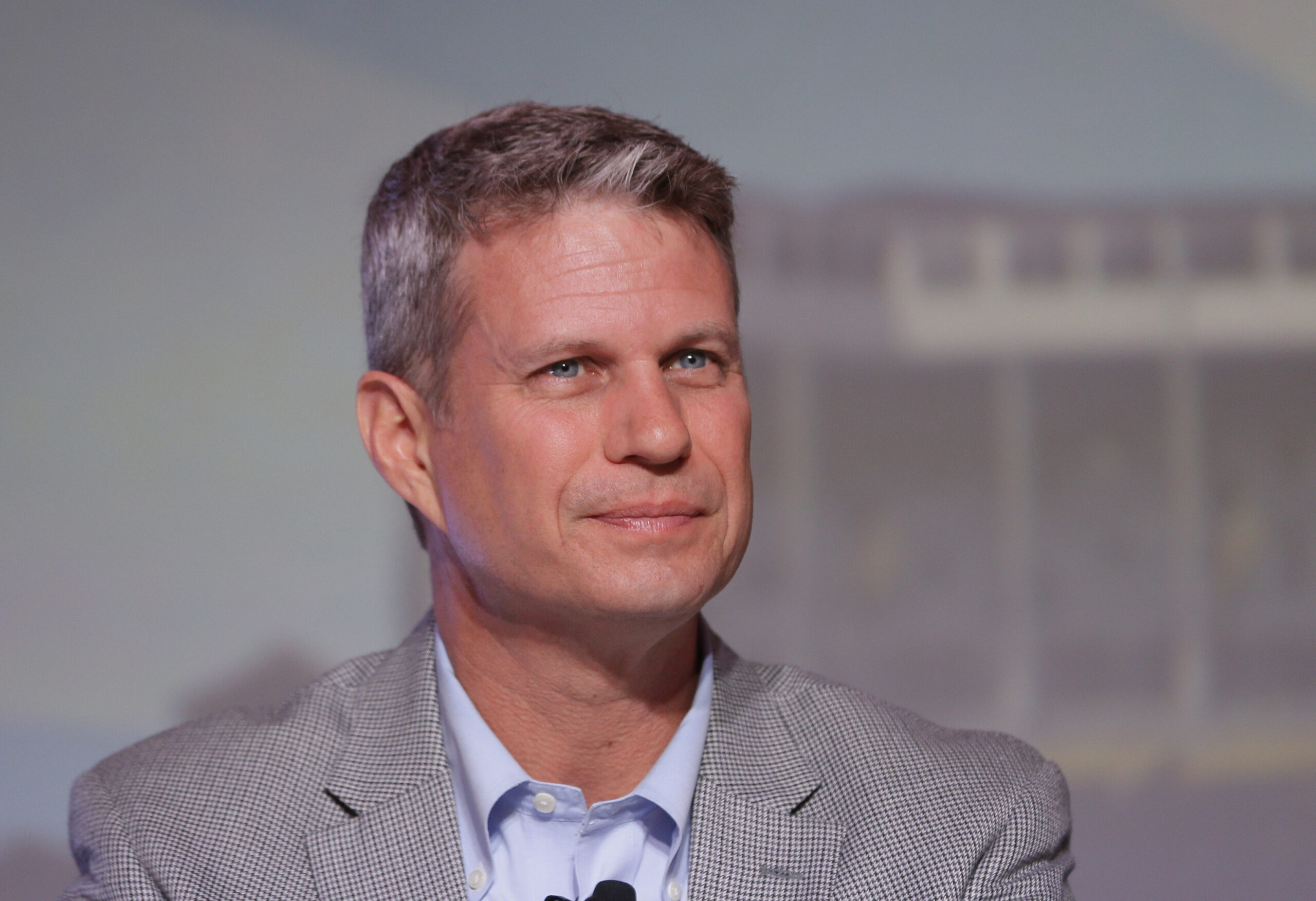
Democrats are stacking the deck at the Federal Reserve in favor of looser money, a top House Republican warned Wednesday.
Bill Huizenga of Michigan, the chairman of the subcommittee on monetary policy, accused Democrats of “a partisan takeover of the Federal Reserve” Wednesday in a CNBC op-ed published and at a hearing he chaired.
Recommended Stories


He said Democrats have succeeded in getting “dovish” officials, those who are less worried about high inflation and more likely to favor low interest rates, to replace more “hawkish” ones who are more worried about inflation.
They did so, he said, through a provision in the 2010 Dodd-Frank financial reform law that curbed the influence of bankers serving as directors at regional Fed banks.
“Through a Trojan-horse provision, the Dodd-Frank Act of 2010 lit the fuse toward this end, tilting the process by which Federal Reserve District presidents are appointed in favor of candidates who instinctively lean toward accommodative monetary policies,” he wrote. At Wednesday’s hearing, he said Democrats favor a “drag race to printing money for the politics of those in office.”
Huizenga defended the influence of commercial bankers on the Fed system, arguing that they favor monetary policies that increase economic growth, rather than self-interested policies.
“Striking this obscure section from Dodd-Frank could put monetary policy and our economy on a better track,” he added. “But rather than embrace the promise of increased opportunity that such a repeal offers, Democrats are doubling down to completely silence interests in price stability and institutionalize a far more centrally controlled monetary policy.”
The Michigan lawmaker, who has authored legislation that would reform the Fed and overhaul the way it communicates monetary policy, held a hearing Tuesday morning on the role of the Fed and its regional banks.
There, two members of the central bank, Richmond Fed President Richard Lacker and Kansas City Fed President Esther George, defended the Fed’s public-private nature.
Lacker said it was appropriate to have bankers on the Fed banks’ boards of directors, noting that they have expertise in banking and money and are “well-positioned” to keep officials up-to-date on what’s happening in their communities.
Both Lacker’s testimony and Huizenga’s statements represent an objection to recent efforts by Democrats to curb the banking sector’s influence over the Fed.
Democrats have been skeptical of both banks’ closeness to the regional Fed banks that regulate them and of banks’ influence over monetary policy. They have sought to advance legislation increasing the administration’s and Congress’ oversight of regional banks, and highlighted what they have said is a lack of diversity at the Fed.
