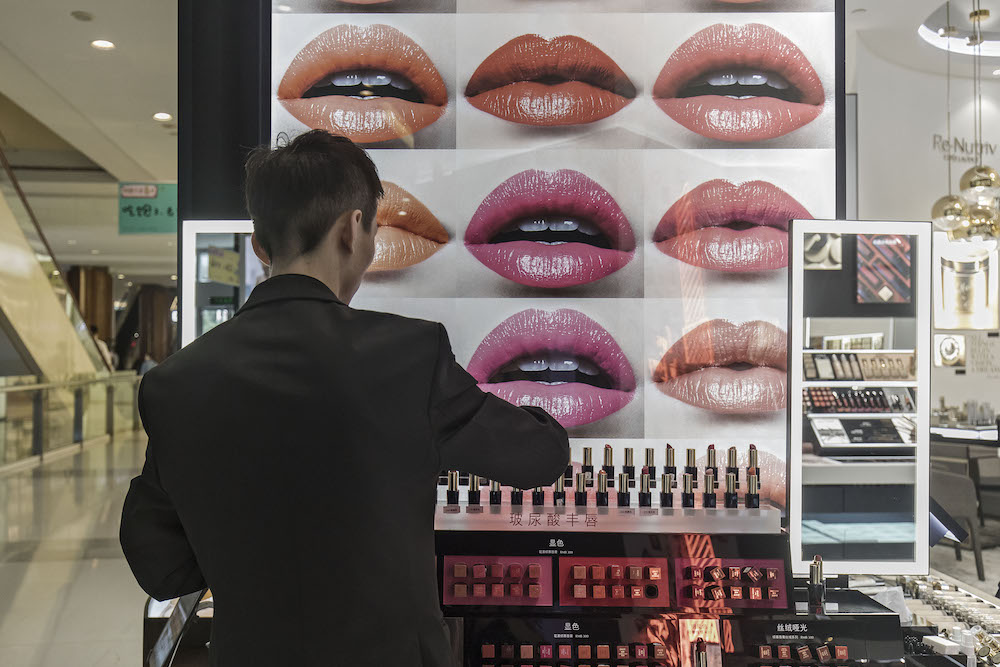
Beauty benefits all nations, says Estee Lauder CEO protesting cosmetics tariffs

If beauty is in the eyes of the beholder, as the Greek philosopher Plato inferred, then it’s possible for Estee Lauder chief Fabrizio Freda to believe the cosmetics trade is good for everyone and should be immune to tariffs and for President Trump, simultaneously, to suggest the opposite.

Make-up powders and preparations are among the $200 billion in additional Chinese products on which the White House has proposed assessing a 25 percent duty as Trump wages a global trade war, using controversial levies he says are “working big time,” to bring American exports in line with imports. The latest round is under scrutiny in hearings by the Office of the U.S. Trade Representative this week and next amid growing concern from lawmakers and corporate executives, who have warned tariffs are likely to curb profits and, ultimately, economic growth.

“We are closely watching the evolving global issue concerning tariffs and trade, including Europe and China, important markets for us,” Freda told Estee Lauder investors on Tuesday after the New York-based company factored growing trade barriers into a projection of 5 percent sales growth during the next 12 months.

The cosmetics giant, which has brands including Clinique, M.A.C. and La Mer and is already grappling with duties in Europe, would face not only higher costs for ingredients shipped to the U.S. from China but the possibility of a retaliatory duty on American products, Freda said.

While it’s not yet clear whether China will impose a cosmetics tariff, he noted that only about a third of Estee Lauder products sold in the country come from the U.S. The remainder are produced in Europe and Canada, Chief Financial Officer Tracey Travis told analysts earlier this year.

The company is doing its best not to raise prices because of the tariffs, Freda said on Monday, and “we continue to hope that tariffs will not be applied because beauty is not a category of tension and represents a benefit for all countries.”

Trump, who doesn’t claim the same for international trade duties, nonetheless argues that they will buoy U.S. trade and spur economic growth. “Tariffs are the greatest!” he said on Twitter in late July. “Either a country which has treated the United States unfairly on Trade negotiates a fair deal, or it gets hit with Tariffs.”


Like Estee Lauder, U.S. consumer companies specializing in home appliances, luxury apparel and auto parts say tariffs haven’t hurt their earnings much so far, but some of the harshest duties have yet to take effect: Potential levies on another $416 billion of Chinese imports (including the $200 billion on which the U.S. trade representative is holding hearings) and 25 percent duties on cars and vehicle components.

The tariffs already in force include duties of 25 percent on steel imports and 10 percent on aluminum, 25 percent on $34 billion of goods from China, and up to 50 percent on washing machines. Competitors and allies like, from Europe to Canada and Turkey, have responded to Trump’s policies in kind.

The retail and consumer industries, which typically rely on complex global supply chains, have been among the most worried by the prospect of a trade war, and newer, smaller firms are more likely to encounter existential challenges from the tariffs. Several — in regions of the country that supported Trump — have already announced job and production cuts.

“While the average firm in the U.S. can likely withstand the rise in costs, some marginal firms will not, and we envision some establishments closing permanently,” Seth Carpenter, an economist with Swiss lender UBS, said in a July report. The tariffs will “create a temporary drag” on the U.S. economy by the end of the year, with growth slowing to 2.7 percent in the three months through December from a previous projection of 3.1 percent, he predicted.

[Also read: Trump tariffs to hit millennial-favored products hard]

Related Content
