

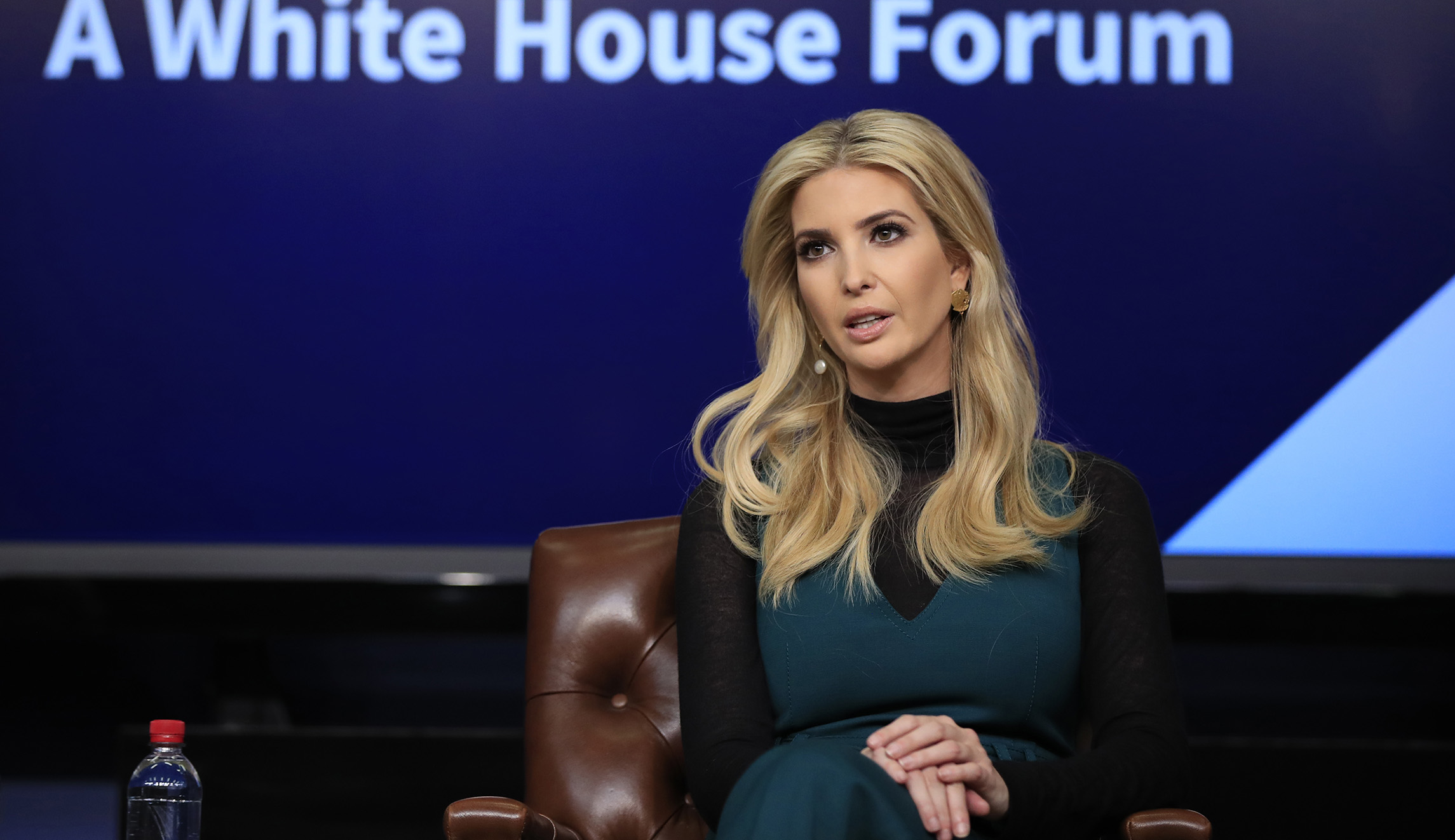
Millennials on both sides of the aisle tend to be vocal about social issues, whether it’s lobbying for the Deferred Action for Childhood Arrivals program or marching for pro-life causes. The issues that impact them the most, however, are economic and health related, according to the topics covered at the White House’s “Generation Next” forum on Thursday.
The event featured President Trump, Ivanka Trump, Kellyanne Conway, Labor Secretary Alexander Acosta, HHS Secretary Alex Azar, and Department of Justice Director of Public Affairs Sarah Flores.
Recommended Stories



I was able to ask a question to the panel featuring Ivanka Trump and Acosta regarding the price and value of a college degree: “As tuition inflation continues to skyrocket, how is the Trump administration making sure that the price of a college degree does not outweigh the value of that degree, specifically in getting a job in one’s on field, where they’ve actually have expertise and training?”
Ivanka Trump answered first, noting that the country needs to question the status quo of education, and ask broadly: What is the end goal and what is the purpose of education?
The purpose of education, Ivanka Trump said, “Is equipping somebody with the skills … to secure a family-sustaining job and a career.”
“And for a lot of people, that does not mean four-year college,” she added. Technically education, vocational education, and industry driven apprenticeships are all a part of the alternative.
Information taught in the classroom does not always translate into real life work-ready skills. Acosta noted this when he suggested more hands on internships in the field of one’s study or aspirations. Acosta gave an example of a student who wants to become a police officer. He argued that the student would do well to spend a semester working at a police academy.
Acosta asked the room, “How many of you have done or know someone who has done a semester abroad?”
Almost everyone raised their hands.
“Think about everything you learned on that semester abroad. If you want to be a police officer and you’re studying criminology, why can’t you do a semester at a police academy, for credit? Are we really saying you would learn less at a police academy?”
He later made the same analogy, describing how medical students learn both anatomy and hands-on skills.
“We have isolated education from the workforce,” Acosta stated. Instead, he would like to see “semesters in the workforce, for credit.”
Ivanka Trump pointed out that people who experience an apprenticeship program are more likely to work in that field.
An example, she noted, was that 50 percent of women who graduate with a degree in STEM don’t end up getting a job in a STEM field. But that number goes up to 95 percent when those women also have an apprenticeship in a STEM field. Hands-on workforce training is the key.
According to the Trump administration, the jobs are available, but the job seekers are not trained, unable to move, cannot pass a drug test (referring to the opioid crisis), or simply don’t know these job openings exist.
Many high school students feel forced into going to college – or at least that it’s their only option.
President Trump recalled a classmate who he described as “not a good student, this was not going to be Einstein academically” and yet that student “could fix an engine or a motor … blindfolded” and the student enjoyed the task. Trump went on to say that he was a perfect candidate for vocational schools and had skills that far exceeded his own, just not the skill set or aptitude for higher education.
White House officials seemed to agree that the stigma regarding trade jobs needs to be lifted. High school students would benefit from knowing which industries have open jobs before they commit to four years of college.
“Part of it is educating students about this is where we think opportunity is going … This is what we think the work of the future is,” Ivanka Trump explained.
And that education will come through looking at trends and big data.
She added, “We haven’t leveraged data enough to show people where there are job vacancies and what skills training programs they need to fill those jobs.”
