

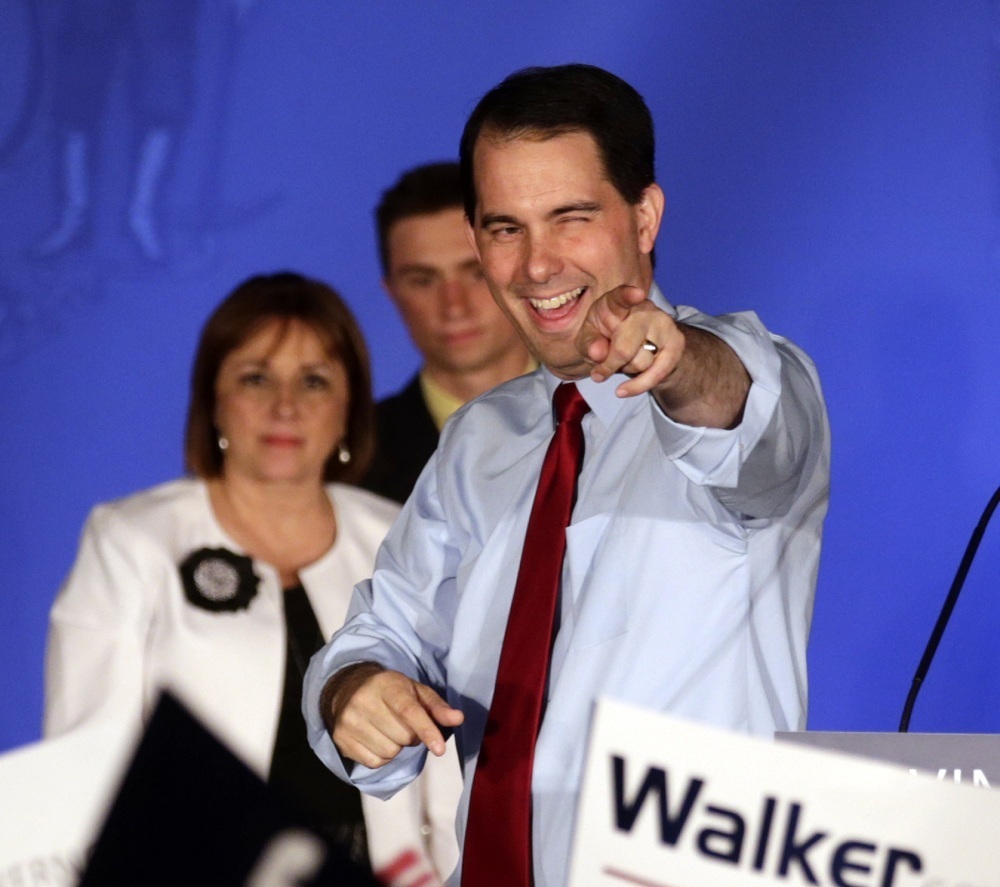
Wisconsin Republican Gov. Scott Walker on Tuesday beat back a union-fueled effort to remove him from office, defeating Democrat Tom Barrett in a recall race many had considered a potential bellwether for November’s presidential election.
Walker was the third governor in U.S. history to face a recall election and the first to win one. With more than half of the votes counted, unofficial returns showed Walker with 57 percent of the vote and Barrett with 42 percent.
Stay informed.Stay ahead.
Join Washington Examiner for unlimited access to the news, analysis, and commentary that matter most.
Already a member? Log in
“Bringing our state together will take some time, but I hope to start right away,” Walker said in a statement. “It is time to put our differences aside and figure out ways that we can move Wisconsin forward.”
Labor unions led the effort to recall Walker after the newly installed governor pushed through reforms that drastically limited the bargaining rights of public employee unions. Walker has been in office just 18 months and has spent most of that time mired in the dispute that arose from those reforms.
The special election in a state that typically votes for Republicans in gubernatorial races and Democrats in presidential contests was being closely watched for any evidence of what the showdown with labor could mean for the presidential race this fall.
And while presumptive Republican presidential nominee Mitt Romney insisted Tuesday night that Walker’s victory “will echo beyond the borders of Wisconsin,” exit polls indicate that the race may not be so telling about Republican chances against President Obama in November. Voters who helped ensure Walker finishes out his first term also favored Obama over Romney by 12 percentage points, polls showed.
Republican Lt. Gov. Rebecca Kleefisch, who was also subject to a recall, retained office as well, defeating Democratic challenger Mahlon Mitchell, a firefighter and union member.
Walker’s victory marks a major defeat for public employee unions, which helped collect 900,000 signatures to secure the recall election in retaliation for Walker’s efforts to curb union bargaining rights.
But from there, the effort to unseat Walker eventually fizzled, in part because the plight of the unions did not resonate with voters who over time grew resentful of the way the recall divided Wisconsin residents.
Republicans also benefited from a major financial advantage, with Walker raising more than $30 million, much of it from out of state, while Barrett raised just under $4 million. And while unions helped lead campaign efforts for Barrett, the mayor of Milwaukee, Tea Party groups poured their resources into Walker’s campaign.
Jenny Beth Martin, co-founder of the Tea Party Patriots who knocked on doors in Wisconsin on behalf of Walker, said Walker’s victory was due in part to the voter backlash against the recall.
“One thing I find very interesting is that many people told me they weren’t huge fans of Gov. Walker but they felt it was time to stop the recall, so they were voting to stop it,” Martin said.
Barrett backers in recent days were angered by a lack of support from the national Democratic Party and President Obama, who avoided the state during the campaign and waited until this week to post a message of support for Barrett on Twitter.
“I’m standing by Tom Barrett,” the president tweeted. “He’d make an outstanding governor.”
