There’s a new way to make money on the internet: You can sell your social media posts, digital pictures, and videos as an original piece of art — as long as people are willing to pay money for it, that is.
Here’s an example: Let’s say you want to take your first-ever Facebook post and enter it into an online auction and sell it off to someone else. That Facebook post would still be widely accessible on the internet, and it would still appear on your profile. But if someone else buys it, it’s technically theirs.
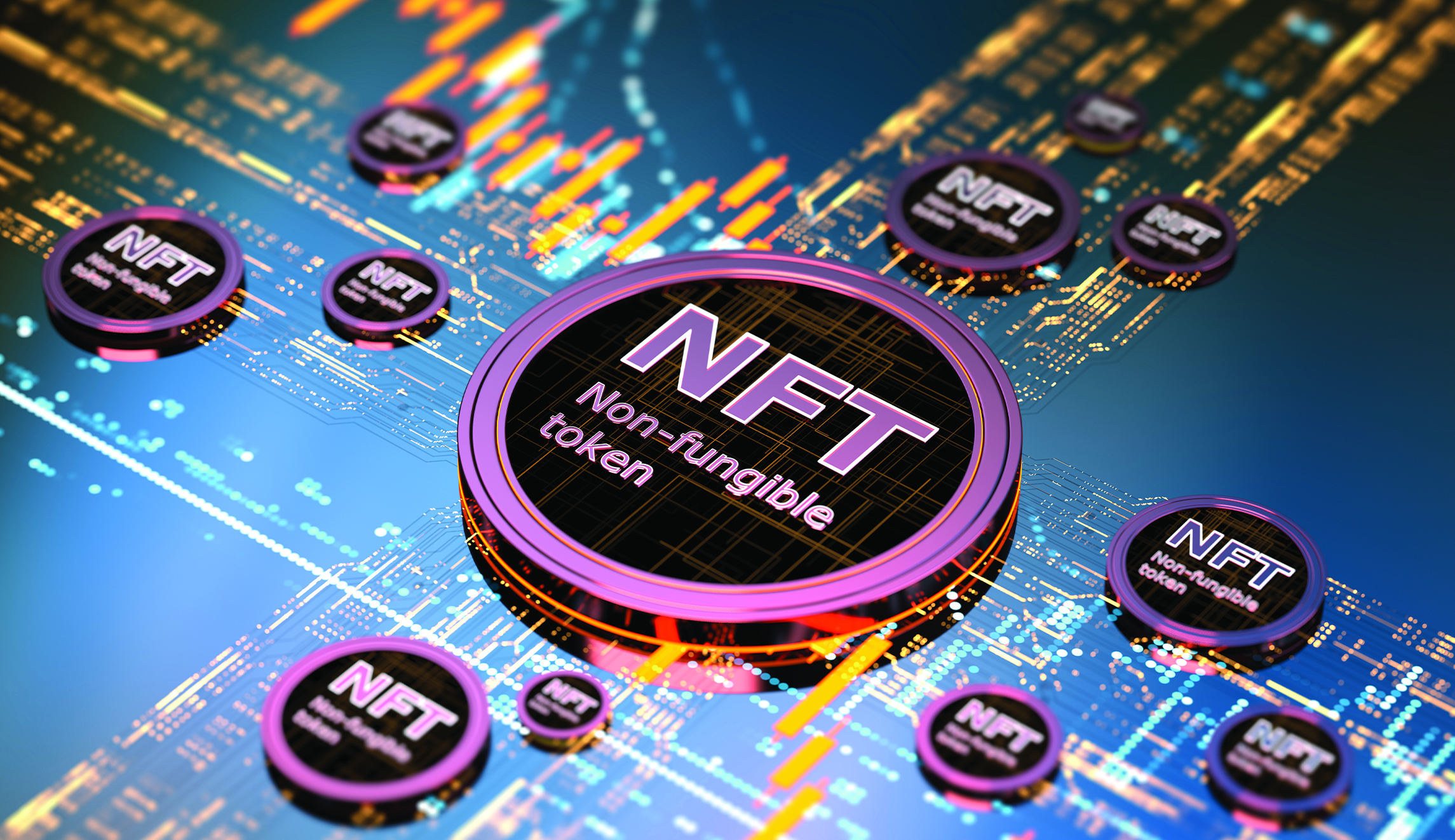
Think of it like a digital garage sale. Instead of buying someone’s used coffee mugs, you’re buying a years-old picture of that one time they went on vacation. And instead of walking home with that coffee mug after buying it, you’re taking home an NFT, a “non-fungible token” that proves this picture in its original form is now yours.
Here’s another way of thinking about it: An NFT lets people know that something is unique and can’t be replaced by another item. It’s like a trademark — it’s a one-of-a-kind token that can’t be replicated. In other words, it’s a kind of digital ownership. And it’s all the rage in the online world right now.
Of course, no one is really interested in buying your first Facebook post from 2007. And no one wants to own that one beach vacation photo you think you looked great in. So, what are people selling? And what are they buying?
Anything they think is worth money. Twitter CEO Jack Dorsey’s first tweet sold for nearly $3 million last month. When asked why he spent all that money just to “own” a tweet anyone could access, Malaysia-based Sina Estavi put it this way: “It’s a piece of human history in the form of a digital asset. Who knows what will be the price of the first tweet of human history 50 years from now?”
Zoe Roth, now a college senior in North Carolina, sold a picture of herself as a young girl that became a viral meme for $500,000. The picture shows Roth as a 4-year-old with a devilish smirk on her face as a house behind her goes up in flames. She became known as “Disaster Girl,” and she decided to sell the original copy of her meme as an NFT.
Another beneficiary of viral internet fame, the Davies-Carr family, sold their famous “Charlie bit my finger” video as an NFT for more than $760,000. The video, which has received more than 880 million views, shows baby Charlie Davies-Carr biting his brother Harry’s finger, triggering a memorable response from Harry. “Ow, Charlie! Ow! Charlie! That really hurt!” the little boy says in his British accent.
As part of the deal, the Davies-Carr family agreed to take down the video from YouTube, where it became one of the most-watched videos in internet history. The decision to sell ownership of the video was a no-brainer, according to the boys’ father, Howard.
“It means that Harry goes to university and has a nice place to stay and doesn’t have to have a bar job,” he said.
But how do NFT owners prove that they are, in fact, the owners? And if anyone can still hypothetically access your “property” on the internet, is it really yours?
As it stands, NFTs are backed by a proprietary digital signature that is logged into a blockchain. This blockchain serves as a digital record of transactions. The same way the government keeps records of your physical property ownership, this blockchain keeps records of NFTs.
At least, that’s how it’s supposed to work. But as with everything on the internet, everything is always changing, and nothing is set in stone. NFTs are an attempt to change that — to make the internet, or parts of it, a bit more permanent. Tech geeks are hopeful it will work. But as for me, I think I’ll hold on to my Facebook posts. Maybe they’ll be worth something someday.
