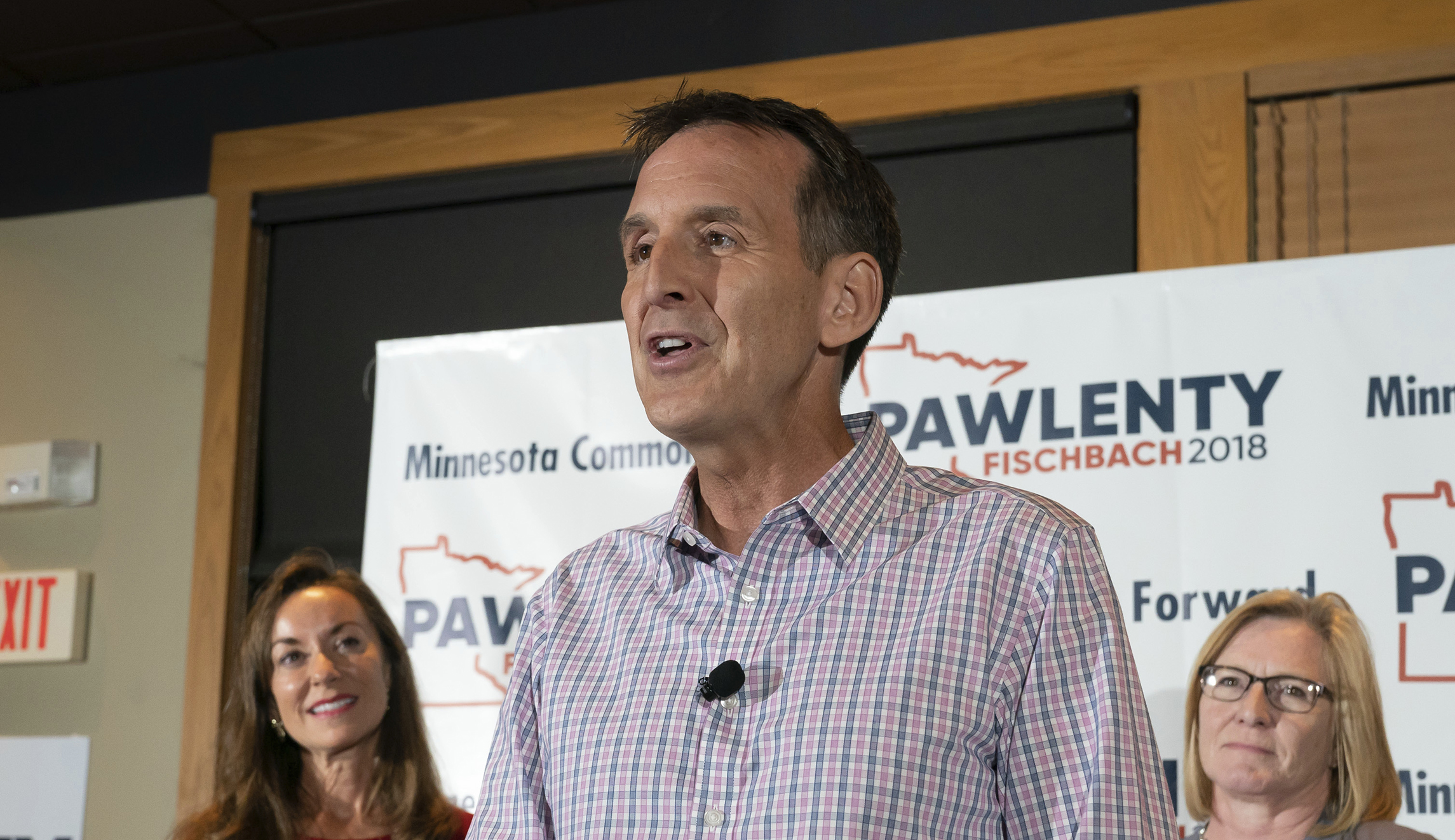
This is not Tim Pawlenty’s GOP anymore

One extraordinary symbol of Donald Trump’s stunning victory in 2016 was his near miss in Minnesota. Democrats have carried this state in every presidential election since 1972. That means even Mike Dukakis and Walter Mondale won there. Former President Barack Obama had carried it by 8 and 10 points.

Since 1995, only one Republican has won a Senate race here, and that was because his opponent died. Democrats currently hold every statewide elected position in Minnesota. Yet Trump came within 1.5 percentage points of beating Hillary Clinton here in 2016. That was a 6.2-point swing to the GOP from 2012.

Clearly, Trump was selling something that Minnesota’s independents and Democrats were buying.

So how did Trump do so well? By winning the working class.

Trump dominated among Minnesota voters with no college degree, winning by 17 points. Romney lost those voters to Obama in 2012. Trump beat Hillary among all Minnesota voters earning less than $100,000, according to exit polls, whereas Hillary won the state on the strength of her $100k-plus vote. In 2012, Romney won the six-figure voters, but lost five-figure voters by 9 points.

The “arrowhead” region of Minnesota—Carlton, St. Louis, Lake, and Cook Counties in the Northeast—had given Obama a margin of about 30,000 votes in 2012. They gave Hillary a margin of only about 7,500. Two rare places where Hillary expanded on Obama’s 2016 margin were Washington and Dakota Counties, relatively wealthy suburbs of the Twin Cities.

Trump showed us something about Minnesota’s electorate that we hadn’t seen before: A sizable portion of the white working class there wasn’t so gung-ho about the Democratic-Farmer-Labor Party, as much as they might have disliked the GOP. When Trump—who finished a distant third, by the way, in the state’s presidential caucuses—was atop the ballot, many of those voters pulled the Republican lever. It was almost enough to swing the state.

This wasn’t the makeup of the electorate that most recently sent Republicans to statewide victory there. When Tim Pawlenty was re-elected as governor in 2006, his coalition was very different from Trump’s nearly winning coalition in 2016.

Pawlenty 2006, like Hillary 2016, lost voters earning under $100,000, but easily won those earning more. Pawlenty tied among those who hadn’t gone to college, and won the state on the strength of college-educated voters, losing only those with advanced degrees.

Where Pawlenty had dominated suburban areas and broke even in rural areas, Trump dominated rural areas and broke even in suburban areas.

So in Tuesday’s primary contests, the question was which Republican electorate would show up when Trump wasn’t on the ballot. Would it be the suburban, center-right, educated party of Pawlenty, or the rural, working-class populist party of Trump?

We got a pretty good test of that dichotomy last night, because one of the candidates running was Tim Pawlenty himself. He was trying to return to the governorship after a stint as a bank lobbyist, and he was heavily favored to win the nomination.

Pawlenty, to be sure, wasn’t a mere bank lobbyist. There are plenty of those. Pawlenty was extraordinary in this regard. During his brief presidential run in 2011, Pawlenty fashioned himself the populist candidate. He blasted the “big bailed-out banks” and told them, “Get your snout out of the trough.” Pawlenty made good sense in those days, but he didn’t make much headway, and he was out of the race long before the Iowa caucuses.

Then Pawlenty got hired up by the big, bailed-out banks, and he came and stuck his own snout in the same trough. He became the highly paid CEO of the Financial Services Roundtable, made up in part of big, bailed-out banks. One of Pawlenty’s reforms at the FSR was kicking out the smaller members and becoming more exclusively a lobby of financial giants. Under Pawlenty, the FSR’s lobbying included asking for government-backed loan guarantees so that the big banks could offload their risk onto taxpayers.

It was a profitable pass through the revolving door, but Pawlenty couldn’t pass back through it the other way. Republican voters chose former Hennepin County Commissioner Jeff Johnson over Pawlenty in the primary. Johnson won most rural counties, but he also carried his own county, which includes Minneapolis.

Notably, only about 50,000 Republicans turned out in Hennepin County in the primaries, despite this heated race. Meanwhile, nearly 200,000 Hennepin County folks voted in the Democratic primary. Pawlenty in 2006 had lost this county by a mere 10 points. Today, it looks much more Democratic.

In other words, Minnesota’s Republican Party has changed. The party of Pawlenty has dissolved, with many of those voters going to the Democrats, while many lower-income, less educated folks who were Democrats last decade have become Republicans.

November, when Johnson faces Democratic nominee Rep. Tim Walz, will give us a hint of how viable this new Republican Party can be when Trump isn’t on the ballot.

Related Content
