
Hesitation at White House On Releasing Abuse Photos
Before releasing terrorist interrogation memos, before Dick Cheney started barking about the threat created by Obama administration’s ongoing apologia for American anti-terror practices, and before Nancy Pelosi got in too deep on what she knew and when she knew it about waterboarding, the White House agreed not to fight the release of 44 photos alleged to show U.S. personnel abusing detainees abroad.
Now that the consequences of national security show and tell are becoming more clear, though, the White house is reconsidering the wisdom of having dozens of potentially embarrassing photos circulating among allies and enemies.
It may be too late, and it may just be to make the release look like an anguished decision but it seems to show an eveolving awareness for the need to protect the reputation of the U.S.
Recommended Stories
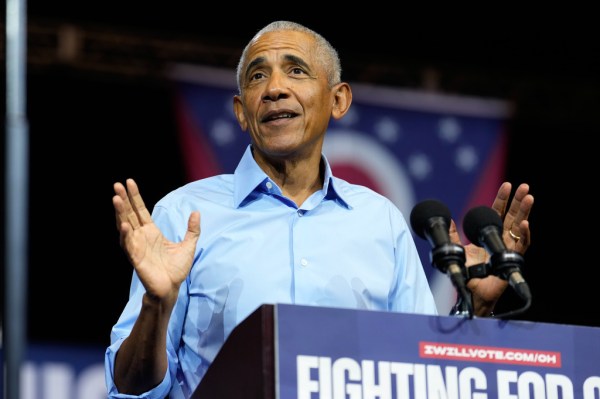


Writer Michael Shear on the change of heart:
“White House press secretary Robert Gibbs told reporters yesterday that President Obama has ‘great concern’ about the impact that releasing the photos would have on soldiers fighting in Afghanistan and Iraq. Asked whether the Justice Department’s decision might be reversed, Gibbs declined to reaffirm the government’s intentions.
‘I don’t want to get into that right now,’ he said, adding a moment later that ‘I’m not going to add much to that right now.’”
Wall Street Journal — U.S. Eyes Bank Pay Overhaul
Writers Deborah Solomon and Damian Paletta reveal that the Obama administration is looking to control salaries across the financial sector – including institutions that didn’t take bailout funds.
A few people, including The Examiner’s Byron York, had already flagged the effort by Rep. Barney Frank to set the salaries of any institution “too big to fail.”
But now the Federal Reserve and the Securities and Exchange Commission are looking at ways to go beyond capping salaries and regulate the way compensation is structured.
The leakers at Treasury say that the goal is to alter the corporate culture at banks and investment houses to avoid the kind of risky behavior that caused the recent problems. There was limited concern when the salaries at failed, bailed-out institutions were being controlled, but expanding the aims could create a real firestorm.
“Government officials said their effort, which is just beginning, isn’t aimed at setting pay or establishing detailed rules. ‘This is not going to be about capping compensation or micro-management,’ said an administration official. ‘It will be about understanding what is the best way to align compensation with sound risk management and long-term value creation.’
Despite the banking industry’s weakened state, it would likely try to push back against curbs on how financial firms can compensate people. Bank executives have complained to federal officials that strict rules could prompt some of their best employees to move to parts of the financial industry that aren’t regulated, such as hedge funds, private-equity firms and foreign banks. They’ve also argued that paying substantial bonuses is integral to how the industry works.”
Washington Post — Officials Knew of AIG Bonuses Months Before Firestorm
Just as Nancy Pelosi is getting pilloried by the Left for her prior knowledge of harsh interrogation practices, Timothy Geithner is getting a bipartisan beating over his knowledge of lavish bonuses paid out to AIG executives in late March.
And just as the outrage has pushed Pelosi to become a big advocate of dragging Bush administration figures before a truth commission, Geithner is now pushing for executive pay limits across the financial sector.
An investigation by writers David Cho and Brady Dennis revealed that when Geithener was running the Federal Reserve Bank of New York, top administrators knew that the bonuses, which would later give the Obama administration’s bailout bonanza a black eye.
What comes through from Cho and Dennis’ impressive work is that Geithner and others were aware but blasé about the bonuses. Once the secretary and others realized the degree of outrage that would be sparked by big bonuses from a company sponging $180 billion from taxpayers, it was too late.
In perfect Washington fashion, though, the administration will compensate with a massive overcorrection. Unable to prevent AIG from giving bonuses, the administration will now try to prevent everyone from giving bonuses.
As the head of AIG, Edward Liddy, comes back to Capitol Hill today for another scolding, it’s clear that the bonuses were seen in the White House as a PR problem – but only too late.
“Geithner called Liddy on March 11, demanding that the company restructure the bonuses. Liddy began drafting a letter that bowed to some of Geithner’s concerns. Because the letter was to be released publicly, Treasury officials reviewed drafts and suggested changes.
The letter was released March 14. But it was too late. The bonuses to executives at Financial Products were already heading out the door.”
New York Times — Stimulus Aid Trickles Out, but States Seek Quicker Relief
During the heady February days when the Obama stimulus was being approved, the buzz phrase was “shovel ready.” The administration was only interested in projects that could get underway immediately.
Now, only 6 percent of the $787 billion borrowed for the stimulus has been paid out and most of that has been for expanding welfare programs on the state level.
The administration holds that the expectation of the stimulus has helped state and local governments as well as contractors who hope to benefit.
What’s become clear is that the stimulus was about two things – bailing out spendthrift states, cities and counties and making commitments to long-term projects favored by Democratic appropriators.
Politically, the issue is whether the administration, which admits to a slow start, can credit the stimulus for good economic news.
“Vice President Joseph R. Biden Jr., who writes in a report on the stimulus bill to be released this week that it remains ‘ahead of schedule in most programs,’ said in a telephone interview Tuesday that the bill was helping people grapple with the recession, getting money to the states and into the economy, and laying a foundation for long-term aspirations like high-speed rail.
‘We’re 85 days into a two-year program here — we’re trying to get the money out as quickly as we can, but not too quickly, so we don’t end up really screwing up here,’ Mr. Biden said. ‘Because we’re talking about big dollars here, these are big numbers, this is unprecedented. And in 85 days we’ve gotten tens of billions of dollars out the door, and so far — knock on wood — no real big problems, no real big glitches.’”
Politico — GOP poised to reject Interior nominee
The Senate will likely reject its first Obama appointee today as Republicans upset over restrictions on energy exploration imposed by Interior Secretary Ken Salazar will vote together to blockade the nomination of David Hayes to run day-to-day operations for the agency.
“Opposition to the nomination is being spearheaded by Utah Republican Robert Bennet, who is trying to pressure the administration to reconsider the cancellation of oil and gas leases in his home state.
‘The American people deserve better than political games that do nothing but waste their time. And the President deserves to have a complete lineup when his team takes the field on the most important issues we face,’ said Jim Manley, a spokesman for Senate Majority Leader Harry Reid (D-Nev.)”