

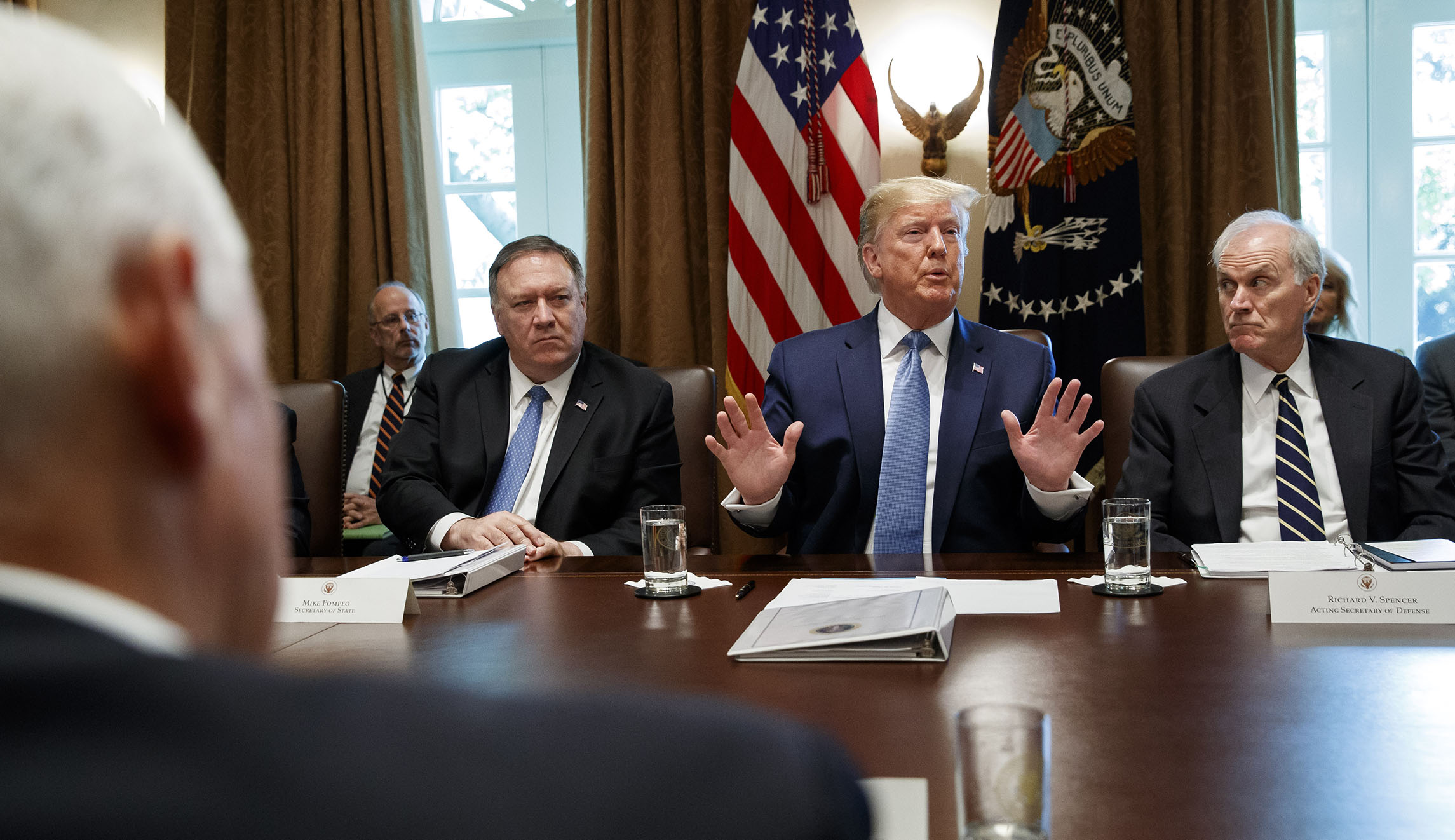
With the departure of Alexander Acosta as Labor Secretary, President Trump now owns the record for the highest turnover in his first two and a half years than his five immediate predecessors did in their first term.
Acosta is the ninth cabinet secretary to leave the Trump administration. It’s a list that includes HHS Sec. Tom Price, DHS Secretary turned White House Chief of Staff John Kelly, Secretary of State Rex Tillerson, Veterans Affairs Sec. David Skulkin, Attorney General Jeff Sessions, Interior Sec. Ryan Zinke, Secretary of Defense Jim Mattis, and DHS Sec. Kirstjen Nielsen. Additionally, there have been some high profile exits with the departures of White House Chief of Staff Reince Priebus, EPA Administrator Scott Pruitt, U.S. Ambassador to the United Nations Nikki Haley, and Small Business Administrator Linda McMahon.
Recommended Stories


The number of departures has been so high that it’s creating a cascade effect that’s costing taxpayers millions of dollars.
According to a 2012 study by the liberal think tank Center for American Progress, turnover for senior and executive level positions in the workplace can cost up to 213 percent of the person’s salary.
As of 2018, each cabinet secretary brought in an annual salary of $210,700. By those estimations, that means, between the nine cabinet secretaries who left the administration through resignation or by firing, over $4 million in taxpayer money is being wasted on turnover costs.
While replacing a rank-and-file employee creates a loss of productivity for a smaller scale position, replacing a cabinet secretary causes productivity to decrease significantly across the entire agency.
Sure, it’s a drop in the bucket compared to the federal budget, but we also need to factor in what the high rate of turnover does to policy implementation.
While Trump has acknowledged that he prefers “acting” secretaries to permanent, Senate-confirmed agency secretaries, it takes a toll on the workflow of the executive branch. In addition to hurting employee morale, federal agencies are often at the mercy of the new cabinet secretary’s learning curve. Resources are diverted from policy implementation to ensuring a presidential cabinet nomination makes it past confirmation in the Senate.
Make no mistake, there are cabinet secretaries who have held their posts who are completely unqualified for the work they do, and it’s well within the president’s right to fire anyone who doesn’t meet his expectations. But, in the end, Trump is not doing himself or the American people any favors by not hiring, as Trump puts it, “the best people.”
