

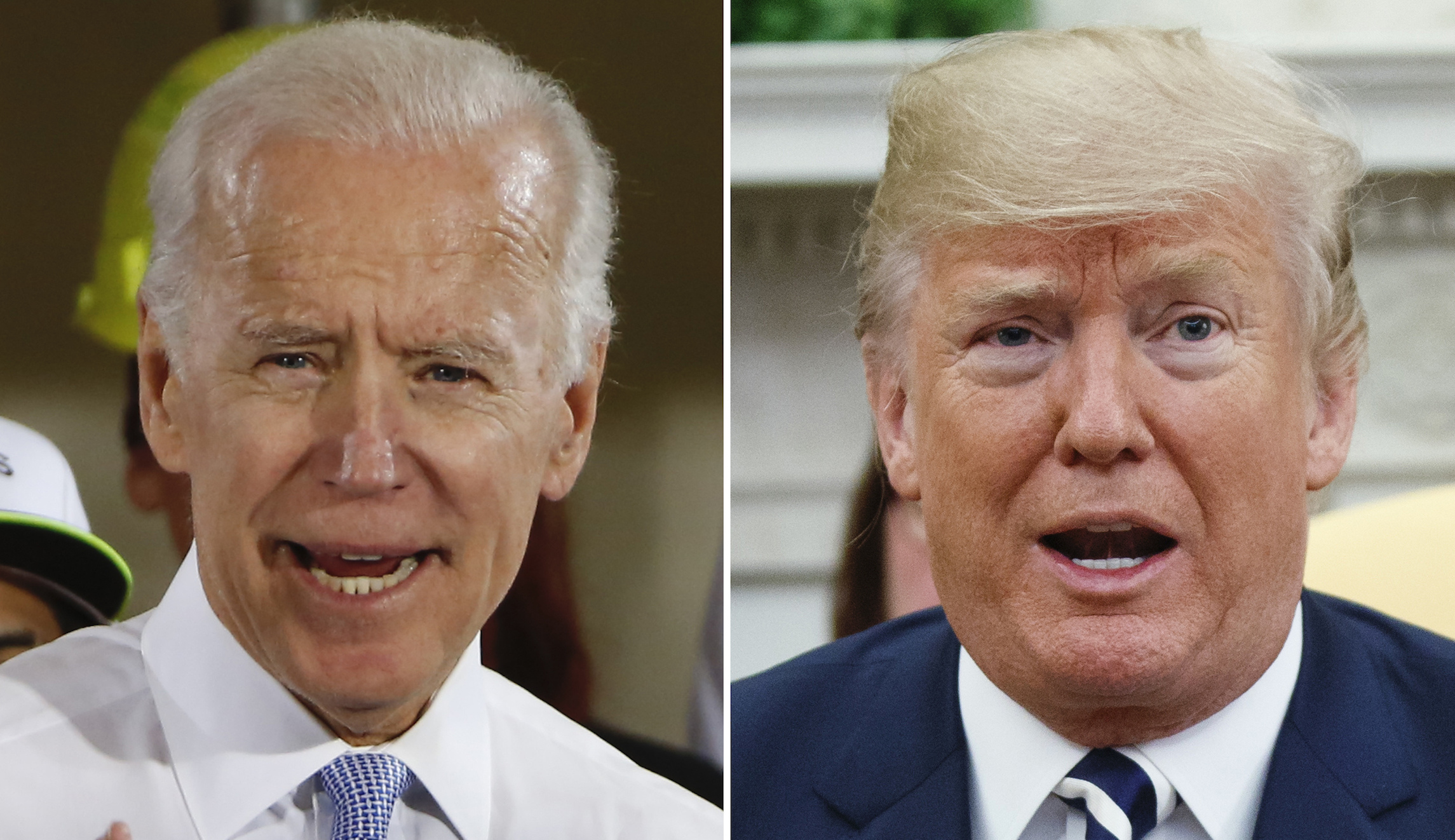
After electing the first black and first female presidential candidates, Democrats have settled on a septuagenarian white man who’s clearly lost a step in the past four years. In a party dominated by diversity requirements and an intersectional hierarchy, the mantle of the party’s future has fallen on Joe Biden, who, if elected, would be older on his Inauguration Day than Ronald Reagan, our oldest president ever, was on his last day in office.
And by every measure, Biden will win come November for two simple reasons: Voters dislike and distrust him significantly less than they did Hillary Clinton. Furthermore, it seems clear that amid a pandemic and economic fallout that’s put the president’s persona on center stage, they revile President Trump even more than they hated Clinton.
Recommended Stories


Trump beat Clinton because, contrary to the media narrative obsessed with Trump, the 2016 election became a referendum on Clinton. A month before Election Day, the Pew Research Center found that just 41% of Clinton supporters aligned to vote against Trump. By contrast, the majority of Trump supporters reported aligning as such to vote against Clinton.
This magnitude of negative partisanship was unprecedented for a presidential election featuring no incumbent candidate. Prior to this year, the last nonincumbent candidate who stirred up as much negative partisanship as either Clinton or Trump in 2016 was George H.W. Bush. Forty-two percent of Michael Dukakis supporters aligned as such to vote against Bush, who went on to win 40 states and then lost in the oddity that was the 1992 election. With the exception of Bush, no nonincumbent candidate from 1988 until 2016 had more than 33% of his supporters aligned as such to vote against his opponent.
As the incumbent, it’s expected that Trump would incite slightly greater levels of negative partisanship. But Trump’s numbers are simply unprecedented right now. A staggering 67% of Biden supporters report aligning as such to vote against Trump — as opposed to the 24% of Trump supporters doing so to vote against Biden. Even in the middle of the Iraq war, 60% of John Kerry supporters aligned as such to vote against George W. Bush, and that figure was previously considered a historical anomaly. No other incumbent from 1992 until 2016 incited more than 54% of his opponent’s voters to align as such to vote against the incumbent.
And the negative partisanship against Trump isn’t just coming from young folks who rarely materialize on Election Day. Although Gen Z and millennial voters post the highest rates of supporting Biden to oppose Trump, the overwhelming majority of middle-aged folks and seniors report doing so as well.
And it’s not just that Trump inspires more enthusiasm from his own base. It’s that they think Biden would be a more acceptable president than Biden supporters believe Trump would be. Whereas 3 in 5 of Trump supporters say Biden would be a terrible president, more than three-quarters of Biden supporters say Trump is a terrible president.
We already knew that a large portion of Biden’s dominance in the polls came from the simple fact that people really just hated Clinton. As I wrote last week:
But fairly or unfairly, Trump himself has become a more reviled figure. Trump’s favorability has remained the same, but it’s now a greater drag on his polling because unlike in February, when voters could choose to ignore his personal foibles and focus on a booming economy and record personal and financial confidence, Trump’s personality is the story. His ego and endless need for sycophancy were sideshows when ordinary folks were benefiting from his administration, but now, they’re driving factors of how we’re responding to the coronavirus and supply and demand shocks.
The Trump campaign is on life support, and clearly, the president knows this. But Trump doesn’t need another staffing shake-up or better ad buys. The problem is him, and unless he can dial back the tweets and tantrums that keep him in the center of every news cycle, Biden will continue to run away with this election.
