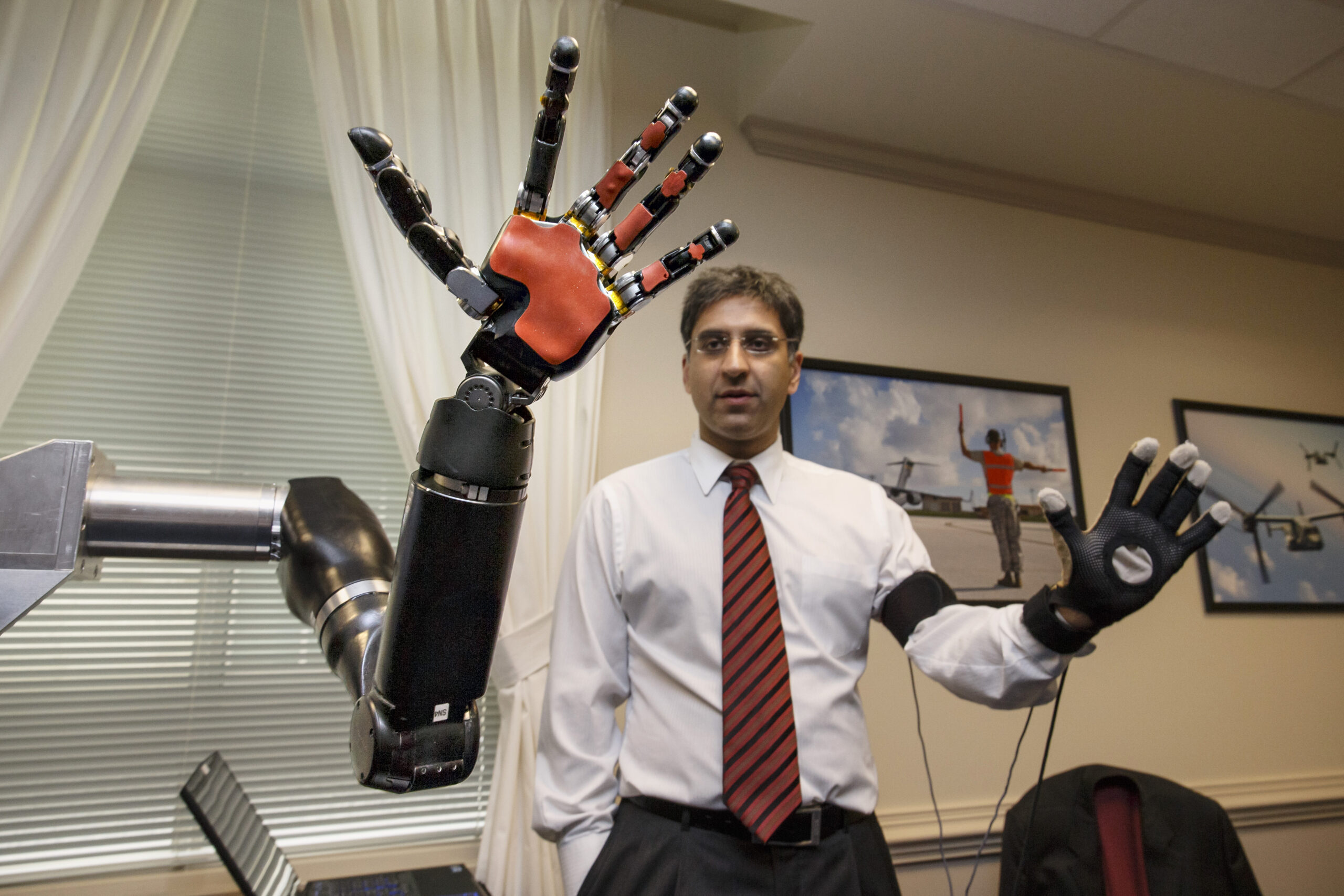
The Pentagon’s lead researcher sang the praises of brain implants on Thursday, saying cyborg technology holds promise for wounded veterans.
Arati Prabhakar, head of the Defense Advanced Research Projects Agency, told an audience that her department had conducted research on the technology and brain function, but did not go into specifics about what that research entailed.
“We have a robust portfolio of neurotechnology,” Prabhakar said. “In the spectrum of work that we’re doing at DARPA, one area that I think is going to be very critical to the future of national security is in the future of biological technologies.
“As biology is intersecting with physical science and engineering and with information technology,” she said, “what’s happening in research there is so vibrant and so interesting and some of those research areas. … they’re going to create huge technological surprises that do matter for national security.”
She said DARPA has created a biological technologies office, whose work includes synthetic biology to “nip infectious disease in the bud.”
“One major area of investment is neurotechnology. The challenges that our wounded warriors face coming back from theater was a major inspiration for our neurotechnology portfolio.”
“Some of that work for example was about revolutionizing prosthetics, and creating a much more agile, adept prosthetic arm, but also understanding signaling from the motor cortex. What are the motor signals that I’m sending to move my arm, and can we pick those signals up and in fact translate those codes into motions for this prosthetic arm.”
One day, Prabhakar promised, humans would jump at the chance to use the technology. “As that mystery of the brain gets unravelled, the power of what we’re going to be able to do to restore function, and in the future also to enhance function, I think that we as human beings will not be able to resist what it’s going to do for us,” she concluded.
She also responded to an allegation made by a journalist, who reported last month that sources had told her the Pentagon implanted some returning wounded soldiers with “chips inside the tissue of the brain.”
“We’re not actually planting chips in soldiers’ brains,” Prabhakar said.
