

The New York Times Editorial Board recently published a disingenuous lecture directed at Republicans on the need to pass so-called “clean spending bills” without policy riders attached to them. In the recent past, unrelated ideological riders have jeopardized “must-pass” spending bills from moving forward and driven our great nation to the brink of a shutdown, so the Editorial Board claims.
The Times goes on to list three of the supposedly worst examples of partisan riders to legislation that allegedly jeopardized the success of the overall bill.
Recommended Stories


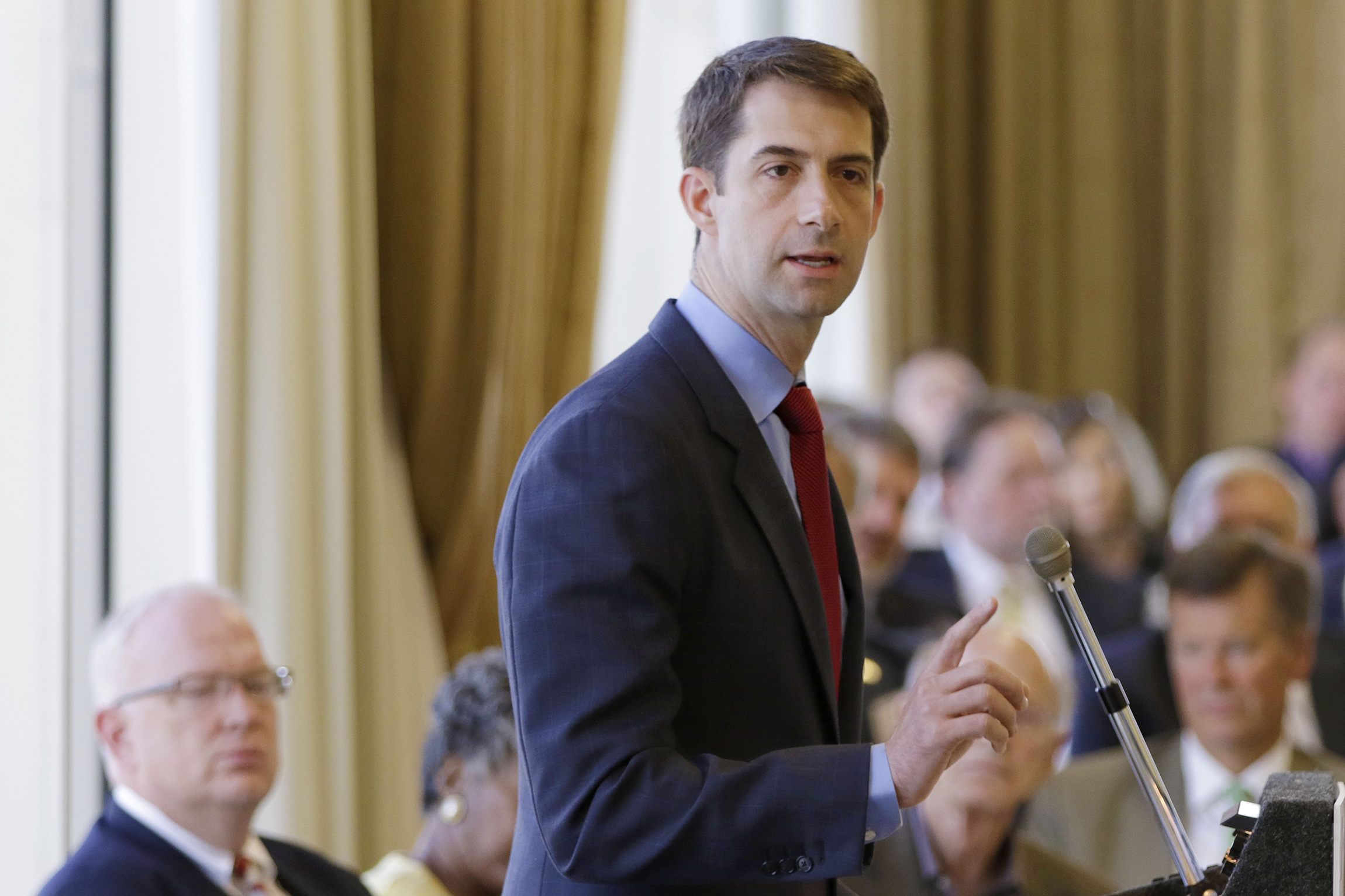
One example was an amendment offered by Sen. Tom Cotton, R-Ark., to the energy and water appropriations bill that would block the U.S. government from purchasing heavy water used in Iran’s nuclear facilities. In less politically-polarized times the amendment would hardly be considered controversial, considering that Iran has largely been prevented from accessing U.S. markets for decades. Further, the amendment was clearly germane to the legislation at hand.
In another case, the Times takes issue with an amendment offered to a transportation bill in the Senate that would bar the Department of Transportation from reinstating a safety-related rule unless the administration can prove statistically that the rule does, in fact, improve safety. Again, hardly controversial and clearly germane to the legislation under consideration.
Finally, the New York Times takes issue with a rider offered to an agriculture and food spending bill in the House Appropriations Committee that would prevent the Federal Drug Administration from taking E-cigarettes off the market and essentially subject them to the same scrutiny from the agency as other tobacco products.
Does the New York Times genuinely believe these represent — in the Editorial Board’s own words — “dangerous policy” that risks taking the federal government to the brink of a government shutdown?
Notably absent from the editorial was any mention of de-facto policy riders written into must-pass spending bills by Democrats, at the direction of the White House, with threat of a veto from the president if not included.
Take for example the spending battle on Capitol Hill at the end of 2014, shortly after President Obama announced his plans to unconstitutionally expand the Deferred Action for Childhood Arrivals program via executive action granting amnesty to millions of individuals. Conservatives on Capitol Hill fought to find a path forward to fully fund the U.S. government, while freezing funding specifically directed to implementing the president’s partisan, unconstitutional policy agenda.
So began the narrative from the White House that Republicans were holding the government hostage and willing to bring it to a shutdown over an ideological dispute. Missing from the media coverage and talking head analysis was that Republicans were willing to fully fund all aspects of government operations and merely deny funding to the unconstitutional pet project of the president.
To use the New York Times’ own words, that sounds like a “loading up a vital spending bill meant to keep the government running with dangerous [policy] aimed at satisfying ideological causes and benefiting special interests.”
Surely, the president cares more about ensuring that the government is funded, senior citizens receive their benefits, our military men and women are paid for their service and our national parks remain open than he does about pet policy projects like expanding DACA.
On the other hand, when dealing with a hostile and resolute White House only willing to consider one party’s concerns, Congress is, at times, forced to use must-pass vehicles to enact necessary policy changes. The reality is that a stand-alone bill to halt funding for the president’s executive amnesty would be subject to a swift veto from the president. Congressional Republicans have come to understand that their last, best hope of blocking bad policy from the White House is through spending bills.
It’s also important to note that Democrats are well-acquainted with tacking loosely-related policy riders to must-pass pieces of legislation. Look no further than Senate Democrats — and some Senate Republicans — trying to force reauthorization of the controversial Export-Import Bank by attaching it to the must-pass Highway Trust Fund bill late last year.
Let’s also remember that more often than not our elected leadership uses the legislative calendar to manufacture crises for the American people in order to force members to vote for unpopular legislation. Stoking fears of a potential shutdown is a strong motivational tool to get members on board with legislation that they don’t want to support. Both parties are guilty of this. Unfortunately, too often the media doesn’t ask the simple question: Why did elected leaders wait until the 11th hour to address government funding we’ve known would expire for months, if not years?
Rep. Mark Meadows represents North Carolina’s 11th District and is a founding member of the House Freedom Caucus. Thinking of submitting an op-ed to the Washington Examiner? Be sure to read our guidelines on submissions.
