Biden vs. Sanders could be final debate of 2020

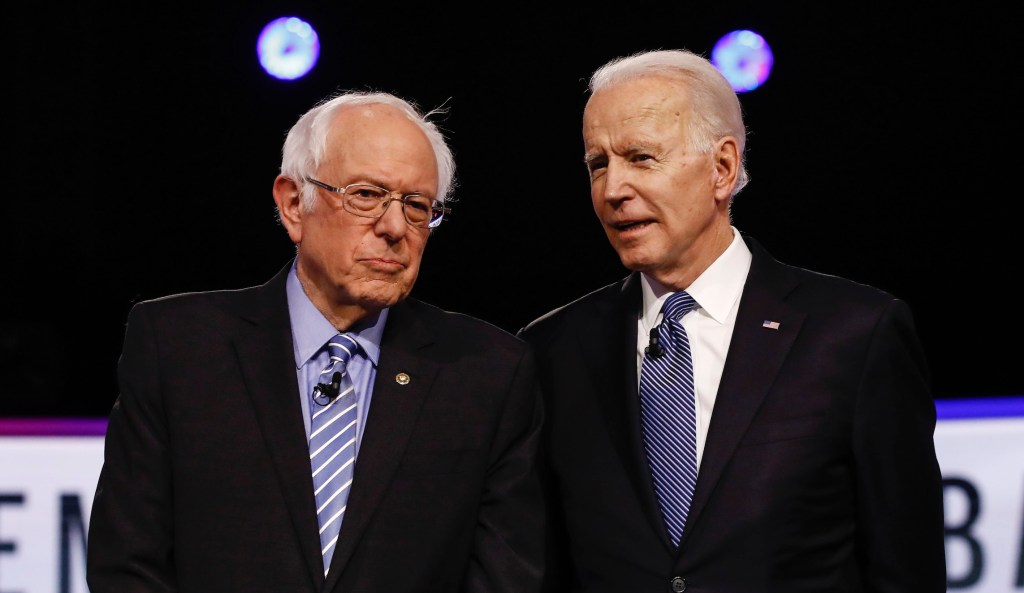
Joe Biden and Bernie Sanders will clash in a head-to-head matchup for the first time this weekend, but the debate could be the last of the 2020 Democratic primary election cycle.

Biden and Sanders met for the Democratic primary’s 11th debate on Sunday in Washington, D.C., an event moved from Phoenix to a CNN studio without a live audience over coronavirus concerns.

The debate was temporarily in doubt as results from last week’s round of voting rolled in, and the conjecture will likely arise again after the March 17 series, when Biden is expected to win big in Arizona, Florida, Illinois, and Ohio.

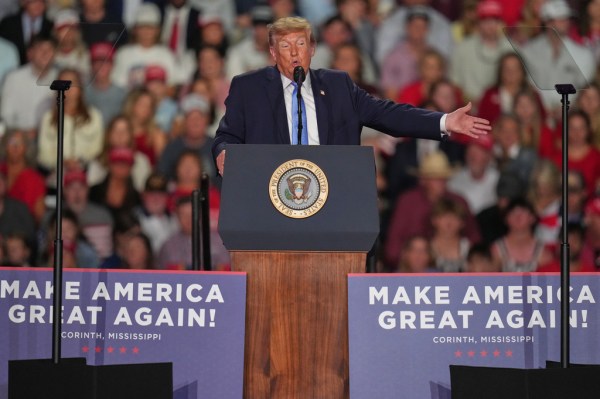
Assuming Biden is the Democratic nominee, he’s set to face off against President Trump in three general election debates this fall. Vice President Mike Pence is also scheduled to debate his Democratic rival, once selected by the party’s nominee.

Presidential debates have been held every four years, beginning in 1976. But there’s no law saying presidential candidates have to debate, and Trump has cast doubt on whether he would participate.

Heading into the general election, Trump has already voiced concerns with the Presidential Debates Commission, describing the nonprofit bipartisan body that has organized the forums since 1988 as being “stacked with Trump Haters & Never Trumpers.” His attack last December was in response to a New York Times report suggesting the White House incumbent would skip the events. The president denied the article.

“As President, the debates are up to me, and there are many options, including doing them directly & avoiding the nasty politics of this very biased Commission,” Trump tweeted, adding he would “make a decision at an appropriate time.”

Northeastern University’s Costas Panagopoulos said it was “doubtful” Sunday’s debate would be the final one of the year.

“Trump may not want to debate the Democratic nominee, but there will be considerable pressure to do so. It’s risky for Trump, as it is for other candidates, if his performance is lackluster, but so is the perception of being too cowardly to debate. Both can hurt,” he told the Washington Examiner.

But Panagopoulos pointed to historical precedents of candidates boycotting the forums, including Richard Nixon, who refused to take part in 1968 and 1972 after his dismal performance against John F. Kennedy in 1960. And even in 1980, it was an open question into late into the general election whether Democratic President Jimmy Carter would face off against Republican nominee Ronald Reagan. The pair debated once, a week before Election Day, an event that turned the tide decisively in favor of Reagan, who won in a landslide.

“Debates don’t typically shift preferences by much, but they can be consequential in very close races, which 2020 is likely to be,” Panagopoulos added.

Sanders, the Vermont senator, underperformed in all but one of the six states where Democrats on March 10 weighed in on their party’s contest, narrowing his path to securing the nomination. But he decided to carry on so he could debate Biden in a one-on-one setting.

Plans for the 12th debate, which has been scheduled for April since December 2018, are still in the works, according to the Democratic National Committee, which has been convening the nationally televised affairs.

Yet between now and April, Sanders’s road to the White House becomes trickier, with Democrats in Arizona, Florida, Ohio, and Illinois going to the polls on March 17. Sanders lost all four states in 2016 to then-Democratic rival Hillary Clinton, and public opinion surveys suggest history will repeat itself next week when they decide how to allocate their combined 577 pledged delegates.

The commission has already announced that the University of Notre Dame, the University of Michigan, and Belmont University will hold the general election debates between Sept. 29 and Oct. 22.

Trump missed a January 2016 primary debate hosted by Fox News over complaints regarding then-network personality Megyn Kelly. He’s also still upset with the commission concerning its handling of the first presidential debate against Clinton that September because of a defective microphone.

Related Content