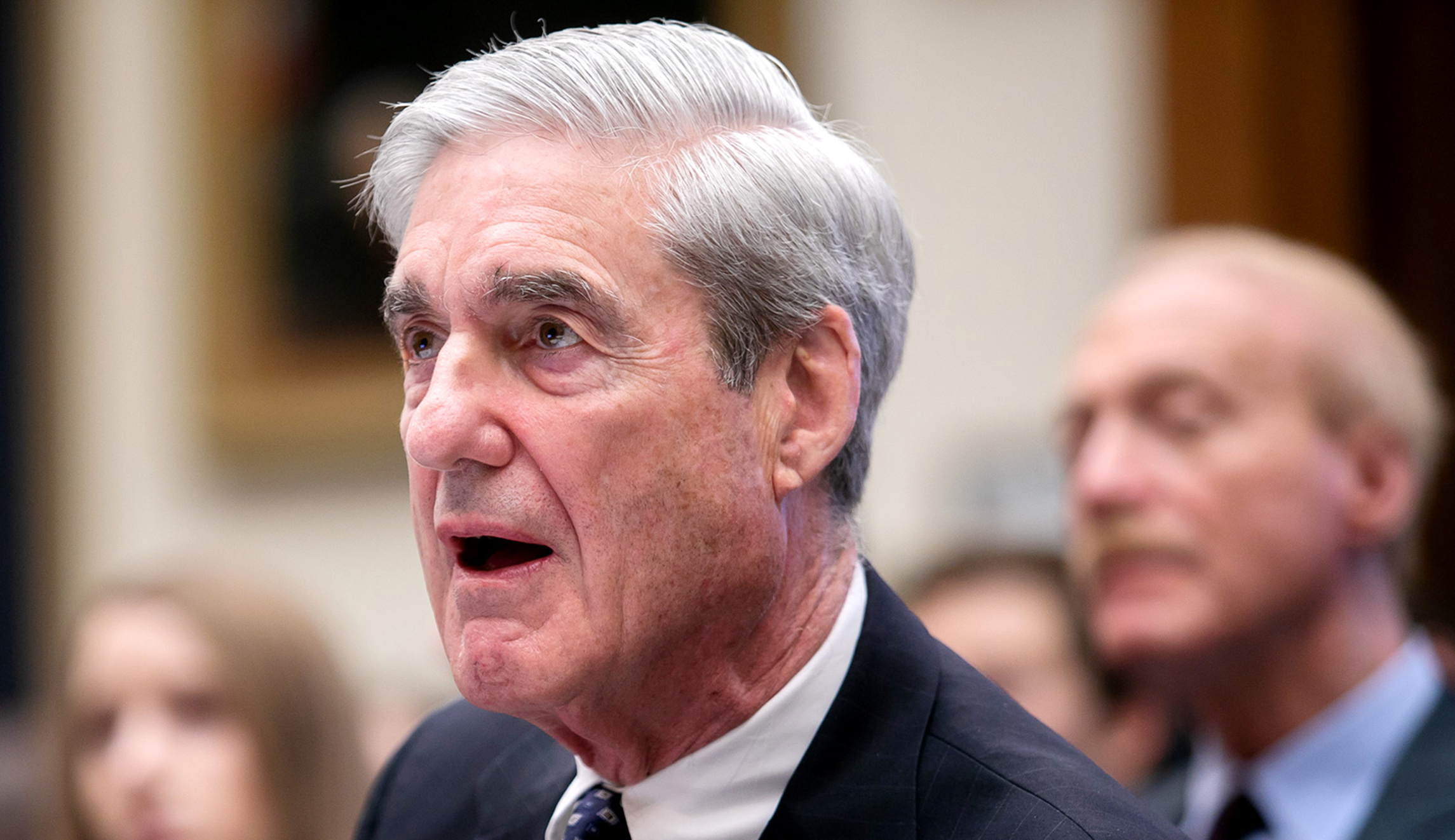
Robert Mueller said he reviewed documents related to the origins of the Trump-Russia counterintelligence investigation “on occasion” during the course of his special counsel inquiry.
Rep. Elise Stefanik, a Republican from New York, pressed Mueller on this issue and the former special counsel acknowledged that he reviewed at least some of the documents which helped justify the launch of the DOJ and FBI counterintelligence inquiry into any connections between the Kremlin and the Trump campaign in the summer of 2016, but he declined to provide further details about which specific information he examined.
During a House Intelligence Committee hearing Wednesday afternoon, Stefanik asked Mueller if he had been given access to all the relevant counterintelligence materials, and Mueller replied, “I can’t get into that investigative … what we collected and what we’re doing with investigation materials.”
Stefanik then questioned if there had ever been any limitations on his access to this counterintelligence information, but Mueller demurred, calling the question overly broad.
Stefanik also pushed Mueller on whether any members of his team traveled overseas as part of the investigation and asked which countries they visited and whether they met with any foreign governments or foreign individuals. Mueller confirmed overseas travel but did not answer further, saying “I can’t answer that” and “that’s out of our bandywick.”
The FBI says it began its counterintelligence investigation into the Trump campaign, code-named Crossfire Hurricane, in July 2016. It was launched after Australian diplomat Alexander Downer informed the U.S. government that former Trump campaign adviser George Papadopoulos had told him that Russia had damaging information about Hillary Clinton, Trump’s Democratic rival in the 2016 election.
Stefanik grilled Mueller, whose work began in May 2017, about British ex-spy Christopher Steele’s salacious and unverified dossier, which was used by the DOJ and FBI in Foreign Intelligence Surveillance Act applications to obtain surveillance warrants against Trump campaign associate Carter Page. Steele was working for opposition research firm Fusion GPS which had been hired by the Clinton campaign through the Perkins Coie law firm. Steele’s Democratic benefactors were never revealed to the FISA Court.
Stefanik asked whether Mueller had read Steele’s dossier, undertaken any efforts to investigate its claims or validate its allegations, tried to interview any of Steele’s sources or subsources, whether it was ever considered that Steele was being fed Russian disinformation, and whether Mueller had passed these investigative tasks onto any other agencies.
Mueller declined to answer any of those questions.
Stefanik closed by saying she hoped those questions would be answered by DOJ Inspector General Michael Horowitz, who is investigating allegations of possible FISA abuse by the DOJ and FBI and whose team reportedly interviewed Steele back in June.
“Thank you for answering on the record,” Stefanik told Mueller. “These are important questions for the American public and we are hopeful that the [Inspector General] is able to answer them.”
Horowitz’s report is expected to be released sometime in the fall.
