US worries about new conflict in Iraq

President Trump’s team is worried that a referendum to form a new state out of northern Iraq could lead to a conflict that could complicate U.S. alliances and partnerships in the region.

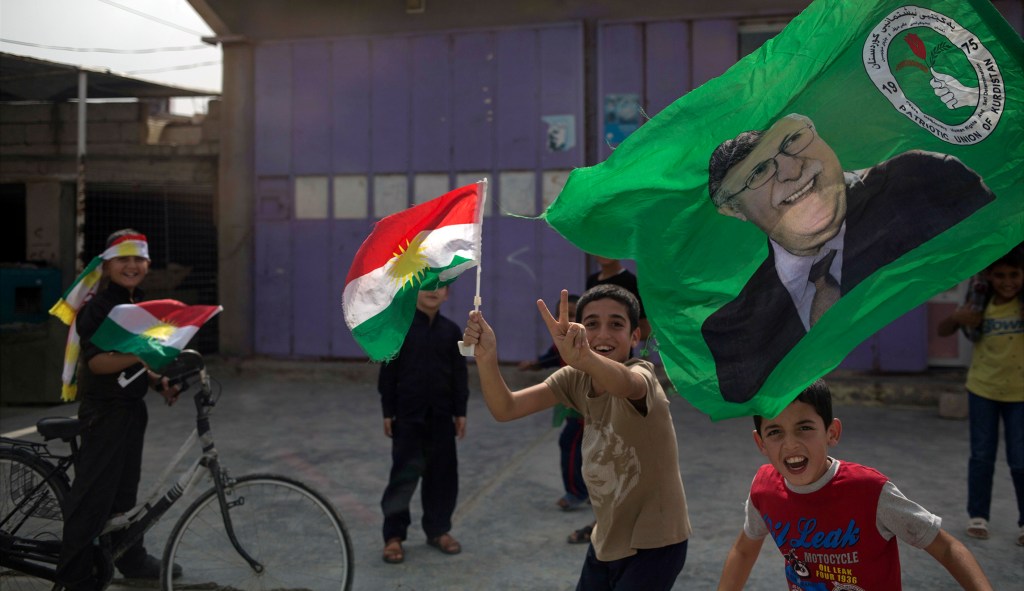
Iraqi Kurds, who dominate a semi-autonomous region in northern Iraq and have played a key role in the fight against the Islamic State, voted overwhelmingly for independence on Monday. That vote won support from some members of Congress, but Trump’s team opposed the referendum. And the State Department worries it could lead to a new conflict over the fate of the region.

“We urge calm and an end to vocal recriminations and threats of reciprocal actions,” Secretary of State Rex Tillerson said in a Friday statement after the vote. “We urge Iraqi Kurdish authorities to respect the constitutionally-mandated role of the central government and we call upon the central government to reject threats or even allusion to possible use of force. The United States asks all parties, including Iraq’s neighbors, to reject unilateral actions and the use of force.”

Tillerson suggested that violence in the region could lead to a return of ISIS, which was expelled from the country by a U.S.-led coalition. “The fight against ISIS/Daesh is not over, and extremist groups are seeking to exploit instability and discord,” he said, using alternative names for the terrorist group. “We urge our Iraqi partners to remain focused on defeating ISIS/Daesh.”

That focus on ISIS kept a lid on various rivalries, but it also helped build the pressure that produced the current crisis. After the collapse of the Iraqi national army, the United States partnered with the Kurds to liberate territory that had been captured by ISIS. This process left the Kurds in control of oil-rich parts of Iraq and diminished the prestige of the central government in Baghdad, which had failed to protect the country.

It also alarmed Turkey, a key NATO ally whose leader has charted an authoritarian course in recent years. Turkish President Recep Tayyip Erdogan worries that the growing strength of the Iraqi Kurds could inspire unrest among Kurds in Turkey, who have launched separatist insurgencies against the Turkish government for decades. Iran has similar worries and has conducted military exercises in the area, according to the Associated Press.

Erdogan even hinted that he might partner with Russia to prevent the Kurds from succeeding in their push for independence. “We have to prevent steps that could cause further, greater mistakes by Kurdish regional authorities,” Erdogan said Thursday.

Russian President Vladimir Putin, who traveled to Turkey to “synchronize” a policy likely to harm U.S. interests in Syria, concurred. “We have agreed to continue closely working together through our foreign ministries, our defense ministries, and our intelligence services on the Syrian conflict and other regional issues,” Putin said at the joint press conference.

Tillerson’s team has sounded an admittedly “cautious” note when considering how to help resolve tensions.

“We want to avoid anything that would contribute to any additional instability,” State Department spokeswoman Heather Nauert told reporters Thursday. “Look, we’re friends with the Kurds; we are friends with the central government of Iraq… We want to have a stable, unified Iraq. We want that more than anything.”

Related Content