

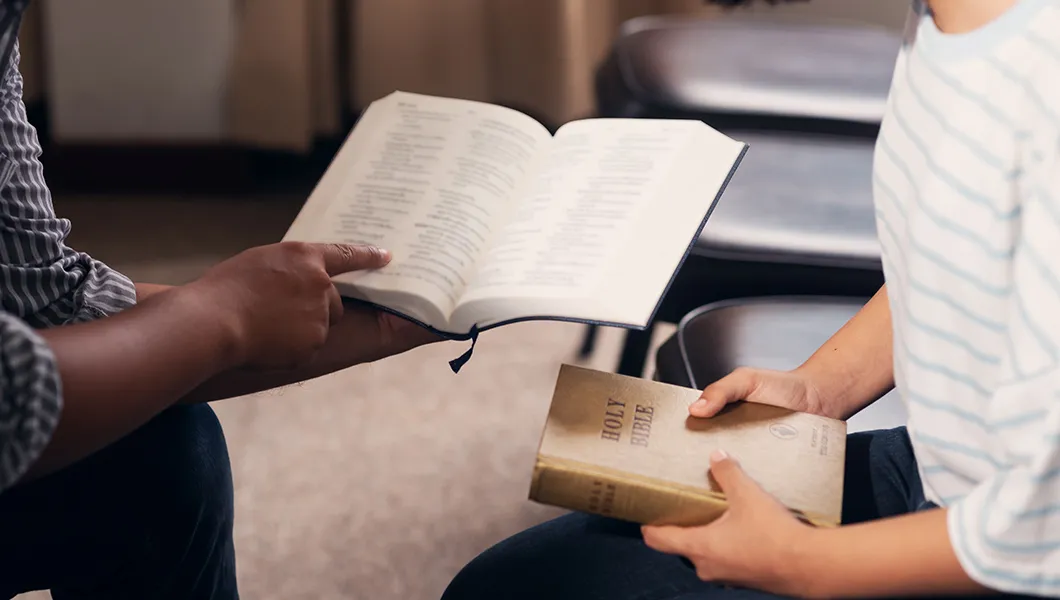
On Twitter Monday, President Trump praised the idea of public schools offering Bible literacy classes. But before Christians jump to celebrate Bible literacy in public education, they should pause to consider the complexities and problems involved.
Numerous states introducing Bible Literacy classes, giving students the option of studying the Bible. Starting to make a turn back? Great!
Recommended Stories
— Donald J. Trump (@realDonaldTrump) January 28, 2019


Iowa’s bill, House File 2031, does not require that high school kids must take a Bible class (that’s a relief) but it would simply, according to the Des Moines Register, “direct the state Department of Education to prepare material and teacher training for a high school elective course that focuses on the Hebrew Scriptures and the Bible’s New Testament. It would be a social studies class.” Dean Fisher, the state representative who introduced the bill with other Republicans, said, “Basically, I want to give students the opportunity to study the Bible from the perspective of its impact on history and culture.”
Even though the bill only proposes this as an elective and not a requirement, it’s not the government’s place to do this, for many reasons. While many liberals might argue it’s a violation of the separation of church and state and the much-loved Establishment Clause, I don’t think that’s a strong enough argument. Teaching a class on the Bible is no more the establishment of religion than teaching kids P.E. is raising a generation of Michael Jordans. But it’s still not something the state should be mandating through legislation because the taxpayer-funded public sphere is simply not the right arena.
In some cases, states are making this a district-by-district decision rather than a statewide mandate that schools offer these classes. Given the state of our kids’ history and literacy scores, which lag many other advanced countries, students could use the perspective that comes from understanding one of the most foundational works of Western civilization, responsible for spawning several religions. Whether as a cultural or religious work, the Bible is certainly profound and compelling. Drew Zahn, spokesman for the Christian conservative organization The Family Leader, endorses the Iowa legislation for this reason. He said, “Beyond its literary and cultural significance, which is significant, the Bible is also an essential thread of the American consciousness, and without it, American unity is unraveling.”
That’s true, but the public education system is so flawed, I don’t trust the bureaucratic beast to do the Bible justice. When the Bible is taught as purely an academic or historical exercise, things gets tricky: How will the flood be explained? Seven-day creation? Miracles of Jesus like turning water into wine or raising Lazarus from the dead? To Christians, these are explained in a supernatural context. In a public school, it would be hazardous to teach these as supernatural truths. Even as just literature alone, the Bible is an incredible study and unique and beautiful in its own right — but therein lies the rub.
The way the humanities and the social sciences are presented in public school is already disappointing. Subjective material can be presented in such a variety of ways. Throw in the restraints of Common Core, the social “values” of public education, and couple it with ignorance and lack of training, and it’s hard to see a positive outcome. If anything, I could see this as yet another avenue of mockery, scorn, and misinterpretation — not a book that would be taught and received well.
I’m not alone in this. At The Atlantic, Jonathan Merritt writes:
If parents would like to see classes taught about the Bible regularly, they would do better to home-school or try private school — hence my columns last week in this space on school choice. Otherwise, let the spiritual teaching in a secular environment spread organically, through students, school boards, or districts — not offered as a cultural elective as a result of state legislation.
Nicole Russell (@russell_nm) is a contributor to the Washington Examiner’s Beltway Confidential blog. She is a journalist who previously worked in Republican politics in Minnesota.
