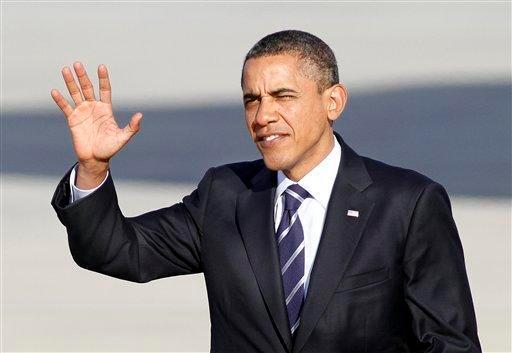
There is no magic formula to driving gas prices down,” President Obama told a Pennsylvania crowd earlier this month. Although he was literally correct that there is no magical concatenation of words involved, there is a formula. It involves either persuading Obama to reverse his opposition to significant expansion of domestic energy production, or replacing him in the Oval Office in November 2012. The same president who once advised Americans to inflate their tires to beat high gas prices, and who recently told a father of 10 that he should cram his family into a hybrid minivan that doesn’t yet exist, has had his boot on the neck of Gulf of Mexico oil production for nearly a year now, to paraphrase his secretary of the interior. Obama’s intervention began with a lie when White House officials falsely represented to the public and to a court that scientists had approved their blanket drilling moratorium after the BP oil spill. The administration then defied a federal court by replacing its original moratorium, which had been struck down, with a substantively identical second moratorium.
One result of this action is that the Obama administration was found in contempt of court. But a further and more consequential result, according to the U.S. Energy Information Administration, is that American offshore oil production as a whole is down 13 percent. The Wall Street Journal reports that, thanks to Obama’s ban on deep-water drilling and his administration’s subsequent slow-walking of permit applications, we are losing out on 375,000 barrels of oil per day. That’s just over 2 percent of American consumption that simply vanished — an amount that is more than enough to affect prices at the pump — and about one-third of the daily production losses because of Libya’s ongoing civil war.