

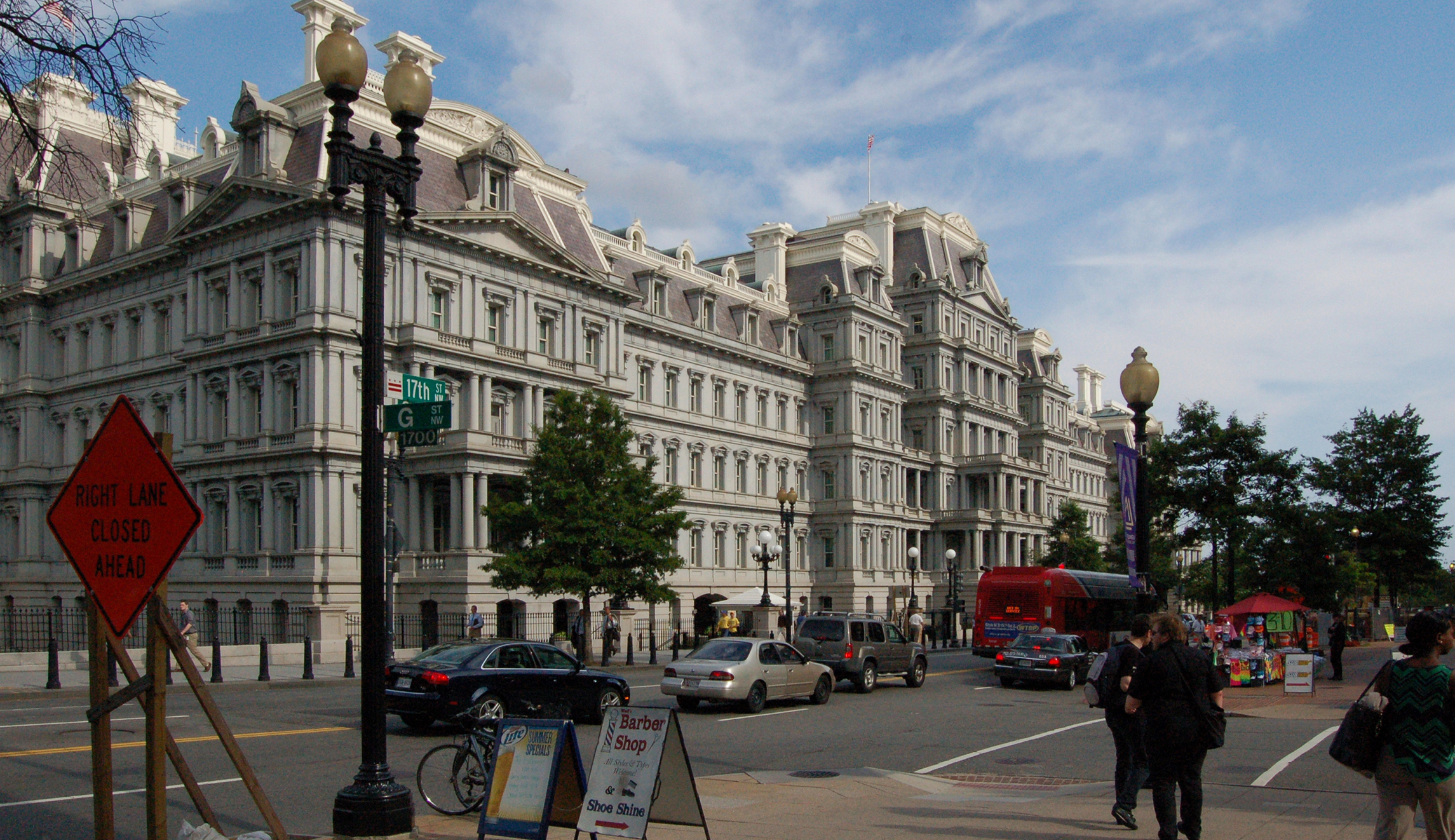
The Millennial Advocacy Council hosted a policy conference on Friday at the White House Eisenhower Building, featuring panels on higher education and workforce development and modernization.
The higher education panel featured state senator Eric Brakey, R-Maine, Rep. Tom Garrett, R-Va., and Cliff Maloney Jr., President of Young Americans for Liberty. The policy-focused discussion centered on the rising national debt, the decline in skills-based training, and the lack of autonomy that teachers have to innovate at the local level.
Stay informed.Stay ahead.
Join Washington Examiner for unlimited access to the news, analysis, and commentary that matter most.
Already a member? Log in
Brakey started the discussion by bringing up the overwhelming student debt problem and the social expectation to attend college and obtain a college degree.
“Our generation is saddled with tremendous amounts of student loan debt,” Brakey said. “So many of the millennials I know have student loans the size of a mortgage without an actual physical asset to show for it.”
Many students are incurring debt because they’ve inherited the belief that they will be unemployable without a traditional college education. As students we are told, “it doesn’t matter how much it costs, it will be worth it … there is a job at the end of the rainbow,” Brakey continued.
“Now, people can come out with a diploma and $100,000 in debt, and they could have made so much more if they had become a plumber,” Brakey added, underscoring the deficit in higher education, failing to provide students with real-world skills.
Garrett agreed with Brakey, calling student debt “the dark cloud that cripples the most creative among us.”
Every year, millennials graduate from four-year universities and colleges with degrees, but not necessarily the skills needed to get a job. Brakey and Garrett concurred that students need to be taught skills for the jobs of today and tomorrow, not the jobs of yesterday.
Garrett raised an important question into the discussion, as well. “Is it a federal issue?”
All three speakers agreed that the more power that can be diverted to state and local governments, the better our students’ education will likely be. As Garrett pointed out, government bureaucracy may inhibit the success of ideas that could change the world.
Cliff Maloney, President of Young Americans for Liberty, added to Garrett’s insight sharing that the climate on campus has become antithetical to the kind of open discourse that used to be the hallmark of higher education.
Maloney added, universities frequently prevent students from expressing opinions on campus that they believe may offend other students and enact restrictive speech policies that deter students from speaking freely. The most common and intrusive of which are so called “free speech zones” that restrict free speech to limited areas on public college campuses where the First Amendment is supposed to apply without discrimination. These codes and practices keep our country’s students from engaging in the very types of rigorous conversations that they need to expand their view of the world.
“We are not looking for an advantage … we want students on campuses throughout the country to hear every ideology,” Maloney said. “The root cause of all of this pushback … are these unconstitutional free speech code.”
Maloney’s organization, YAL, is challenging unconstitutional speech codes to restore the right to speak freely on campus through a national Fight for Free Speech campaign.
“Out of our 900 chapters, over 250 of them are on campuses where there are restrictive free speech codes pushing back on our students,” Maloney said. He continued by sharing “a few stories from the battlefield,” citing cases at Bunker Hill Community College, Arkansas Tech University, and Los Angeles Pierce College.
When it comes to youth issues, Brakey, Garrett, Maloney, and all millennials have a friend in the Trump administration – Secretary of Education Betsy DeVos.
She was quoted earlier this year saying, “We have seen in far too many cases an intolerance toward listening to and hearing from others who have differing perspectives than ours, and I think that’s one of the most valuable parts of a higher education is to dialogue with and meet those who don’t come from the same perspective that you do and to have conversation about that.”
Kelsey Carroll is a sophomore at Indiana University Purdue University – Fort Wayne studying communications and political science. She serves as a Media Ambassador and Chapter President for Young Americans for Liberty.
