

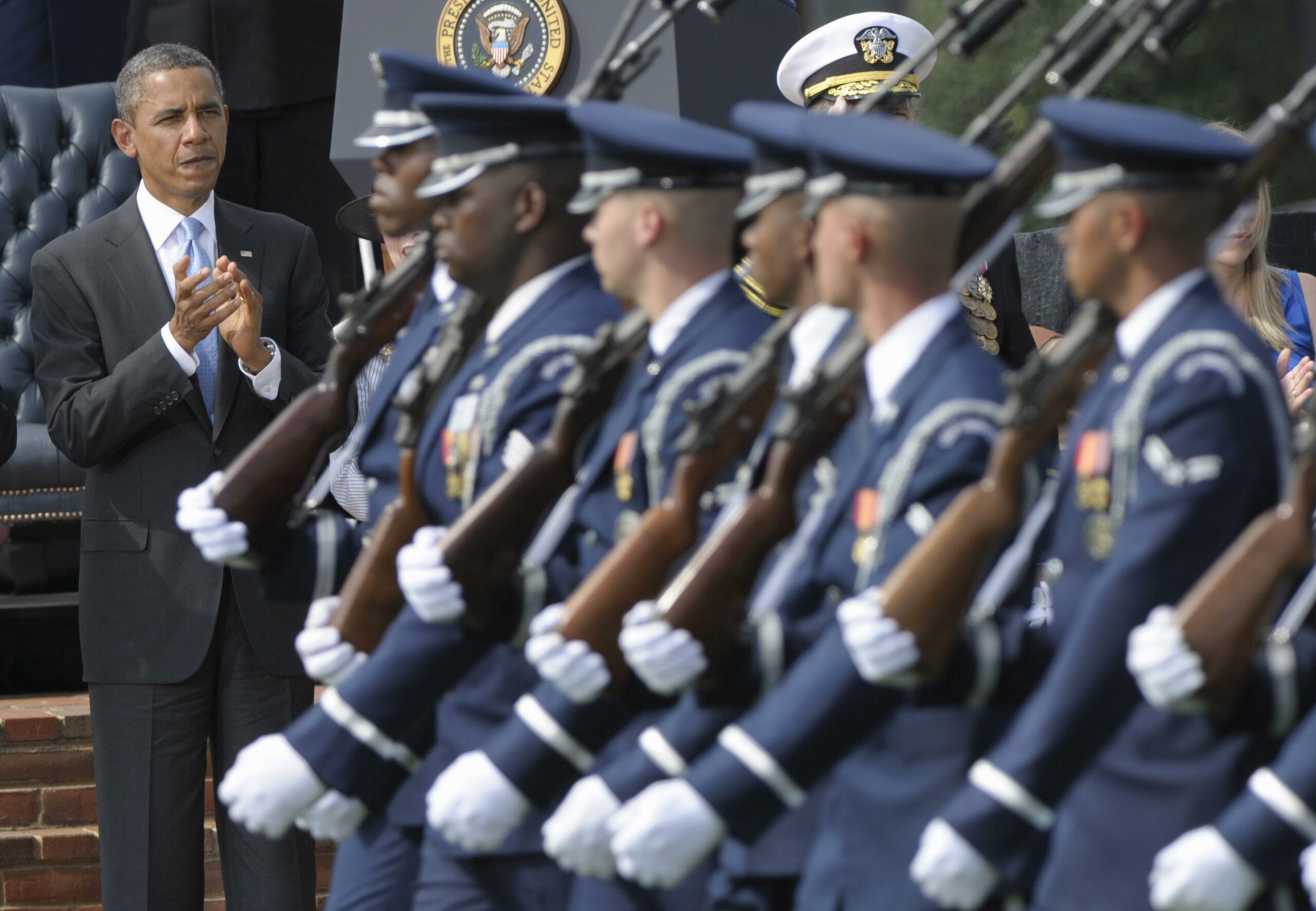
President Obama secured another notch in his commander-in-chief belt with the killing of al Qaeda operative Anwar al-Awlaki last week, but even rare bipartisan praise is unlikely to score Obama much political credit with an American public more focused on kitchen-table issues than a clandestine war on terrorists.
It’s a dramatic shift in public perception for Obama, whose biggest liability upon entering office was his national security bona fides. The question now is less about his qualifications to answer the “3 a.m. phone call,” as an anti-Obama campaign ad once put it, than it is about reassuring Americans who worry constantly about keeping their jobs and making their mortgage payments.
Obama’s national security credentials were bolstered in recent months with the killing of al Qaeda mastermind Osama bin Laden, but that achievement has been largely overshadowed for voters by a stagnant economy and the president’s approval ratings have plummeted to about 40 percent as a result.
If killing bin Laden didn’t boost Obama’s ratings, eliminating a relative unknown like Awlaki probably won’t either even though Awlaki, a U.S. citizen who served as a bridge between al Qaeda and the West, posed a very real threat to the United States.
“It takes the national security issue off the table,” said Charles Walcott, an expert on the presidency at Virginia Tech. “It’s one less thing he can be attacked for. But will it impact his standing with voters? Not enormously.”
The successful mission, carried out by the CIA and special military forces, won Obama praise in one corner — from the Republicans vying to challenge his re-election next year.
“I commend the president, the members of the intelligence community, our service members and our allies for their continued efforts to keep Americans safe,” said GOP presidential candidate Mitt Romney.
In a recent Republican debate, Texas Gov. Rick Perry gave Obama credit for getting bin Laden even while criticizing the president’s foreign policy.
For voters, though, international developments short of major terrorist attacks are unlikely to get much attention, Walcott said.
Another dynamic blunting any public bump for Obama is his reluctance to discuss the details of the successful military operations. By demurring, Obama avoids the appearance of celebrating a killing, particularly of the man believed to be the first U.S. citizen tracked down and killed under a presidential order. But it also robs the politician of a chance to brandish his national security bona fides publicly.
But even if voters don’t take Obama’s military accomplishments into consideration next year, analysts say the president could still benefit since his successes are likely to blunt any Republican criticisms of his ability to handle national security issues.
Republicans have long pounded Democrats for being soft on national security, arguing that a liberal agenda would amount to playing defense rather than offense against a burgeoning and increasingly global terrorist network.
“Will those attacks be as credible? Probably not,” said University of Georgia political scientist Charles Bullock. “Democratic lawmakers can point to the achievements of the White House and make a substantial case against those claims.”
