

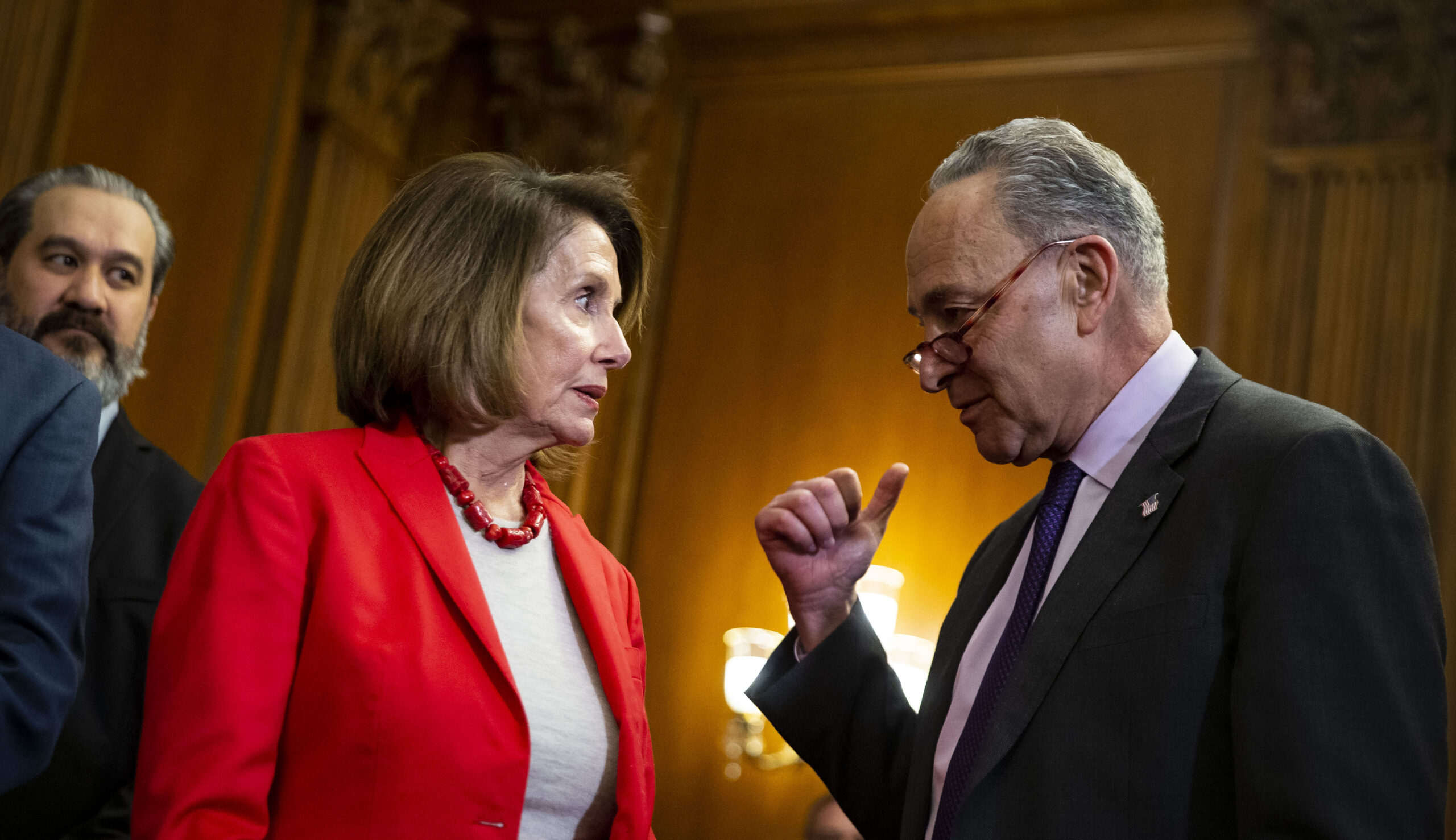
In an effort to close the so-called gender wage gap, House Speaker Nancy Pelosi and her Democratic colleagues reintroduced the Paycheck Fairness Act. It is severely flawed, not only on its premise. While it might seem like a boon particularly for women, it likely won’t help that much at all. If passed, it would continue to perpetuate myths about how a free-market economy works and how men and women are treated in the workplace when it comes to compensation.
The proposed bill, which Democrats have tried to pass for some two decades, would add protections to the Equal Pay Act of 1963 and the Fair Labor Standards Act, and would try to close the so-called gender wage gap. In a speech trumpeting the bill she co-sponsored with Pelosi and more than 230 other Democrats, Rep. Alexandria Ocasio-Cortez, D-N.Y., said she appreciates a couple important aspects of the bill.
Recommended Stories


Rep. Alexandria Ocasio-Cortez on the Paycheck Fairness Act: “It is time that we pay people what they are worth and not how little they are desperate enough to accept.” https://t.co/jytoj12JSE pic.twitter.com/QF51W8TSYj
— ABC News (@ABC) January 31, 2019
Ocasio-Cortez believes the bill will force employers to be more transparent. “We cannot ask people for their salary history and pay people on their salary history anymore. It is time that we pay people what they are worth,” Ocasio-Cortez said. “[The bill] makes it legal and totally permissible to share your salary information at your workplace. That’s incredibly important, for all those people who say the wage gap does not exist and that it’s a myth, they should have no problem proving that.”
The government has no right to tell a private employer they cannot ask for a person’s salary history. Such a restriction is impractical. Salary history is a helpful gauge. Any fair, nuanced employer realizes that salary history is only a piece of the puzzle toward compensation, in addition to several other aspects like skills and education. Because an employer chooses to pay a person based on their salary history doesn’t mean they’re being unfair or discriminatory. Free-market principles mean that the market often dictates what a person is worth: If a worker believes he is worth more, he must prove he is worth more to an employer willing to pay that amount.
Ocasio-Cortez mentioned that the bill would make it legal to share salary information as a way to deter any kind of wage gap from persisting in the workplace. This isn’t a new Democrat tactic. In April 2014, Obama signed an executive order that accomplished this. However, there’s already a federal labor law on the books, the National Labor Relations Act, enacted in 1935, which says employees in the private sector have the right to engage in “concerted activities for the purpose of collective bargaining or other mutual aid or protection.” Essentially, employees are already free to talk about their salaries at work.
This entire reintroduced bill is based on the false premise of a gender wage gap in the first place. When compared side by side, women and men basically make the same amount of money for the same job, provided they perform it well, have the same education, and work the same number of hours. The reason it looks like a gender wage gap exists is very few women do this. Women tend to be drawn to jobs that are in lower demand and thus are compensated less—and on top of it, they work fewer hours because they are often parenting. Men tend to earn more because they work more hours in more competitive, dangerous jobs, so they make more.
Republicans typically refuse to support these types of bills, not because they are discriminating against women, but because they want to protect employers from unnecessary lawsuits. It’s unfortunate that someone like Ocasio-Cortez, who has quickly built such a prominent platform, continues to spout myths about wage gaps to garner support for a bill that’s entirely unnecessary.
Nicole Russell (@russell_nm) is a contributor to the Washington Examiner’s Beltway Confidential blog. She is a journalist who previously worked in Republican politics in Minnesota.
