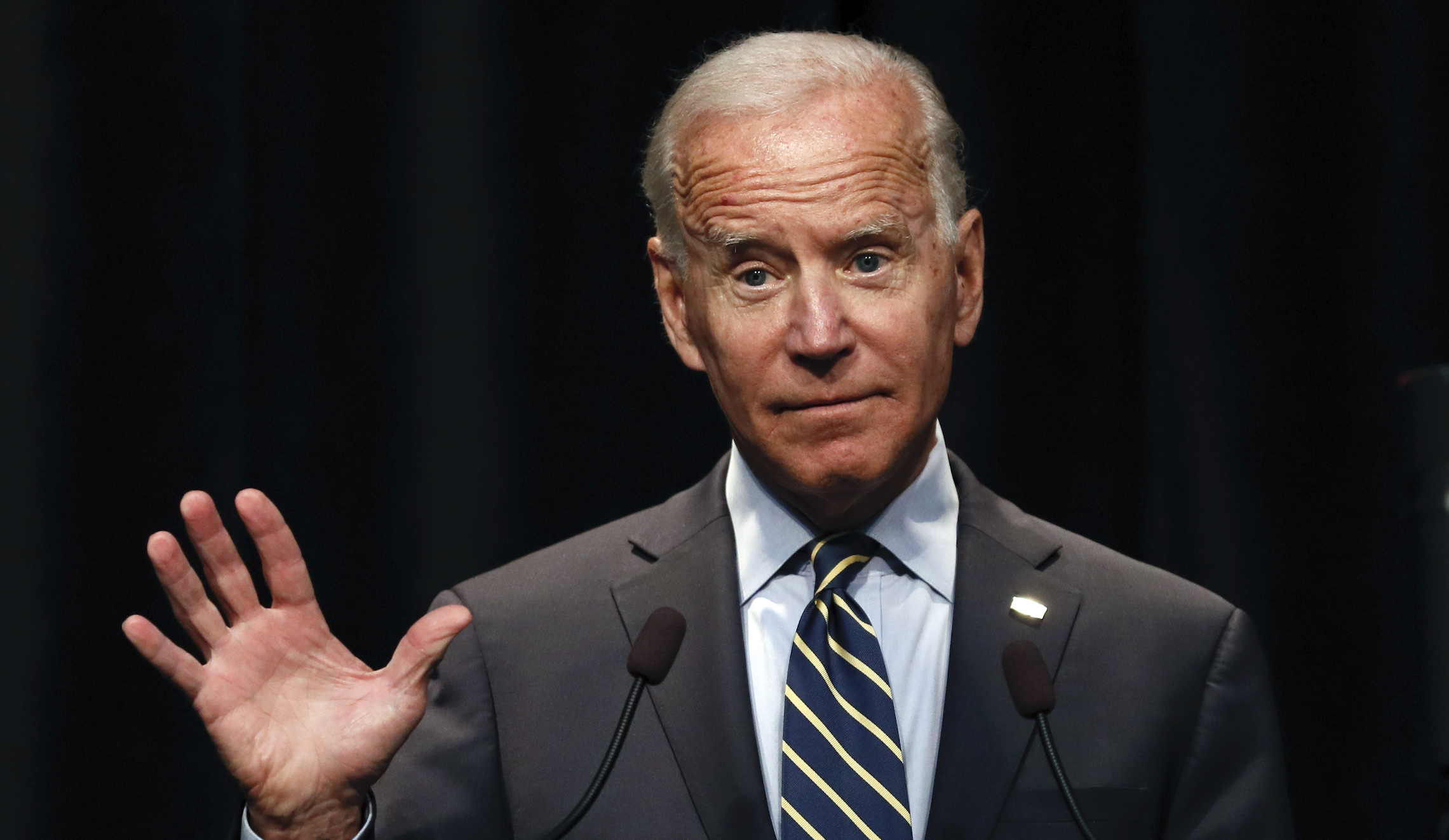
Joe Biden’s main argument to the Democratic primary electorate is his “electability” against President Trump in fall 2020. But that strategy carries risks, including sending a message to voters the former vice president is taking them for granted.
The electability approach oozes through from Biden, 76, his surrogates, and the campaign’s media strategy.
Recommended Stories
“The stakes are higher, the threat more serious. We have to beat Donald Trump. And all the polls agree Joe Biden is the best Democrat to do the job,” says Biden’s first television spot, rolled out this week via a six-figure ad buy in Iowa.
Biden’s wife, former second lady Jill Biden, was even more overt in touting the candidate’s electability earlier this week, urging attendees of a New Hampshire event to “swallow” any policy disagreements they have with him for the sake of defeating Trump.
“I know that not all of you are committed to my husband, and I respect that, but I want you to think about your candidate, his or her electability, and who’s going to win this race,” she said Monday in support of Joe Biden.
The community college professor, 68, who has been married to the former vice president for 42 years, encouraged New Hampshire Democrats to consider the surveys, arguing that public opinion research is hard to “dismiss” if “they’re consistently saying the same thing.”
“Your candidate might be better on, I don’t know, healthcare than Joe is, but you’ve got to look at who’s going to win this election, and maybe you have to swallow a little bit and say, ‘OK, I personally like so and so better, but your bottom line has to be that we have to beat Trump,'” she said.
It’s a classic front-runner’s strategy, reflecting Biden’s lead in the polls. The RealClearPolitics polling average on Thursday had Biden on top of the crowded primary field at 28.8%, with Vermont Sen. Bernie Sanders in second place with 16%.
But Seth Masket, director of the University of Denver’s Center on American Politics, said the approach could dampen enthusiasm among rank-and-file Democratic voters ahead of the first nominating contest in Iowa next February.
“It means if he does win the nomination a fair number of activists within the party will view that as a loss for issues they care about,” the political science professor told the Washington Examiner. “It might be harder to get some groups to turn out that were also not eager to turn out in 2016.”
Jill Biden’s comments were “kind of surprising,” Maskett said, and “almost maybe a tad cynical.”
Democratic strategist Bill Carrick had been skeptical of electability in the past, but said the lead-up to the 2020 election “is very different from the normal pattern” due to the “passionate desire” to oust Trump from office. Additionally, Biden uses it as “a key” to get into his “association with President Obama” and attack “Trump on the Charlottesville images.”
Carrick, however, was adamant Biden wasn’t forgoing liberal Democrats because “the whole definition of progressives and millennials, new and old,” is “complicated.”
The former vice president could also change his strategy without encountering too much criticism, Democratic adviser Bob Mulholland told the Washington Examiner.
“If Joe doesn’t win Iowa, that argument is somewhat cut in half,” he said. “Like on a freeway, you’ve got to decide what lane you’re in, because you don’t want to hit anybody or get behind somebody. And Biden’s been around long enough that he understands how the weather changes, not only in Iowa but with political candidacies.”
Biden’s opposition to policies such as “Medicare for All”, and his defense of the Obama’s administration deportation of 3 million people, have rankled many liberals and grassroots activists. Yet their issues with his candidacy haven’t impeded his performance in the polls.
