Teachers unions keep losing

When the Democratic National Committee elected Tom Perez as its new chair on Saturday, it was yet another in a long string of losses for teachers unions. Although the two largest teachers unions in the country did not make an institutional endorsement, the presidents of both unions made a personal endorsement of Rep. Keith Ellison, D-Minn.

Mike Antonucci of the Education Intelligence Agency chronicled the history of teachers union losses, dating back to October 2007 when the American Federation of Teachers endorsed Hillary Clinton for the Democratic presidential nomination. Clinton lost.

The American Federation of Teachers and the National Education Association endorsed Clinton again in the 2016 election cycle. Although she won the primary this time, it was way closer than it should have been. Oh, and she lost the general election.

Then came the union failure to get a third and decisive Republican defector to vote against Betsy DeVos for secretary of education. DeVos won.

Aside from those political losses, I would add a few big-picture ways teachers unions keep losing.

2017 is shaping up to be a banner year for anti-union legislation, with Kentucky and Missouri becoming the 27th and 28th right-to-work states in January, on the heels of West Virginia in 2016. That’s thanks to the Democratic Party losing more than 900 state legislative seats since 2008, presumably many of them endorsed by teachers unions.

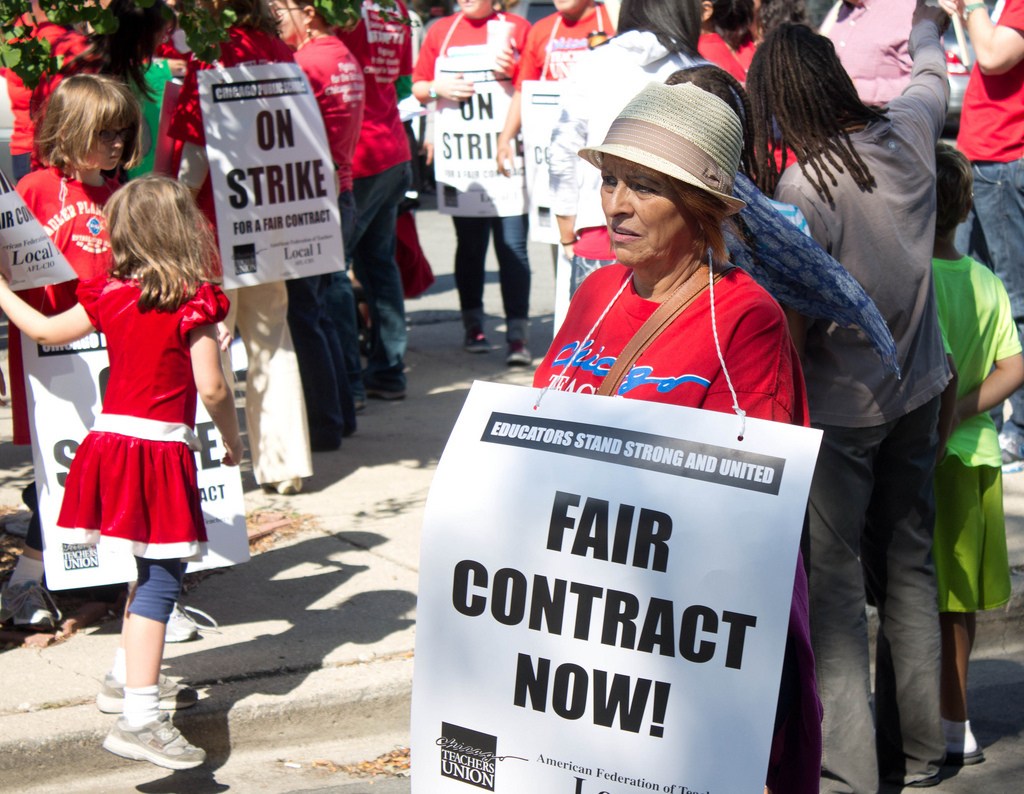
Furthermore, enrollment in (largely non-unionized) public charter schools is now at a record high, with more than 3 million students in charter schools. As charters become more mainstream, they’ll continue to lead people away from the old-school (pardon the pun) version of education, where students simply attend the school closest to them and are taught by unionized teachers. The new-school version of education has much more flexibility for students and families to be educated as they see fit, and new schools are increasingly finding that unionized teachers aren’t part of this model.

Finally, unions in general keep losing members. Union membership has now declined to the lowest point since the Bureau of Labor Statistics began keeping track in 1983. Less than 11 percent of the workforce is unionized.

That said, politics tends to be cyclical. Don’t be surprised if Democrats have an eight years semi-similar to the eight years Republicans had during President Barack Obama’s administration.

Jason Russell is the contributors editor for the Washington Examiner.

Related Content