

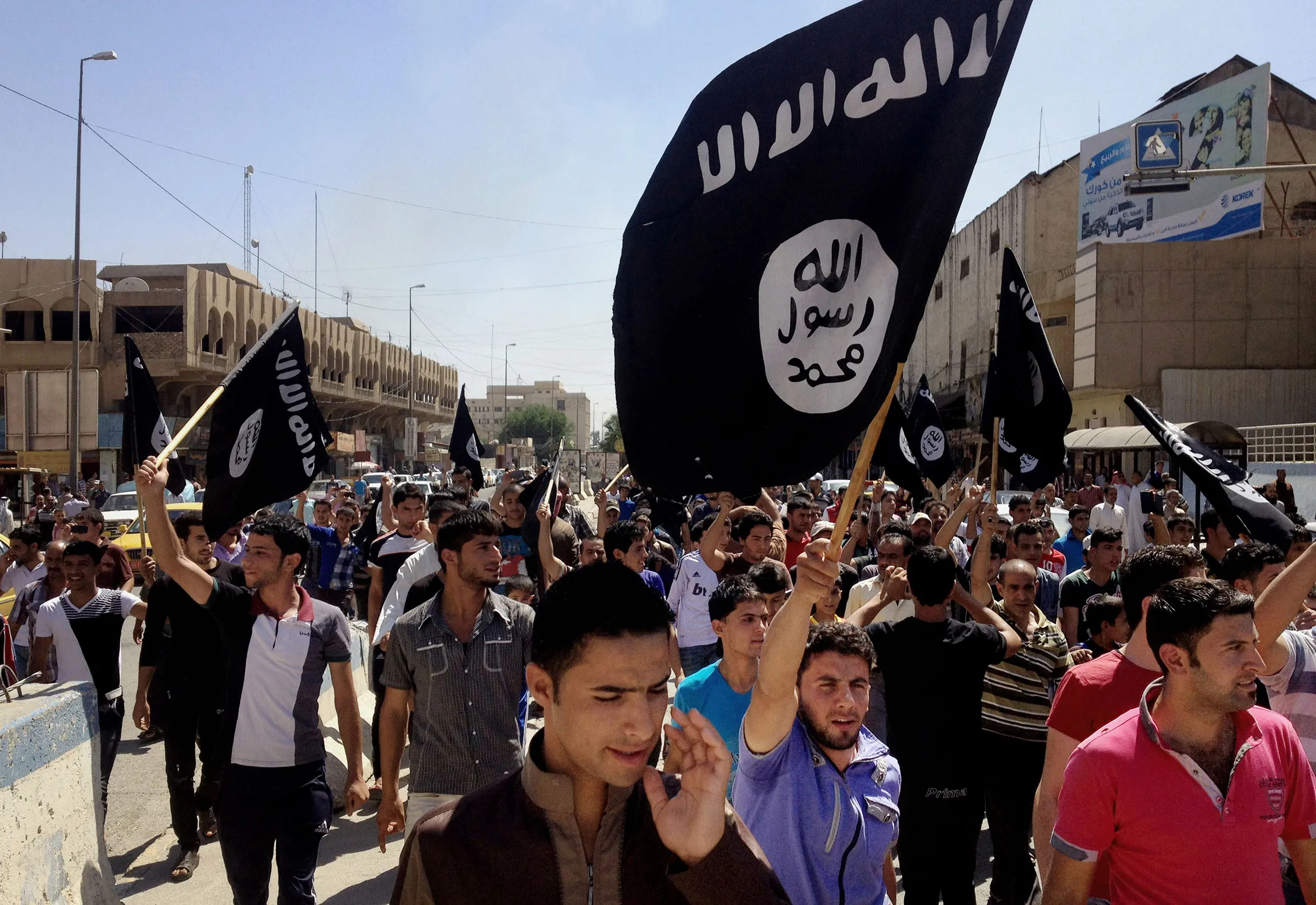
The terrorist attack in Nice, France, is a sign of what experts have been warning about for months: as the U.S.-led military campaign against the Islamic State succeeds, more attacks outside its proclaimed “caliphate” will occur.
And that means the next president may inherit a more formidable foe than the one President Obama has struggled to deal with over the last few years, at least when it comes to coping with domestic attacks.
Recommended Stories


Experts were warning just this week that the very success of the anti-Islamic State coalition in Syria and Iraq means more trouble back home. FBI Director James Comey warned about a “terrorist diaspora” during a congressional hearing Thursday morning.
“We all know, there will be a terrorist diaspora out of the caliphate as military force crushes the caliphate,” Comey prophesized.
Although the Tunisian-born attacker who killed at least 84 people on France Thursday did not flee Syria, he likely represents a worldwide expansion of the Sunni-led terrorist group’s reach. And there were earlier signs of how the influence of the Islamic State was being felt across the globe.
“The terror attack in Orlando shows that the group’s territorial losses over the past year have not diminished its appeal,” Tahrir Institute for Middle East Policy fellow Hassan Hassan testified before the Senate Homeland Security Committee last month. “And I argue that we have reached a point where the Islamic State’s international appeal has become untethered from its military performance on the ground.”
The group’s leaders brag that they can lose the battle for cities and territory, but still will win the war of terror.
“For them, territorial control today is not the overarching goal,” Hassan said. The Sunni-led militants out of Iraq knew that the world would turn against it and that the U.S. would lead a military campaign against it.
In May the group’s spokesman said: “Or do you, O America, consider defeat to be the loss of a city or the loss of land? Were we defeated when we lost the cities in Iraq and were in the desert without any city or land? And would we be defeated and you be victorious if you were to” retake various Iraqi and Syrian cities?
“Certainly not! True defeat is the loss of willpower and desire to fight,” he said.
Congress is starting to take that message onboard.
“Thousands of Western foreign fighters have departed the conflict zone, including operatives who are being sent to conduct attacks as we saw in Paris and in Brussels,” House Homeland Security Committee Chairman Mike McCaul, R-Texas, said on Thursday. “At the same time, ISIS’s online recruiting has evolved, and they now micro-target followers by language and country.”
“Although our nation is shielded by two oceans, geography alone cannot protect us from this mortal threat,” he continued. “The statistics speak for themselves. In the past two years, federal authorities have arrested more than 90 ISIS supporters in the United States. And in 2015, we saw more homegrown jihadist plots than we have ever tracked in a single year.”
In a recent interview with the Washington Examiner, Hassan said that it is too late to stop ISIS’s “international” arm. The time for that was when it began its rampage across Iraq and Syria two years ago. When the U.S.-led coalition launched only a limited military operation that did not crush the group quickly, it gave it room to begin its propaganda and recruitment campaign that is now unstoppable, he said.
Although the militants are under combat pressure in their strongholds, they are spreading their ideology well outside their base, the SITE Intelligence Group reported on its blog Tuesday.
Islamic State “broadened its geographic span by directing or indirectly inspiring attacks in 16 countries” including Jordan, where it had never struck before, SITE reported.
All of this means that the next president, most likely Donald Trump or Hillary Clinton, will likely have their hands full. In anticipation of a new U.S. leader, Syrian ex-patriot groups and other activists have already turned their attention to try to influence their policies.
And there are already signs that this influence is being felt in the campaigns. Trump was already campaigning on a tougher U.S. stance against the Islamic State, but Clinton, who casts herself as a way to further develop Obama’s policies, has indicated she wants to be tougher, especially in the wake of recent attacks.
For example, Clinton has already separated herself from President Obama by saying she would impose no-fly zones in Syria — something groups such as the Syrian-American Council have requested of Obama for two years.
She also is shielding herself from the criticism heaped upon Obama for refusing to call Islamic State and similar terrorists “radical Islamists” by referring to them as “radical jihadists,” a step in the direction of Republicans.
The tougher approach will likely be needed if the experts are right, and more attacks will be seen around the world.
“My only expectation of what’s going to go on is an escalation of violence,” Syrian-American Council spokesman Omar Hossino said.
