Welcome to Byron York’s Daily Memo newsletter.
Was this email forwarded to you? Sign up here to receive the newsletter.
WHY NOT HOLD THE FIRST PRESIDENTIAL DEBATE EARLIER? After a lot of hemming and hawing and trial balloons, it appears that both President Trump and former Vice President Joe Biden will, as have all major candidates since 1976, participate in the three debates that will be held by the Commission on Presidential Debates. That’s good. Debates are a critical part of the public’s ability to evaluate the candidates side-by-side in the final stretch of the campaign.
But what about the timing of those debates? The Commission has laid out the following schedule: The first debate will be on September 29 at Case Western Reserve University in Cleveland. The second will be October 15 at the Adrienne Arsht Center for the Performing Arts in Miami. And the third will be October 22 at Belmont University in Nashville. A vice-presidential debate will be held October 7 at the University of Utah in Salt Lake City.
Here’s the question: Should those debates begin earlier? The biggest story of this election season is the change in the method millions of Americans will use to vote. Because of coronavirus, an unprecedented number will vote by mail. While there have been many warnings of difficulties that will make the post-election vote counting long and laborious, there is also the fact that some Americans will vote earlier than they ever have before.
Subscribe today to the Washington Examiner magazine that will keep you up to date with what’s going on in Washington. SUBSCRIBE NOW: Just $1.00 an issue!
“The 2020 election actually starts in one month,” CNN reported on Tuesday. It’s true. On September 4, North Carolina will begin sending out mail ballots. That will be 60 days before election day. While North Carolina is the earliest, a lot of states begin sending out ballots 45 days or more before election day: Michigan, Pennsylvania, Wisconsin, Minnesota, Texas, Virginia, Georgia, New Jersey, Arkansas, Kentucky, South Dakota, West Virginia, Alabama, Delaware, Idaho, Indiana, Louisiana, Oklahoma, Rhode Island, Tennessee, Vermont, and Wyoming.
That’s a lot of voting. And all of it will begin before the first presidential debate. So: Do voters have a right to see the two candidates debate before voting actually begins?
This week Trump lawyer Rudy Giuliani wrote a letter to the Commission on Presidential Debates. He asked that a fourth debate be added to the schedule — that’s a non-starter, since three debates have proven to be enough over the years. But he also asked that if there is to be no fourth debate, that the last debate, currently scheduled for October 22, be moved to early September for the benefit of the millions of voters who will be casting their ballots then.
“By the time of the first presidential debate on September 29, 2020…as many as eight million Americans in 16 states will have already started voting,” Giuliani wrote. Many more millions will vote before the subsequent debates are held.
It’s a reasonable point. There’s no doubt that debates have proved critical in the past, from Kennedy-Nixon all the way up to Trump-Clinton. The old debate schedule was premised on the idea that most people would go to the polls to vote on election day. The last debate was scheduled long enough before election day for voters to make a reasonable judgment on the candidates’ performance.
But the idea of a single “election day” has gone out the window for this election. Because of schedules changed by the pandemic, more voters will have more time than ever to make their decision before the formal election day, in this case, November 3. The first debate in the 2004 presidential race was on September 30. The first debate in the 2008 race was September 26. Now, the first is scheduled for September 29. Why should the Commission act as if nothing has changed?
Critics will say that Trump is requesting the change because he is desperate. The candidate trailing in the polls always wants more debates. Fine. But whatever the Trump team’s motivation, the idea of keeping the Commission’s traditional three-debate structure, but moving the first debate to earlier in September to accommodate early voting, makes a lot of sense.
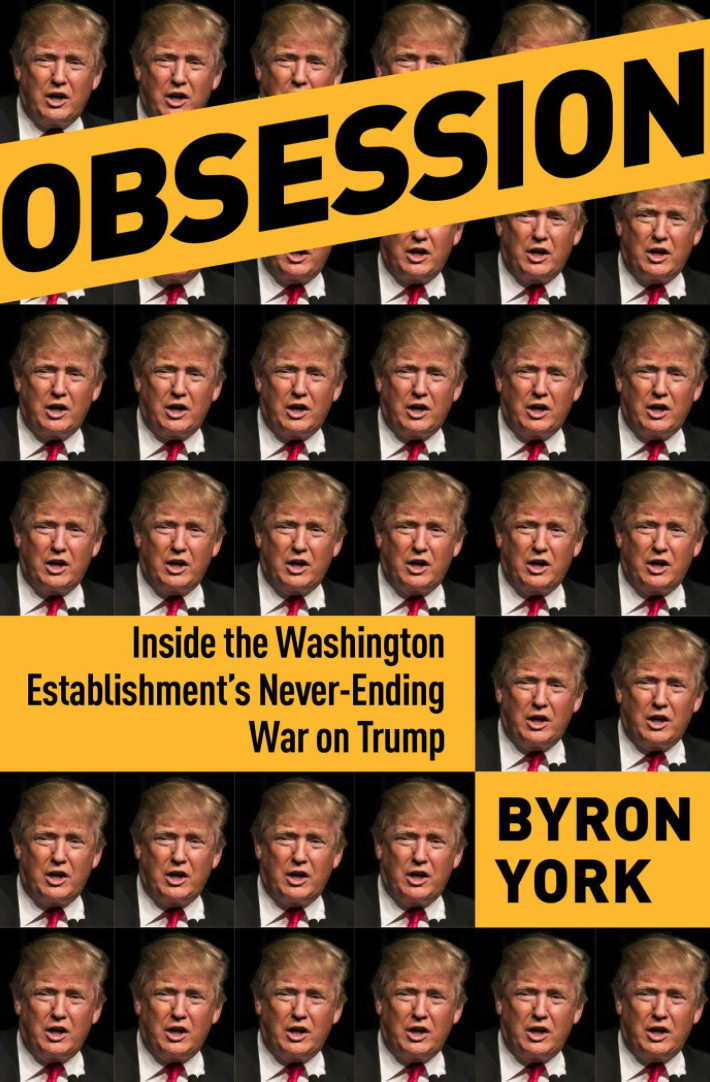
BOOK REMINDER: The publication of my new book, Obsession: Inside the Washington Establishment’s Never-Ending War on Trump, is about a month away. The book is about the long effort to remove the president from office, from the events leading up the the appointment of special counsel Robert Mueller all the way through impeachment. It has stories and material in it that you haven’t seen before, and I hope you’ll consider pre-ordering.