

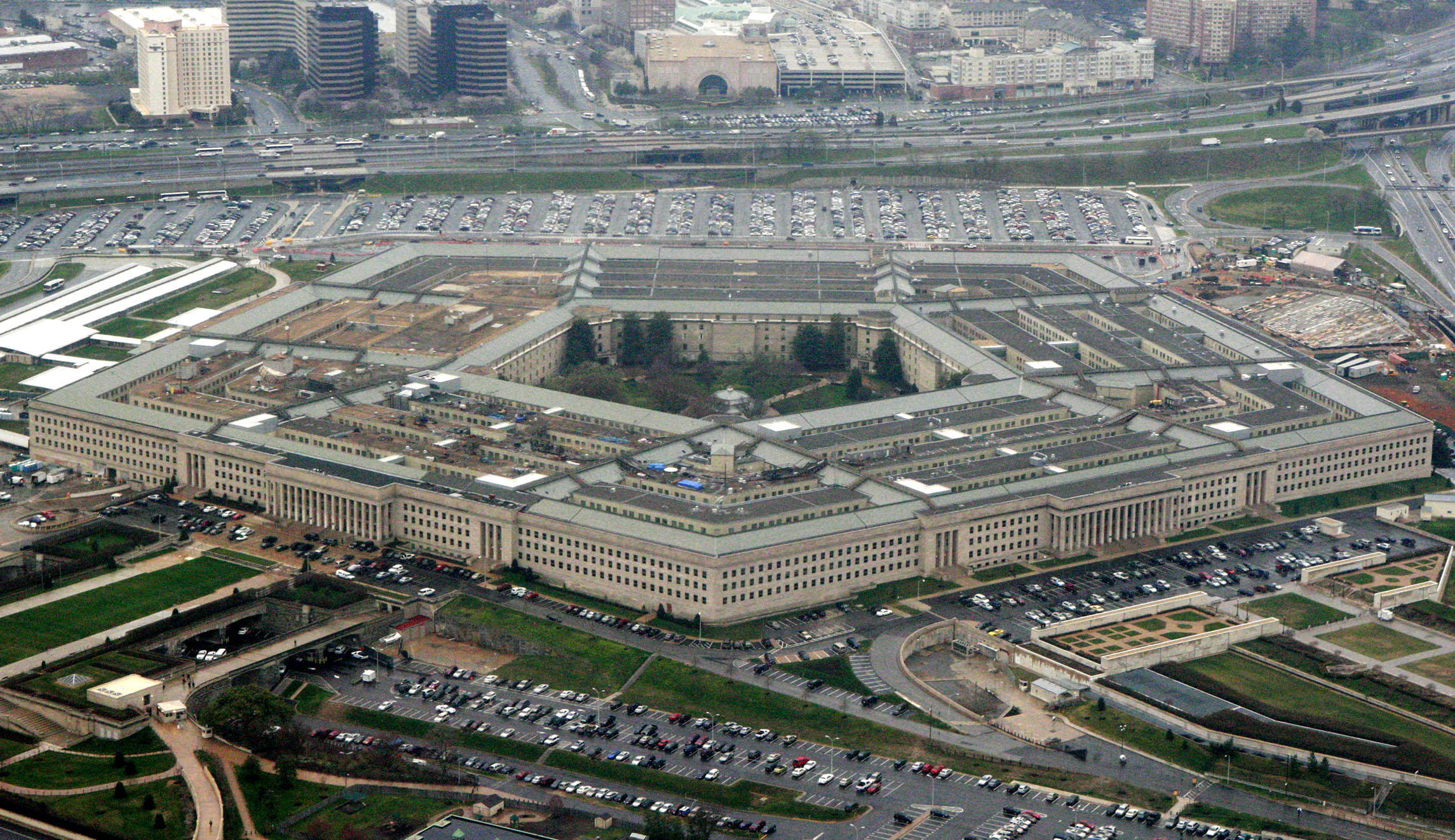
ONE MORE TIME: After weeks of delay and finger-pointing on both sides, the Senate meets this afternoon to resume consideration of the 2022 National Defense Authorization Act, the annual must-pass policy bill that provides the spending authority for the Pentagon. The Senate convenes at 3 p.m. and is scheduled to vote on a motion to invoke cloture on a substitute amendment, which contains a “manager’s package” of dozens of noncontroversial amendments. That would allow for up to 30 hours of debate.
The vote comes after Majority Leader Sen. Chuck Schumer backed off his effort to attach a separate bill, the U.S. Innovation and Competition Act, or USICA, to the $778 billion NDAA. “After Senate Republicans made it clear they would block the inclusion of USICA on the NDAA, we have decided that the best way to get an agreement will be through the conference process,” said Schumer and House Speaker Nancy Pelosi in a joint statement.
Recommended Stories



THE BLAME GAME: Republicans and Democrats have blamed each other for the delay in passing the NDAA, which ideally should be enacted in time for the start of the new fiscal year, which began Oct. 1.
“This should have been passed months ago, but it’s been on the back burner for Joe Biden and for Chuck Schumer,” said Wyoming Republican Sen. John Barrasso on Fox News Sunday. “This president has been weak on national defense because when he came into office, his first budget basically super-sized government on everything except for two areas where we didn’t even keep up with inflation. One was defense. The other was homeland security. Our nation deserves better.”
In remarks on the Senate floor earlier this month, Schumer blamed obstructionism on the part of a few Republicans. “Democrats have been working in good faith for several days — actually, for several months really — to pass this defense legislation,” Schumer said on Nov. 18. “Democrats have demonstrated all year that we are more than willing to work on good faith on amendments here on the floor.”
Among the Democratic priorities is an amendment to repeal the 2002 Iraq War authorization, while Republicans are pushing for sanctions related to the Russian-built Nord Stream 2 pipeline, boosting military aid to Ukraine, and ensuring that any U.S. aid to Afghanistan does not benefit the Taliban.
BUT WAIT, THERE’S MORE: The NDAA is only half of the funding equation for the Pentagon. In addition to an authorization measure, Congress must also pass an appropriations bill. The current stopgap authority is set to expire on Friday, and with the lack of agreement on a yearlong appropriation bill, it appears another continuing resolution will be necessary. The question is whether the CR, which limits spending to last year’s level, would be just for a few more weeks, or extend into February or March, or even for the entire fiscal year. Nobody wants another government shutdown, but Democrats need 60 Republican votes in the Senate to pass Biden’s budget.
“A full-year CR would not only underfund the Department of Defense but also misalign billions of dollars in DOD resources in a manner inconsistent with evolving threats and the national security landscape,” the White House said in a statement earlier this month. “For instance, a full-year CR would prevent new program starts critical to modernization, adversely impact hypersonic weapons development, and delay over 114 new military construction projects this fiscal year.”
CLICK HERE TO READ MORE FROM THE WASHINGTON EXAMINER
Good Monday morning and welcome to Jamie McIntyre’s Daily on Defense, written and compiled by Washington Examiner National Security Senior Writer Jamie McIntyre (@jamiejmcintyre) and edited by Victor I. Nava. Email here with tips, suggestions, calendar items, and anything else. Sign up or read current and back issues at DailyonDefense.com. If signing up doesn’t work, shoot us an email and we’ll add you to our list. And be sure to follow us on Twitter: @dailyondefense.
CLICK HERE TO SIGN UP OR READ BACK ISSUES OF DAILY ON DEFENSE
Subscribe today to the Washington Examiner magazine and get Washington Briefing: politics and policy stories that will keep you up to date with what’s going on in Washington. SUBSCRIBE NOW: Just $1.00 an issue!
ON A PERSONAL NOTE: Today’s edition of Daily on Defense is the first since late October, when I was forced to take a leave of absence after sustaining third-degree burns to my left hand in a small kitchen fire in my home. The injuries required a brief hospital stay and a skin graft. I spent a month convalescing, and the good news is I’m on the mend and should make a full recovery. I appreciate the support of my loyal readers.
One other note. I will be taking a long-planned family vacation the last two weeks of December, and so the newsletter will again be on hiatus. But it won’t mean I’m having a relapse.
HAPPENING TODAY: Secretary of State Antony Blinken is traveling to Riga, Latvia, for two days of meetings with fellow NATO foreign ministers, which begin tomorrow.
“I expect ministers will discuss the important opportunities and challenges the alliance faces, in particular, Russia’s large and unusual troop movements near Ukraine,” Karen Donfried, assistant secretary for European and Eurasian affairs, told reporters last week at the State Department.
During a visit to Lithuania ahead of the foreign ministerial, NATO Secretary-General Jens Stoltenberg called on Russia to be transparent, reduce tensions, and de-escalate. “This military buildup is unprovoked and unexplained. It raises tensions, and it risks miscalculations,” Stoltenberg said, noting the buildup is by a country that has invaded Ukraine before. “If Russia uses force against Ukraine, that will have costs, that would have consequences,” he said.
HAPPENING TOMORROW: Defense Secretary Lloyd Austin departs for Seoul, South Korea, for the annual U.S.-Republic of Korea Security Consultative Meeting. Among his meetings with senior government leaders will be Minister of Defense Suh Wook. On his way back, Austin will stop at the 2021 Reagan National Defense Forum in Simi Valley, California, to deliver a keynote address on China Saturday at 5 p.m. EST.
“Austin will highlight his vision for the People’s Republic of China as the Department’s top pacing challenge, and discuss integrated deterrence, cooperation with allies and partners, the crucial role of investments in tech and innovation, and working with industry partners and Congress in the context of the forthcoming National Defense Strategy,” the Pentagon said in a statement.
CHINA’S UNRELENTING HARASSMENT OF TAIWAN: On Sunday, Taiwan was once again forced to scramble jet fighters in response to an incursion of 27 Chinese air force planes into its air defense identification zone, or ADIZ.
‘”Their intention is to slowly exhaust, to let you know that we have this power,” Taiwan’s Defense Minister Chiu Kuo-cheng told reporters, according to Reuters. “Our national forces have shown that, while you may have this power, we have countermeasures.”
A tweet by the Taiwanese Defense Ministry said the latest provocation included 18 fighter jets, five nuclear-capable H-6 bombers, and a Y-20 aerial refueling aircraft.
In comments reported by state media, Chinese President Xi Jinping did not mention Taiwan specifically, but after meeting with his senior military leaders, he talked about the need to “improve the actual ability to win modern wars.”
“It is necessary to strengthen practical experience and encourage and guide officers and soldiers to experience the wind and rain, see the world, strengthen their muscles and bones, and develop their talents in fiery military practice,” Xi said.
DOZENS OF CHINESE MILITARY AIRCRAFT BREACH TAIWAN’S AIR DEFENSE ZONE WITH AERIAL TANKER
ESPER MUZZLED: Former Defense Secretary Mark Esper is suing the Pentagon, arguing his First Amendment rights are being violated by heavy-handed redacting of key portions of his memoir, A Sacred Oath: Memoirs of a Secretary of Defense During Extraordinary Times.
“As part of my lawful obligations and lifelong commitment to protecting national security, I submitted my manuscript to the Defense Department for review. For nearly six months, I patiently followed the formal process, only to have my unclassified manuscript arbitrarily redacted without clearly being told why,” Esper said in a statement. “The American people deserve a full and unvarnished accounting of our nation’s history, especially the more difficult periods. My memoir — A Sacred Oath — offers important details and new insights into many of the most controversial events that occurred during the tumultuous second half of the Trump Administration.”
Esper is being represented by noted Washington attorney Mark Zaid, a veteran of many declassification and pre-publication legal battles with the government. His recent clients included both retired Lt. Col. Alexander Vindman, who testified against Trump before the House, and retired Lt. Gen. H.R. McMaster, Trump’s former national security adviser.
“Secretary #Esper’s book covers everything from domestic issues such as DoD’s handling of COVID, WH management of civil unrest & int’l issues such as Iran, Germany, China, Venezuela & Russia,” Zaid said in a tweet. “It goes behind scenes of #Esper’s increasingly contentious relationship w/Trump’s WH.”
Esper told the New York Times that some of the redactions “asked me to not quote former President Trump and others in meetings, to not describe conversations between the former president and me, and to not use certain verbs or nouns when describing historical events.”
“I was also asked to delete my views on the actions of other countries, on conversations I held with foreign officials, and regarding international events that have been widely reported,” Esper told the New York Times. “Many items were already in the public domain; some were even published by DOD.”
PESSIMISM PERVADES RESUMPTION OF IRAN TALKS: Hopes are fading for a resumption of the 2015 Iran nuclear deal, which former President Donald Trump pulled the U.S. out of in 2018, calling the agreement “the worst deal ever.”
The U.S. won’t be at the table in Vienna today as the remaining signatories to the deal — Iran, Russia, China, France, Germany, and Britain — reconvene after a six-month break.
Iran now has a new president, Ebrahim Raisi, with new demands, and U.S. envoy Robert Malley told NPR last week that based on Iran’s public statements, he’s pessimistic about this seventh round of negotiations.
“I believe in being prepared. I don’t believe in prejudging, and so let’s see what they say when they’re at the table,” Malley told NPR’s Morning Edition. “But obviously the indications they’ve given — and we’re not the only ones who’ve heard those indications — are not particularly encouraging.”
CLICK HERE TO READ MORE FROM THE WASHINGTON EXAMINER
The Rundown
Washington Examiner: Dozens of Chinese military aircraft breach Taiwan’s air defense zone with aerial tanker
Washington Examiner: Delegation visits Taiwan amid tensions with China
Washington Examiner: Pentagon creates new organization to investigate UFOs
Washington Examiner: Trump-backed policy group supports Navy SEALs seeking vaccine exemption approval
Washington Examiner: Space Force general warns US hypersonic technology ‘not as advanced as the Chinese or the Russians’
Washington Examiner: Esper sues Defense Department for ‘censoring’ First Amendment rights by redacting book on Trump administration
Washington Examiner: Germany will continue to host US nuclear weapons, incoming government says
Washington Examiner: Top special ops commander says US can’t count on Taliban to fight ISIS-K
AP: EXPLAINER: Can world powers curb Iran in new nuclear talks?
AP: Philippines Rejects China’s Demand To Remove Ship From Shoal
New York Times: Biden Explores Talks As China Builds Arsenal
Reuters: Kremlin Hopes Biden And Putin Will Talk On Video Before Year-End
Washington Post: Biden Wonders Publicly Whether Burn Pits Caused His Son’s Death. Activists Want Him To Do More On The Issue
Washington Post: Taliban sends hundreds of fighters to eastern Afghanistan to wage war against Islamic State
Washington Post: The Pentagon’s $82 Million Super Bowl of Robots
Air Force Magazine: No COVID-19 Vaccine, No PCS Moves, Air Force Says
USNI News: 97% of Active-Duty Sailors Fully Vaccinated With Four Days Until Deadline
USA Today: National Guard scandals in these 13 states raise questions about culture and accountability
Air Force Magazine: Air Force is 120 Airplanes Smaller Since 2020, But Fighters and Bombers Stay About Level
USNI News: U.S. Navy Sending Salvage Ship, Crew To Help Recover Crashed British F-35B
19fortyfive.com: Super Raptors: The Air Force Is Making Big Changes to the F-22 Stealth Fighter
19fortyfive.com: History Made: Woman Graduates U.S. Army Sniper Course for First Time
New York Times: Guantanamo Bay: Beyond The Prison
Forbes: Australia Is Becoming Indispensable To America In The Southwest Pacific
Calendar
MONDAY | NOVEMBER 29
10 a.m. — Mitchell Institute for Aerospace Studies virtual Spacepower Forum event with Lt. Gen. B. Chance Saltzman, deputy chief of space operations for operations, cyber, and nuclear, U.S. Space Force; and retired Gen. Kevin Chilton, explorer chair for space warfighting studies at MI-SPAR https://mitchellaerospacepower.org/event/spacepower-forum
11 a.m. — Jewish Institute for National Security of America virtual discussion: “High Noon in Vienna: Iran Nuclear Negotiations Resume, with Michael Makovsky, president and CEO of JINSA and former special assistant in the Office of the Secretary of Defense; former Defense Undersecretary for Policy Eric Edelman, counselor at JINSA’s Center for Defense and Strategy; John Hannah, senior fellow at JINSA’s Center for Defense and Strategy and former national security adviser to Vice President Dick Cheney; and Blaise Misztal, vice president of policy at JINSA https://us02web.zoom.us/webinar/register
12 p.m. — Hudson Institute virtual book discussion on “China’s Civilian Army: The Making of Wolf Warrior Diplomacy,” with author Peter Martin https://www.hudson.org/events/2041-virtual-event
3 p.m. — Center for Strategic and International Studies virtual discussion: “Unpacking China’s Sixth Plenum,” with Phillip Saunders, director of National Defense University’s Center for the Study of Chinese Military Affairs; Chris Buckley, chief China correspondent at the New York Times; and Patricia Thornton, associate professor of Chinese politics at the University of Oxford https://www.csis.org/events/unpacking-chinas-sixth-plenum
1 p.m. 1740 Massachusetts Ave. N.W. — Johns Hopkins University Paul H. Nitze School of Advanced International Studies discussion with Ki-jung Kim, president of the Institute of National Security Strategy, on South Korea’s foreign policy for the next generation https://www.eventbrite.com/e/conversation
TUESDAY | NOVEMBER 30
Time undisclosed — Defense Secretary Lloyd Austin departs for Seoul, South Korea for 53rd U.S.-Republic of Korea Security Consultative Meeting and troop visits. https://www.defense.gov/News/Advisories
8:15 a.m. Orlando, Florida — Interservice/Industry Training, Simulation and Education Conference with Chief of Naval Operations Adm. Michael Gilday and Marine Corps Commandant Gen. David Berger https://www.youtube.com/user/NTSAToday
11 a.m. — Government Executive Media Group and SailPoint virtual 2021 Government Identity Security Summit, with Chris Cleary, principal cyber adviser at the Navy Department, delivers remarks on “Enabling Trusted Digital Experiences in the DoD” https://idgov.govexec.com
2 p.m. — Government Executive Media Group virtual briefing: “Streamlining Risk Mitigation,” part of the “Meeting the Mission Through Low Code Modernization” series, with Nate Parker, data scientist at the Army Futures Command https://event.on24.com/wcc
3 p.m. — American University Washington College of Law virtual discussion: “Combating Ransomware: A Matter of National Security, with Marine Corps Lt. Col. Kurt Sanger, deputy staff judge advocate at U.S. Cyber Command; Sujit Raman, privacy and cybersecurity partner at Sidley Austin; Kristen Eichensehr, law professor and director of the University of Virginia School of Law’s National Security Law Center; and Gary Corn, director of the AU WCL Technology, Law and Security Program https://www.wcl.american.edu/impact/initiatives-programs
WEDNESDAY | DECEMBER 1
10 a.m. — Ronald Reagan Foundation and Institute releases its fourth annual Reagan National Defense Survey.
12:30 a.m. — Virtual ReutersNEXT global conference featuring “world leaders, big business and forward-thinking pioneers,” including NATO Secretary General Jens Stoltenberg; State Department Special Presidential Envoy for Climate John Kerry; and Anthony Fauci, director of the National Institute of Allergy and Infectious Diseases; and many others https://reutersevents.com/events/next/register.php
9 a.m. National Harbor Marina — Defense Strategies Institute Space Resiliency Summit with John Hill, performing the duties of assistant defense secretary for space policy delivering remarks on “Coordinating Space Policy and Strategy to Further U.S. interests in Space and at Home” https://space.dsigroup.org/
9:30 a.m. — Center for Strategic and International Studies virtual discussion: “China’s Power: Up for Debate 2021,” with Army Secretary Christine Wormuth; and Bonny Lin, director of the CSIS China Power Project https://www.csis.org/events/chinas-power-debate
9:30 a.m. — Henry L. Stimson Center virtual discussion: “Tracking U.S. Arms: Implications for Security and Stability,” with former Afghan Deputy Interior Minister Hosna Jalil; Elias Yousif, deputy director of the Security Assistance Monitor; Justine Fleischner, head of regional operations at Conflict Armament Research; and Rachel Stohl, vice president of research programs at Stimson. https://stimsoncenter.zoom.us/webinar/register
10 a.m. — Woodrow Wilson Center Kennan Institute for Advanced Russian Studies virtual discussion: “Achievements of State Building in Ukraine,” with Oleksandr Merezhko, member of the Ukrainian Verkhovna Rada; Georgiy Kasianov, head of the Sklodowska University Laboratory of International Memory Studies; Mykhailo Minakov, editor-in-chief of Focus Ukraine blog; and Kateryna Pishchikova, associate professor at eCampus University https://www.wilsoncenter.org/event/achievements-state-building-ukraine
11 a.m. — Heritage Foundation virtual discussion: “The Iran Nuclear Negotiations: Why the Humpty Dumpty JCPOA Should Not Be Renewed,” with Fred Fleitz, president of the Center for Security Policy; Peter Brookes, senior research fellow at Heritage; and James Phillips, senior research fellow at Heritage https://www.heritage.org/middle-east/event/the-iran-nuclear-negotiations
3 p.m. 418 Russell — Senate Veterans’ Affairs Committee hearing on “An End-of-Year Look at the State of VA.” https://www.veterans.senate.gov/hearings
3 p.m. — Center for Strategic and International Studies virtual book discussion: “Global Jihad: A Brief History,” with author Glenn Robinson, associate professor of defense analysis at the Naval Postgraduate School https://www.csis.org/events/book-event-global-jihad-brief-history
THURSDAY | DECEMBER 2
8:30 a.m. — Brookings Institution virtual discussion: “North Korea in a new era of U.S.-South Korea partnership,” with Sohn Yul, president of the East Asia Institute; Sue Mi Terry, director of the Wilson Center’s Hyundai Motor-Korea Foundation Center for Korean History and Public Policy; Soo Kim, policy analyst at the RAND Corporation; Jihwan Hwang, professor of international relations at the University of Seoul; Jina Kim, professor at Hankuk University of Foreign Studies; and Andrew Yeo, visiting fellow at the Brookings Center for East Asia Policy Studies https://www.brookings.edu/events/north-korea
9 a.m. — Atlantic Council virtual discussion: “Will Russia invade Ukraine again?” with Hanna Shelest, director of security studies at the Foreign Policy Council’s “Ukrainian Prism”; former Assistant Secretary of State for European and Eurasian Affairs Daniel Fried, fellow at the Atlantic Council; former U.S. Ambassador to Ukraine John Herbst, senior director of the Atlantic Council’s Eurasia Center; and Melinda Haring, deputy director of the Atlantic Council’s Eurasia Center https://www.atlanticcouncil.org/event/will-russia-invade-ukraine-again
9 a.m. — Intelligence and National Security Alliance virtual discussion with Christine Abizaid, director of the National Counterterrorism Center, on the shift of intelligence resources to focus on China and Russia, and the impact on the nation’s counterterrorism posture. https://www.insaonline.org/event/coffee-conversation
9 a.m. — Defense Strategies Institute Space Resiliency Summit with Lindsay Millard, principal director for space in the Office of the Under Secretary of Defense for Research and Engineering, delivering remarks on “Assuring America’s Space Capabilities and Maintaining the Nation’s Competitive Advantage in the Space Domain” https://space.dsigroup.org/
9:30 a.m. G-50 Dirksen — Senate Armed Services Committee hearing on the nomination of Adm. Christopher W. Grady to be vice chairman of the Joint Chiefs of Staff. http://www.armed-services.senate.gov
11 a.m. 2118 Rayburn — House Armed Services Subcommittee on Readiness Hearing: “Minding the Gap: How Operational Energy Can Help Us Address Logistics Challenges,” with Lt. Gen. Sam Barrett, Joint Staff director for logistics, J-4; Lt. Gen. Duane Gamble, Army deputy chief of staff, G-4; Vice Adm. Rick Williamson, deputy chief of naval operations for fleet readiness and logistics, N-4; Lt. Gen. Edward Banta, Deputy Marine Corps Commandant, installations and logistics; Lt. Gen. Warren Berry, Air Force deputy chief of staff for logistics, engineering and force protection, A-4 https://armedservices.house.gov/hearings
3:30 p.m. — Center for Strategic and International Studies virtual discussion: “The European Union’s New Strategic Compass, with EU Military Staff Director General Vice Adm. Herve Blejean https://www.csis.org/events/eus-new-strategic-compass
FRIDAY | DECEMBER 3
12:30 a.m. — ReutersNEXT three-day global conference wraps up a full day of events with a 4:30 p.m. interview with Secretary of State Antony Blinken on “Leading the Way in Challenging Times” https://reutersevents.com/events/next/register.php
10 a.m. — Brookings Institution virtual discussion: “How to address extremism among veterans,” with William Braniff, director of the National Consortium for the Study of Terrorism and Responses to Terrorism; Shawn Turner, senior adviser at the Veterans Affairs Department; Cynthia Miller-Idriss, professor at American University; Kathleen Belew, assistant professor at the University of Chicago https://www.brookings.edu/events/how-to-address-extremism-among-veterans/
12 p.m. — American Security Project virtual discussion: “Addressing a Revanchist Russia,” with Steven Pifer, research fellow at Stanford University’s Center for International Security and Cooperation https://us02web.zoom.us/webinar/register
SATURDAY | DECEMBER 4
5 p.m. EST — Simi Valley, Calif — Defense Secretary Lloyd Austin delivers keynote address on China at day one of the two-day Reagan National Defense Forum 2021 https://www.reaganfoundation.org/media
QUOTE OF THE DAY
“The American people deserve a full and unvarnished accounting of our nation’s history, especially the more difficult periods. My memoir — A Sacred Oath — offers important details and new insights into many of the most controversial events that occurred during the tumultuous second half of the Trump Administration … I am more than disappointed the current Administration is infringing on my First Amendment constitutional rights.”
Former Defense Secretary Mark Esper, who is suing to protest redactions to his memoir ordered by the Pentagon
