

In Focus delivers deeper coverage of the political, cultural, and ideological issues shaping America. Published daily by senior writers and experts, these in-depth pieces go beyond the headlines to give readers the full picture. You can find our full list of In Focus pieces here.
As an array of high-profile conservatives align themselves with Qatar through statements and trips to the Gulf nation, the country’s purportedly outsize influence on American politics has come under increased scrutiny.
Qatar’s publicly known influence operations primarily consist of an army of foreign agents, state-backed media organizations designed to amplify information favorable to its regime, donations to universities, and strategic investments. Many, however, suspect that the scope of Qatar’s influence over American politics is broader than what present reporting and public records suggest. Such speculation is fueled by reports of Qatar hiring unregistered foreign agents and public officials failing to disclose swanky trips paid for by the country.
While it is possible, and some would even argue likely, that much of Qatar’s spending happens under the table, some estimates place Qatari spending in the United States below that of other countries in terms of scale.

A Free Press investigation published in May was able to track $100 billion in all-time Qatari spending in the U.S., spanning business investments, weapons purchases, energy spending, lobbying, education spending, and its Al Udeid Air Base, which American forces use but the Qatari government pays for. A report from the Middle East Forum released around the same time uncovered roughly $40 billion in Qatari spending since 2012 across investments, donations, and lobbyists.
In comparative terms, OpenSecrets’s aggregation of data collected by the Justice Department shows that Qatar spent the seventh-most money among foreign nations on lobbying and public relations activities between 2016 and 2024, coming in at $260.4 million. Israel, which Qatar is frequently compared to, meanwhile, spent $195.1 million over the same period. China, boasting well over half a billion dollars in such spending, tops the chart.
Qatar’s web of influence, however, is somewhat unique in terms of how far it reaches across multiple facets of American political and economic life.
Lobbyists, guns, and money
Qatari operations are perhaps most visible when they directly target elected officials.
Under the Foreign Agents Registration Act, foreign principals, such as the Qatari government, are allowed to pay individuals, often but not always American citizens, to influence policy or the media environment on their behalf. These foreign agents, in turn, must register with the DOJ and provide regular reports on their activity to the agency.
While an unknown quantity of people operate outside the bounds of the law, making a full accounting of Qatari foreign agents impossible, details have emerged in recent years that provide a glimpse into how they operate.
It is known, for instance, that Qatari foreign agents have a tendency to shower the lawmakers they are courting with large sums of campaign cash.
The Washington Examiner reported in May that Qatar’s active foreign agents have donated nearly $700,000 to members of Congress and other government officials since 2020. Concurrent with these donations, those agents enjoyed open lines of communication and face time with influential lawmakers — often the very same people they were cutting checks to.
Academic research has consistently found that campaign contributions do indeed lead to increased access to lawmakers.
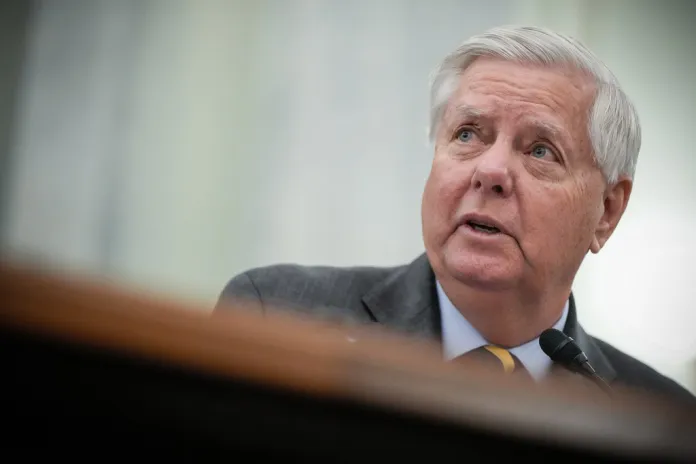
In the case of Sen. Lindsey Graham (R-SC), the Washington Examiner previously reported that a single Qatari foreign agent donated roughly $30,000 to campaign committees linked to him between 2020 and 2025. During the same period, Graham’s office granted his lobbying firm ample access so he could advocate Qatar’s interests, including over 130 total communications between the office and the agent, personal meetings, and phone calls with the senator himself.
Graham’s home state of South Carolina is a special case in the realm of Qatari influence.
In May, the Gulf nation inked a $96 billion aircraft manufacturing agreement with Boeing that would primarily benefit the firm’s assembly plant in Charleston, South Carolina. Additionally, Barzan Holdings, the strategic investment arm of Qatar’s Ministry of Defense, has a facility in the state boasting 72,400 square feet of manufacturing and office space.
Qatar’s economic footprint in the Palmetto State no doubt affords it a degree of influence over the politicians who represent it. Graham and Rep. Joe Wilson (R-SC) have emerged as two of Qatar’s strongest advocates in Congress.
Wilson was a co-chair of the Congressional Qatari Caucus and credits himself for meeting with Qatari officials to deepen economic ties between the Gulf nation and his state. Graham, meanwhile, has reportedly taken meetings with representatives from Qatar’s sovereign wealth fund. Both have consistently made pro-Qatari statements during their tenures.
In terms of total volume, DOJ records document roughly 7,400 political communications sent by Qatari foreign agents since 2020, according to a Washington Examiner analysis of FARA records. These consist of phone calls, emails, video calls, and in-person meetings. In addition to members of Congress and federal staffers, foreign agents also reach members of the press in the hopes of placing or shaping stories about the country they represent. Israeli foreign agents, for comparison, have sent just over 2,000 such communications since 2020.
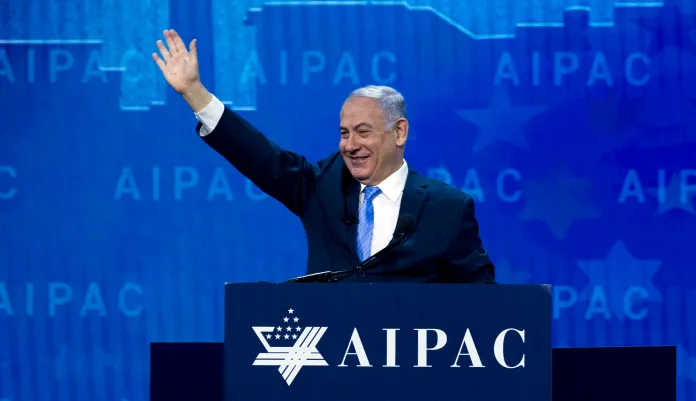
This comparison, however, suggests that the Israel lobby is weaker than it truly is. Unlike Qatar, Israel has a sizable and wealthy domestic base of support. This manifests itself primarily through the American Israel Public Affairs Committee. AIPAC and its affiliated super PAC, United Democracy Project, spent close to $100 million on the 2024 elections, alongside millions more in lobbying efforts.
In addition to AIPAC, pro-Israel billionaires such as Paul Singer and Miriam Adelson also pour tens of millions of dollars into domestic media operations, think tanks, and political candidates that support the Jewish state.
Israel, like Qatar, also has significant economic ties to the U.S., bolstering its influence. Both countries have spent tens of billions of dollars purchasing American arms.
Influence is difficult to quantify without concrete examples of victories. Qatar has enjoyed ample victories in recent years.
During the recent negotiations surrounding the 2026 National Defense Authorization Act, for example, Qatari foreign agents secured a series of phone calls and email exchanges with top staffers on the House and Senate Armed Services committees, the bodies tasked with drafting the legislation, between March and May.
After these exchanges, Congress voted down amendments that would have blocked funding to retrofit the Pentagon’s recently acquired Qatari plane into Air Force One. The House version of the NDAA, meanwhile, included a measure ordering the war secretary to produce a report on Al Udeid Air Base in Qatar, possibly recommending additional missile and air defense resources, enhancing security in the country.
Qatar also does well to shape the words coming out of the mouths of American politicians.
Sen. Roger Marshall (R-KS) left some observers confused in March after he offered an impassioned defense of Qatar during a congressional hearing. A Washington Examiner review of FARA records found that many of the arguments he levied lined up with talking points provided to his office by Qatari foreign agents.
Marshall, notably, was once a sharp critic of Qatar.
Hearts and minds
Outside the halls of Congress, Qatar is waging an information war to sway the opinions of everyday Americans.
The crown jewel of this effort is Qatar’s state-backed media conglomerate, Al Jazeera. Across its various social pages, Al Jazeera reports accrued a total of 14.2 billion views in 2023. AJ+, its flagship English-language social media brand, boasts 2.4 million YouTube subscribers and 11 million Facebook followers. Al Jazeera English, an arm of the conglomerate’s traditional media operation, claims to reach over 270 million households across the English-speaking world.
Using the considerable reach at its fingertips, Al Jazeera advances points of view that are typically anti-American, anti-Israeli, and broadly anti-Western.
A 2023 report published by the Zachor Legal Institute found that, during one week in 2023, 32% of the content produced by AJ+ was anti-American, 13% was anti-Israel, and an additional 25% was broadly anti-Western. As of mid-December, practically all the content on AJ+’s YouTube and X accounts falls into one of those three categories.
“AJ+ frequently highlights injustices in American society pertaining to women’s rights, issues facing the Black community, and discrimination against LGBTQ+ people,” the 2023 report reads. “AJ+’s coverage portrays American society as divided and often contributes itself to widening those divisions, creating a fertile ground for harming the legitimacy of the American government and its institutions.”
The slant of Al Jazeera and its affiliates has left some observers wary about Qatar’s influence on universities and other academic institutions.
A Network Contagion Research Institute study published in April found that, according to Education Department records, Qatar is the largest source of foreign donations to American colleges and universities, pumping in $6.3 billion since the government began tracking such transactions in 1986. Nearly a third of those donations, over $2 billion, were made between 2021 and 2024, suggesting that the Gulf state is ramping up its efforts.
Critics contend that universities that have taken the most Qatari money have seen the greatest upticks in anti-Israel and antisemitic activity. While there is some correlative evidence for this claim, such as the case of Northwestern University, no definitive link has been found.
In at least one case, the Qatari government has used its relationship with prestigious American institutions such as Carnegie Mellon University and Georgetown University to bolster the legitimacy of its influence operations. The two universities, alongside Northwestern, are partnered with Doha Debates. The program, which claims to be a neutral platform for the discussion of ideas, pushes content to millions of viewers, arguing that the U.S.’s global power is diminished, claiming that Western nations are racist, criticizing Israel, and pressuring the developed world to accept more refugees.
Think tanks, which fill a similar role to universities in terms of policy research, have also accepted considerable funding from Qatari sources. Prestigious think tanks such as the Aspen Institute, the Brookings Institution, the Rand Corporation, the Stimson Center, and the Center for Strategic and International Studies have accepted millions of dollars from Qatar since 2019, according to the Quincy Institute.
Critics point to the panels, policy papers, and favorable opinion articles produced by think tanks funded by Qatar as ways the Gulf nation seeks to build legitimacy among Western elites. Indeed, Rand and the Stimson Center were partners in the recent state-run Doha Forum, which has been characterized by critics as a way the Qatari regime launders its reputation by attempting to convey proximity to well-respected Western individuals and institutions.
Qatar also works diligently to shape the coverage of American media outlets.
A Washington Examiner investigation published in May found that Qatari foreign agents greatly ramped up their outreach to conservative outlets and commentators following President Donald Trump’s 2024 election victory. Qatari agents successfully secured a high-profile interview with Tucker Carlson for the country’s prime minister and saw outlets publish pro-Qatari pieces shortly after reaching out to them.
TOP US POLITICAL FIGURES LEND LEGITIMACY TO QATARI FORUM ALLIED WITH ARRAY OF ANTI-AMERICAN GROUPS
Qatar isn’t letting up in its quest to control U.S. media, with the country recently announcing an array of partnerships with media giants such as CNN and Bloomberg, and hiring agents to expand its influence over American news coverage.
Hiding in ‘plane’ sight
Close observers of American politics may have reason to believe that Qatar’s web of influence is far broader than official disclosure and mainstream press reports suggest.
Some, for example, worry that the $400 million jet that Trump accepted on behalf of the U.S. to become the new Air Force One, and eventually the property of his presidential museum, may come with strings attached. Others point to the fact that high-profile Americans, among them a retired general, a former ambassador, and top Trump operatives, have been implicated in illegal Qatari influence schemes.
While the true extent of Qatari influence over American life is difficult to measure, it is obvious that the terrorism-linked Gulf nation is intent on burning through billions of dollars to reshape the U.S. to be more amenable to its interests.
