

The Heritage Foundation, a cornerstone of conservative policymaking for over 50 years, was rocked four months ago when its boss made a crucial misstep.
Kevin Roberts, in a now-infamous video message, defended Tucker Carlson for an interview with self-avowed racist Nick Fuentes, calling the former Fox News presenter’s critics “the globalist class” and a “venomous coalition.”
Blowback from conservatives, including many within his own organization, came swiftly. Roberts soon apologized, saying the video script was written by an aide who had since resigned. Then, in a staff meeting, he claimed, “I didn’t know much about this Fuentes guy. I still don’t.”
The fallout for Heritage was devastating. Many influential conservative policymakers abandoned ship. Sixteen landed in one place: Advancing American Freedom, the policy and advocacy group founded in 2021 by former Vice President Mike Pence. The new recruits doubled AAF’s headcount.
The Heritage defections enabled AAF to expand its influence in Washington, raising millions in new fundraising.
To outsiders, the Heritage blow-up may have seemed like a personnel dispute, but experts say it marked the start of a fundamental contest over defining the conservative movement’s principles.
“The larger implications of this moment reveal what is happening in terms of the ideological debate unfolding in the policy world of the Republican Party,” political pundit Jamie E. Wright told the Washington Examiner. “For decades, institutions like the Heritage Foundation have been functioning as intellectual engines for the conservative movement. When leading policy architects in the same ideological space divide into different camps, it naturally leads to a focus of the debate away from loyalty to the individual institution and toward questions regarding the direction of the movement itself.”
Pence said he has long respected the Heritage Foundation but claimed the group had “abandoned its principles” by embracing a more isolationist posture, withdrawing support for Ukraine in its war with Russia, backing tariffs, and supporting Robert F. Kennedy Jr. for Secretary of Health and Human Services.
Pence added that disgruntled employees made the move to his organization because “Heritage and some other voices and commentators have embraced big-government populism and have been willing to tolerate antisemitism.”
Since leaving office, Pence has had less influence inside the Republican Party. His public break-up with President Donald Trump in 2021 made him an outcast in MAGA circles. Pence struggled in his 2024 presidential run, dropping out without winning a single primary.
Yet, he has maintained a following among conservatives who have opposed Trump’s leadership of the party. The current environment gives Pence a way to extend his influence beyond electoral politics into policy development, helping shape the conservative movement in the United States.
But it won’t be easy, and the Heritage Foundation isn’t going down without a fight.
Heritage aims to steady the ship
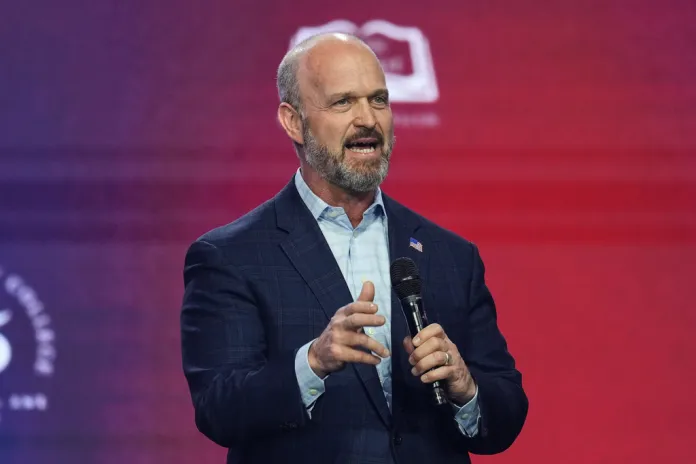
Since the mass exodus, leadership has worked to steady the organization and rebuild its ranks, even as it continues to pursue an agenda shaped by Trump-era priorities. Heritage has brought on 21 new hires since November.
“We’re focused on putting Americans first by fighting for the policies that matter most — unleashing a strong, free economy, restoring trust in our elections, strengthening the family, and making America safe again,” a Heritage spokesperson told the Washington Examiner. “Attempts to distract from that critical work are a disservice to the American people.”
Heritage also has a deep donor base, strong brand recognition, and extensive congressional relationships that could be hard to penetrate. Still, there is an opening.
“Conservative policymaking now resembles a competitive ecosystem where multiple institutions attempt to supply the intellectual architecture of Republican governance,” geopolitical analyst Irina Tsukerman told the Washington Examiner. “The institution that demonstrates reliability, moral discipline, and technical excellence will define the next generation of conservative policy thinking.”
Breaking point
The messy Heritage departures were the result of simmering disagreements within the think tank over its trajectory under Roberts, who took over in 2021 after leaving the Texas Public Policy Foundation. In September 2023, he took over Heritage’s lobbying arm, Heritage Action for America. He also oversaw the creation of Project 2025.
Roberts has pushed the organization to more explicitly align with the president’s policy legacy and to “institutionalize Trumpism,” which emphasizes nationalist, populist, and interventionist stances, in contrast to Heritage’s prior commitment to limited government and free markets. That approach created unease among those who believed Heritage was narrowing its once-expansive, principle-based policy mission.
Senior staff began departing in clusters last year, resulting not only in a loss of expertise and continuity but also in a diminishing of Heritage’s long-standing influence.
The last straw for some came after Roberts stood by Carlson following his interview with Fuentes. His clumsy apology angered several staffers, who began openly questioning the organization’s direction. One person who left soon after told the Washington Examiner she started “looking for a soft landing spot.”
The Carlson-Fuentes fiasco showed how viewpoints once pushed to the fringes had gained traction within parts of the Trump-era Republican coalition. It also fueled a broader debate over whether the conservative movement was losing its coherence and highlighted what it means to be a conservative today.
Political expert Andrellos Mitchell called what happened at Heritage an embarrassing “exposure.”
“For years, Heritage has marketed itself as the intellectual backbone of conservatism,” he told the Washington Examiner. “But under the leadership of Kevin Roberts, the organization has taken a direction that has raised serious questions — not just about ideology, but about judgment and institutional credibility. When an organization finds itself defending ‘free speech’ in the context of figures like Nick Fuentes, it raises a fundamental question: whose speech, and at whose expense?”
Those who left Heritage described an institution they felt had lost its way.
In his resignation letter, Josh Blackman, former senior editor of the Heritage Guide to the Constitution, blamed Roberts for wounding the think tank’s “moral standing.” Blackman also blasted him for turning the once “iconic” brand “toxic” with his actions.
“The Heritage Foundation is greater than any single President,” Blackman wrote. “But one President has done what was once unthinkable.”
AAF’s staying power
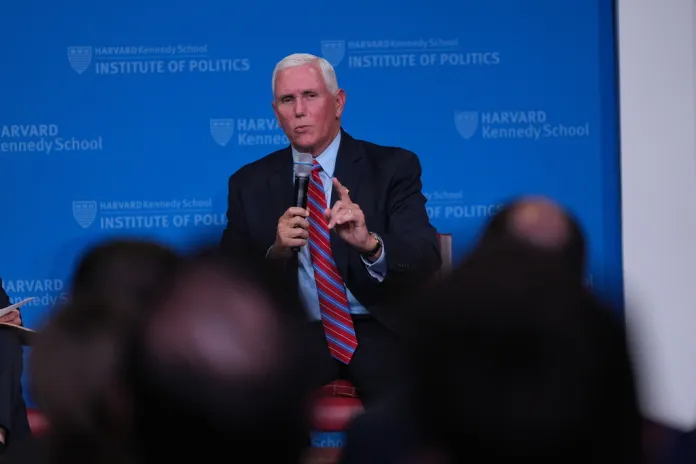
While Heritage has been recalibrating, AAF faces a different test. The organization’s expanded footprint has raised its standing, but its long-term influence remains an open question.
To establish staying power, AAF will need to turn its growth into real policy influence, shaping debates and building alliances, experts told the Washington Examiner.
In an interview with the Washington Examiner, AAF President Tim Chapman discussed the future of conservative policy, the organization’s commitment to conservative principles, and its aim to stand outside the political system. Chapman said what has weakened modern conservatism is not just bad policy outcomes, but a deeper shift in what the movement prioritizes. Conservatism has been grounded in principle, limited government, free markets, and a belief in institutional checks that constrain power. But in recent years, that foundation has eroded as allegiance has shifted from ideas to personalities, he said.
When a political movement organizes around a single leader instead of a coherent set of principles, it creates incentives that reward loyalty over honesty. Institutions that once shaped policy began to mirror that dynamic, he added. Instead of offering independent analysis, they aligned with Trump’s instincts, which in his second term have strayed from core conservative principles. The result has been a movement that lost its ability to self-correct. Conservatism, at its core, has long argued for limits on power, yet personality-driven politics undermines that principle.
Chapman, who worked at Heritage for a decade, said supporters who backed Trump in the last election expected a return to the economic conditions of 2019, but are now feeling the sting of reality. When economic confidence falters, and policy missteps go unchallenged, electoral consequences follow, he said. Chapman argued that this created an opening for principled conservatism to make a comeback.
The jostling for influence between Heritage and AAF has also highlighted the distance maintained by institutions like the American Enterprise Institute. Known for its research-heavy, policy-first approach, AEI has mostly stayed out of the factional infighting, taking a different path from rivals that have become more overtly political. That decision has helped it retain standing across a broad swath of the conservative movement, even as others more aggressively vie for influence within the GOP.
Midterm elections and 2028
The division between the two camps will likely remain as the midterm elections and the 2028 presidential elections approach.
“The significance for 2026 and 2028 lies in how this intellectual competition shapes candidate preparation,” Tsukerman said. “Presidential campaigns depend heavily on think tank-produced personnel lists, executive action plans, judicial nominees, and regulatory blueprints. The policy institutions that emerge strongest from this realignment will influence not only what candidates say but how they govern if elected.”
Wright added that “every time the brain trust of the conservative movement’s policy breaks down, the next election cycle is essentially a competition to see whose policy architecture will eventually dictate the governing vision of the Republican Party.”
