

China’s people, as is sometimes said, are “trying to breathe,” hoping to find some freedom from central control.
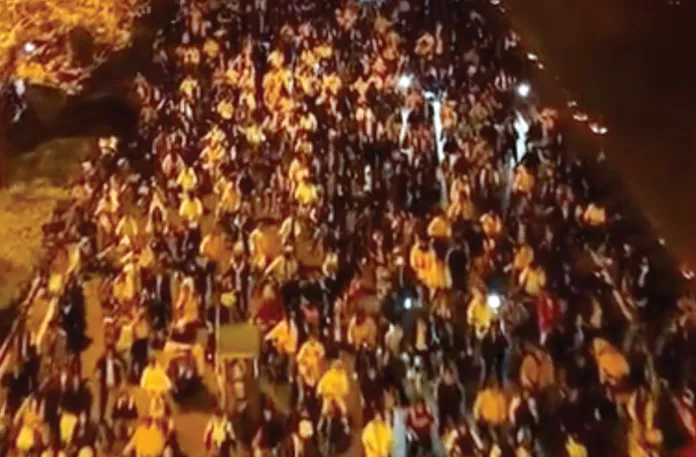
Four female college students in the central city of Zhengzhou tried to breathe in June 2024 as they decided to take an overnight 50-kilometer bike ride to Kaifeng, where they could enjoy a meal of soup dumplings. The craze caught on, and by November 100,000 young people were making the overnight treks.
Were the bike rides innocent activity?
Of course they were, but authorities were deeply concerned nonetheless and left nothing to chance. They tried to limit the number of riders, and there were even reports that colleges and universities were restricting students from congregating and participating.
For an insecure regime, just about everything is considered a threat.
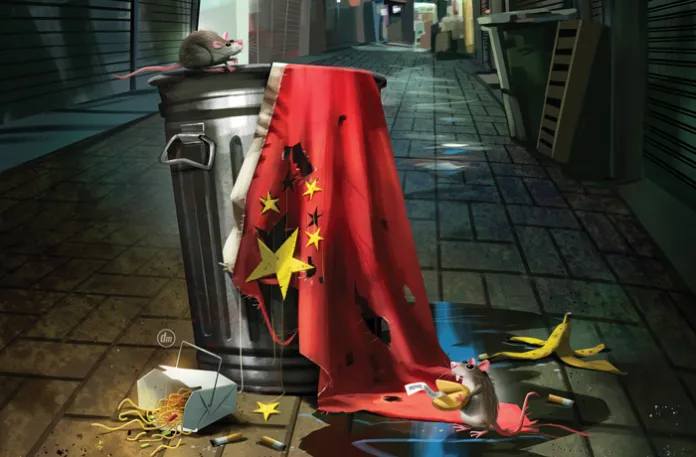
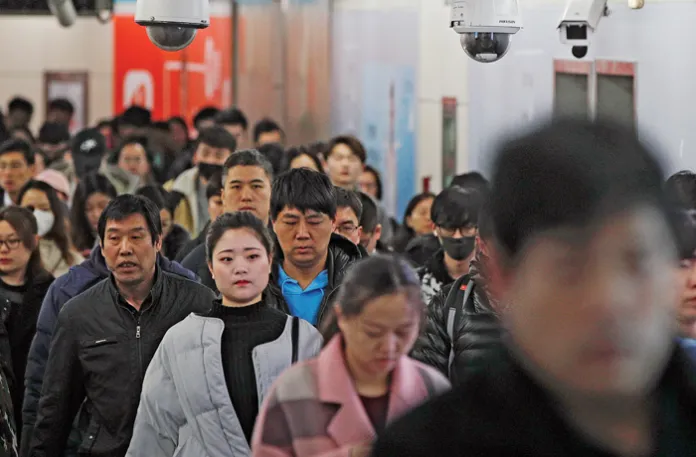
Chinese society has always been volatile, but it is even more so now. President Xi Jinping’s response to widespread unhappiness is to increase coercion. The Chinese Communist Party has developed and now operates the world’s most sophisticated system of social controls, employing, among other things, neighborhood “grid management” monitors, an updated version of local “watchers” from the Maoist era; more than 700 million surveillance cameras; the Great Firewall cutting the country off from the global internet; and a standardized social credit system. The control and surveillance mechanisms, in their totality, are especially merciless. For instance, those with low social credit scores have been completely cut off from society and must sleep in the streets.
“Xi’s response to widespread desperation has been to significantly enhance ‘stability maintenance’ measures to suppress popular discontent through the use of digital technologies that menace and intimidate all expressions of resentment,” said Charles Burton, a former Canadian diplomat in Beijing.
Chinese authorities should be especially worried at the moment because the economy is suffering a prolonged downturn, the first since the end of the Cultural Revolution in 1976. China cannot be growing at officially reported rates, and it is probably contracting outright.
But the downturn is not the real problem for the CCP. The real problem is a growing public perception of unfairness. “China’s economy is failing fast due to Xi Jinping’s policies of repression to preserve the power and privilege of the corrupt Chinese Communist elite,” Burton, now at the Prague-based Sinopsis think tank, told me in November 2024. “More and more people have lost their life savings in the collapse of the housing market. Young people suffer the soul-destroying impact of unemployment.”
Xi, as Burton suggests, has tried to prevent as much as possible the sharing of benefits of growth with the laobaixing, the ordinary Chinese people. Resulting resentment scars China’s society, even though Xi has tried to ban public displays of wealth by senior officials. “He will not adopt measures to address the root causes, instead heartlessly abandoning the Chinese people,” Burton said.
China’s young people are not happy being part of what Dan Wang calls the Communist Party’s “engineering state.” Wang, author of Breakneck: China’s Quest to Engineer the Future, said Chinese leaders “treat society as a big engineering project, where people are yet another building material that the leadership just wants to tweak, and remold, and destroy if necessary.”
“These days, there is a sense of bitter anger among the people at being the voiceless victims of the state’s obsession with world power and beating the United States,” Helen Gao wrote in the New York Times in November.
Xi’s 15th five-year plan, which covers the next half-decade, emphasizes industrial production and technological development, not common welfare. “Many now feel that the very state policies that have made China appear strong overseas are hurting them,” Gao, a Beijing-based freelance writer, explained. “They see a government more concerned with building global influence and dominating export markets than in addressing the challenges of their households.”
As a result of this general feeling of helplessness, horrific acts of violence are scarring China. For instance, for much of 2024, China suffered one mass killing after another. In an especially horrible incident in November of that year, a man drove his SUV on the exercise track of Zhuhai Stadium, killing 35 people and injuring 43 others. Disaffected Chinese are increasingly resorting to violence as their first choice instead of their last one.
The Communist Party’s reaction has been to conceal what is going on, censoring news of such incidents and suppressing expressions of grief and mourning. These actions, by further bottling up emotions, are making a bad situation even worse.
People with resources are, not surprisingly, leaving China. Many others, who cannot get out, have dropped out of society. The University of Pennsylvania’s Victor Mair put it this way in his Language Log: “‘Lying flat,’ ‘Buddha whatever,’ ‘Kong Yijiism,’ ‘involution’ — China today has so many memes for opting out.” Since Mair’s July 2023 posting, young, educated Chinese people have also found a new way to show discontent, which is “retiring” by leaving cities and taking up farming.
The gloom in Chinese society is forcing down birth rates.“In this country, to love your child is to never let him be born in the first place,” is a popular sentiment. In 2022, a young man who was told by officials that his defiant conduct would cause troubles for the next three generations of his family answered, “We are the last generation, thank you.” The video of the threat and rebuff went viral.
There will, of course, be future generations, but the sharp drop in fertility is so serious that China could lose three-quarters of its population by the turn of the century. No aspect of society will be untouched as the People’s Republic goes from the world’s second-most populous state — it lost its population crown to India in the middle of 2023 — to a midsized one.
“China has embarked on a road of demographic no-return,” writes Wang Feng of the University of California, Irvine. Yi Fuxian of the University of Wisconsin-Madison talks about “a civilizational collapse.”
Xi is now out of touch because of Communist Party repression that prevents officials, especially the man at the top, from hearing authentic voices from those they govern. He started his rule in 2012 talking about the “Chinese dream” and later popularized the Maoist-era slogan “common prosperity.” Now, however, such optimistic and uplifting phrases ring hollow.
The Chinese people have a phrase of their own for all this — they refer to the “garbage time of history.” First coined in 2023 by essayist and editor Hu Wenhui, the words have captured the imagination of the disaffected, who now use China’s rich past to criticize Xi obliquely. “As far as Chinese history is concerned, the Ming dynasty opened by Zhu Yuanzhang is a typical ‘historical garbage time,’” business writer Ma Xiangyang noted in February about the founder of that imperial ruling group. “He started his empire dream with severe punishments and harsh laws and wanted to protect the family name for generations. Objectively, it only extended the length and depth of this period of darkness.” In case anyone doubted what all this was about, Ma added that “garbage time” was starting to return to “the heart of Asia.”
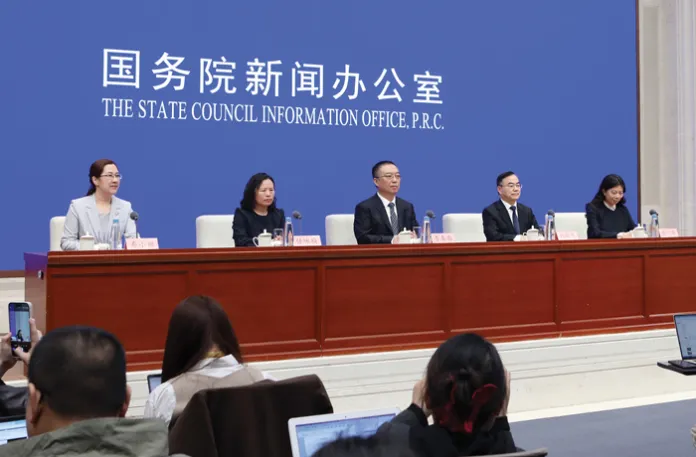
In response to these expressions of deepening malaise, officials are attacking “excessively pessimistic sentiment.” As Burton pointed out in November, censors went on a tone-deaf, two-month campaign aimed at “curbing the spread of fear and anxiety.” For many, the interest of the Communist Party in Ma’s writing confirmed that the country was heading into a grim period. The Chinese are especially dour, now spending time comparing their “misery points.”
“The key political drivers in modern China are the desire for central control at the top and pressure for decentralization from below,” wrote Lanxin Xiang of the Graduate Institute of International and Development Studies in Geneva. Xi’s top-down pressure is beginning to fail as the signs of societal fracturing are evident.
The country itself could fracture. There are always centrifugal forces in a “multicultural empire,” such as China’s.
The Communist Party has sought to unify the country by reinforcing the notion of Han nationalism. The official line is that China is composed of the Hans, who comprise about 91% of the Chinese population, and 55 other ethnic groups. The Hans, considered the world’s largest ethnicity, are not a single monolithic strain of humanity, however, but an amalgamation, the result of the assimilation of various peoples over centuries.
Chinese officials speak of a unified nation. “The people of all ethnic groups are tightly held together like pomegranate seeds, and together they are making arduous efforts for the great rejuvenation of the Chinese nation where they can all live a happy life,” said Yu Jianhua, the head of China’s Mission to the United Nations office at Geneva, at the U.N. Human Rights Council in 2019. Xinhua News Agency reported at the time that all 56 ethnic groups are “living together like brothers and sisters” and “are all part of the big family of the Chinese nation.”
“No, we are not part of a happy Chinese family,” Nury Turkel, an American lawyer of Uyghur heritage, told me in December. “We’re not the same family. We are not even the same race.”
“We want good relations with our neighbors, but they are our neighbors, they are not us,” added Turkel, former chairman of the U.S. Commission on International Religious Freedom.
Today, conquered peoples such as the Tibetans and Uyghurs want their own countries. Some Mongolians hope their lands will become part of neighboring Mongolia.
Even some Han are eager to leave the People’s Republic, especially those in southern areas. There has been an undercurrent in Guangdong that the province would be better off by itself, but separate sentiment has always been high in neighboring Hong Kong, one of China’s two special administrative regions since July 1997. There, people are considered Han but have been abandoning “Chinese” identity. In 2019, the year of protests against Chinese rule, a stunning 92.5% of those in the 18-29 age group identified themselves solely as “Hongkonger.” Hongkonger identity has remained strong throughout this decade among most age groups.
In short, many in China do not want to be included in the Chinese nation. As the Chinese themselves correctly say, there are periods when their country gets larger, and there are periods when it gets smaller. In the interwar warlord period, for instance, the country was fracturing and almost split apart.
China is now held together by totalitarian controls, but those mechanisms could fail, especially if the Communist Party elites continue to quarrel. Then, unhappy people at the periphery just might make their break for freedom.
In the meantime, with an unhappy populace, explosion will become the model of social change. Why were officials in central China so worried about college students riding bikes for soup dumplings?
The Zhengzhou officials were still smarting from the uncontrollable protests that began in the same city in October 2022. Then, hundreds, perhaps thousands, of workers fled “iPhone City,” a manufacturing plant of Hon Hai Precision Industry Co., better known as Foxconn. Videos of what is now called the “Foxconn Great Escape” or the “iPhone Long March” show workers scrambling over high chain fences. “Something snapped over the weekend,” Bloomberg News reported at the time.
To avoid detection, workers traveled through cropland by day and took to the roads at night. “Some people were walking amid wheat fields with their luggage, blankets, and quilts,” one poster said on WeChat, the popular Chinese social media platform. “I couldn’t help but feel sad.”
Residents of neighboring areas rallied, for instance, leaving water and provisions in the open on roadsides. Social media postings reported signs such as “For Foxconn workers returning home.”
Truckers also pitched in to help. Risking detention, they gave workers rides in pick-ups, dump trucks, and flatbeds. One video shows a woman standing on the back of a big tank truck speeding down a highway in the rain.
Workers fled Foxconn’s “closed loop” system, which isolated the plant from the rest of society during the COVID-19 epidemic. The Zhengzhou workers were not just rebelling against strict disease-prevention measures, but against their isolation and top-down constraints. More than a decade before their great escape, several Foxconn workers died by suicide by jumping off buildings at a self-contained plant in Shenzhen, in southern China.
The defiance of the fleeing iPhone City workers in Zhengzhou was contagious. The incident quickly led to spontaneous protests across the country as workers, homeowners, students, elderly people, and others took to the streets for more than two months to complain about a variety of long-simmering grievances. In November 2022, protesters in Shanghai publicly shouted revolutionary slogans. “Step down, Xi Jinping!” they demanded. “Step down, Communist Party!”
China’s millennia of history have been marked by long periods of repression after spasms of violent political change, in seemingly impossible rebellions such as those that eventually toppled China’s first imperial dynasty, the Qin, and the last one, the Qing.
The mighty Qin dynasty was ended by a revolt started by two lowly soldiers who faced execution. The Qings went down after an accidental explosion in Wuchang that Sun Yat-sen, who is considered the leader of the revolutionary forces, read about while he was in Denver. Chinese leaders didn’t foresee the Beijing Spring of 1989, protests in more than 400 Chinese cities that led to the June 4 massacre in the capital, so we have to wonder what they are missing now.
Senior leaders have been desperately trying to set limits as to what is permissible, but their response, removing dissidents and activists from the streets, is not working. Instead, it is prompting even more calls for freedom and demands for political reform. In some cases, the Communist Party’s methods have failed as authorities have had to arrest and rearrest people across the country. As my friend Christopher Tibbs, who was stationed in China as a banker, told me long ago, “There’s a billion people who don’t like following instructions.”
With the policies of repression and centralization with which they intend to create more national unity, Communist Party leaders are delegitimizing themselves. One crude act after another, they are galvanizing public opinion against themselves. The CCP’s traditional methods, therefore, are losing effectiveness in China’s increasingly forward-looking society. Protests today occur not so much because conditions are worse but because, among other things, fear is receding while thinking inside the country is changing, as it has in every modernizing society. “Modernity breeds stability, but modernization breeds instability,” the late Harvard political scientist Samuel Huntington wrote.
The Communist Party should know a thing or two about instability in modernizing societies. Chiang Kai-shek, leader of the Kuomintang, had an overwhelming material and strategic advantage in his struggles as ruler for control of the country in the 1940s against Mao Zedong’s Communist Party.
But toward the end of that decade, the population had had enough of Chiang’s corruption and ineffectiveness, and it wanted something new. Mao said in 1948 that it would take him a decade to prevail. In fact, he needed only a year to get rid of Chiang’s regime and establish the People’s Republic.
Some analysts argue that the Communist Party will remain in power until an organized opposition appears, like Mao’s CCP was to Chiang’s Kuomintang. Since the Cold War, however, many seemingly stable governments have fallen to impromptu crowds in the street.
In January 2001, in Manila, Philippines, “People Power 2,” a mass protest, brought down the corrupt government of President Joseph Estrada. He was finished when an unknown Filipino sent out a text message urging people to congregate at a well-known intersection. The crowd grew geometrically, beyond the expectation or control of anyone. A demonstration that would never have happened in the past occurred spontaneously and grew electronically. Eventually, the military, gauging public opinion by the size and fervor of the crowd, switched allegiance and forced Estrada to resign.
Every revolution in history has had leaders, but today, their role is diminished because crowd formation is becoming the most important factor. As Vaclav Havel, the father of Czech freedom, wrote, “Without anybody organizing a demonstration, the passersby had turned into demonstrators who filled the main square in Prague.” Leaders these days are often the captives of events.
We have, in short, entered an age where spontaneous combustion has become the primary motor of revolutionary upheaval. As Mao himself famously noted, “A single spark can start a prairie fire.” No wonder Chinese officials were afraid of the soup-seeking bike riders in central China last year.
NATIONAL PRIDE IS ESSENTIAL TO NATIONAL SECURITY AND COUNTERING CHINA
China is particularly combustible because the Communist Party has lost both the love and loyalty of large segments of the population, and its ability to inspire and lead is crumbling. It has, therefore, had to resort to short-term measures. “We have been evangelized for decades to think that China is a culture of strategy, that it always adopts the long, patient view,” Blaine Holt, a retired Air Force general and now-China watcher, told me in November. “The Communist Party today is hanging on by a thread and wondering how it will navigate the rest of November rather than the rest of this century. Long-term now means months, not decades.”
The ruling organization is old, and the people are restive. The Communist Party era in China is passing.
Gordon G. Chang is the author of Plan Red: China’s Project to Destroy America and The Coming Collapse of China. Follow him on X @GordonGChang.
