

The late Nobel Prize-winning economist Milton Friedman famously argued that “it is one thing to have free immigration to jobs. It is another thing to have free immigration to welfare. And you cannot have both.”
The man was wrong. You can. The result is now on display within the Somali community in Minnesota.
It’s clear that an outsize level of corruption exists among these newcomers in Minnesota. Tax dollars allegedly flow into autism treatment centers to treat children who don’t have autism, and state funds prop up charitable ventures that employ scores of people but fail to engage in any legitimate charitable functions. That’s just what we know from the existing indictments.

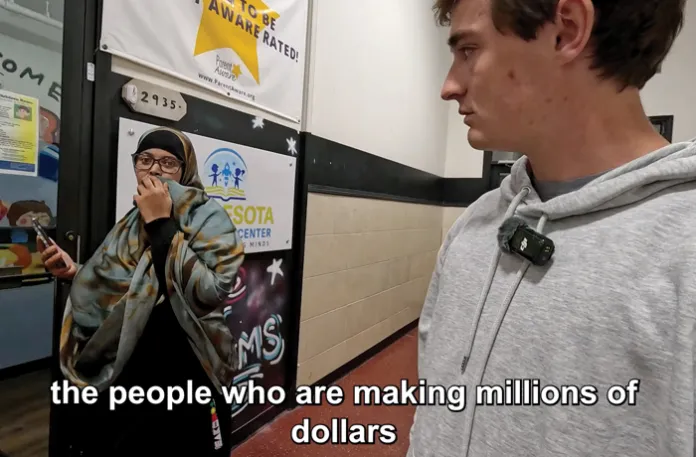
The Somali fraud story was on a low journalistic simmer for years until Ryan Thorpe and Christopher Rufo at City Journal reported that some of the bilked funds were diverted to the terrorist organization al Shabab. Then, the day after Christmas, a 23-year-old YouTuber named Nick Shirley released a 40-minute viral video of Somali-run child care centers in Minnesota allegedly fraudulently taking funding meant to provide for low-income families.
It’s true that Shirley made some mistakes in his investigation, as is expected from an amateur journalist. He’s also delved into some conspiratorial waters without evidence, unfortunately. Perhaps he’ll become a reliable journalist. Perhaps he won’t. Nevertheless, outlets such as CNN expend more energy trying to discredit his work than moving the story forward — ironic, considering its own atrocious track record on both conspiracies and journalism.
Then again, the Left’s reflexive energies are often aimed at diminishing stories or marginalizing reports that put immigrants in a bad light. But the lawbreaking isn’t new to federal prosecutors who have already indicted nearly 100 people for fraud, a healthy majority of them of Somali descent. Nor is it new to local media, which have tepidly covered various angles of the story for years.
And while most of the reporting not unexpectedly focuses on the fiscal extent of the fraud, there’s a broader, gnawing crisis: the immigrant reliance on welfare.
Though Friedman’s comments were in response to a question regarding “unlimited” immigration, both legal and illegal, his point about incentives stands. Immigrants, including his parents, came to the United States in the early 20th century, Friedman argued, “in order to use their resources and their capacities and were productive and help themselves and help the rest of the people who are here.” The contemporary welfare state, which has exploded since Friedman made his comments in 1999, means that people are “immigrating, not in order to use their resources in a productive way, but as it were, to be parasites on the rest of the society.”
It’s difficult to work out the exact percentage of Minnesota Somalis who rely on some form of government handout, but it’s likely extraordinarily high. President Donald Trump shared a graph on social media that showed 72% of Somalis were on welfare. It’s unclear where he got those numbers, but it’s not beyond the realm of possibility. One study, for instance, contends that 86% of Somali households with children receive Medicaid.
When my parents, and hundreds of thousands of others, immigrated to the U.S. as refugees from Eastern Bloc countries in the 1960s and 1970s, they renounced communism in the oath of allegiance to this nation — because collectivism, like Islamism or fascism or any other authoritarianism, is antithetical to the Constitution. Before that, however, they also promised to be self-reliant. The principle driving public charge doctrine is that we don’t want immigrants to be a burden on existing taxpayers, thus denying them the ability to receive assistance until they become citizens.
None of the destructive externalities of dependency change after citizenship. Reliance on the state is antithetical to long-term economic and civic success.
Just look at Europe, where numerous large cities feature suburban enclaves, virtual ghettos, teeming with immigrants who subsist on the dole. The most notorious are the banlieues of France, where generationally unemployed Muslims live in crime-ridden suburbs. But in Germany, descendants of Turkish guest workers and their families who came in the 1950s still congregate in the same isolated areas, struggling to integrate, with a large percentage unemployed and subsisting off generous social benefits.
Somali defenders point out that criminality among immigrant groups isn’t unique to this era. And anyone who’s watched a mafia film likely agrees. The big difference is that most ethnic criminals preyed on their own communities because the state wouldn’t or couldn’t properly protect them. In the case of Somalis, they’ve almost certainly been able to engage in the unprecedented defrauding of taxpayers because politicians, either obsessed with identitarian ideas or looking for new constituents, coddle them.
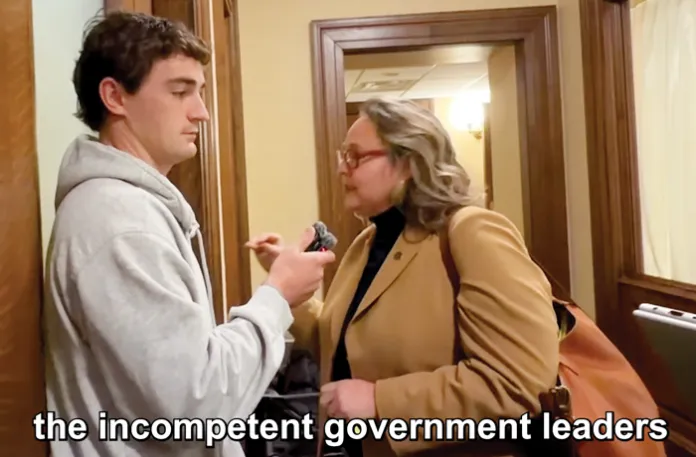
Gov. Tim Walz (D-MN) responded to Shirley’s video by accusing those who amplified it, including Vice President JD Vance, of being driven by “white supremacy.” Minneapolis Mayor Jacob Frey groused about the “racism directed at a black immigrant community,” tying it to the killing of George Floyd.
Since they brought up the question of race, one might ask why other “black immigrant communities” succeed where Somalis fail? Kenyan immigrants, for example, who come from the predominantly Christian nation that borders Somalia, also have black skin, yet they have relatively low welfare and poverty rates. That might be an uncomfortable conversation for Democrats.
Now, it shouldn’t be lost on us that one of the reasons welfare fraud is rampant among Somalis, and others, is our own negligence, permissiveness, and endless expansion of the system. “The three most salient characteristics of Medicare and Medicaid fraud,” Michael Cannon once wrote, “are: it’s brazen, it’s ubiquitous, and it’s other people’s money, so nobody cares.” In Minnesota, the problem is so bad that Assistant U.S. Attorney Joe Thompson speculated that perhaps “half or more” of the $18 billion billed to Medicaid in Minnesota since 2018 has been falsified. Even if Thompson’s claim turns out to be an exaggeration, what we’ve seen is one of the biggest swindles in history. Minnesota’s Medicaid program is so easy to scam that it attracts tourists from around the country who con the state out of tens of millions of dollars. This level of corruption is abnormal even by the shoddy standards of government.
So big, in fact, that Walz, who only in 2024 was a vice presidential candidate, was forced to abandon his gubernatorial reelection campaign. Did Democrats, who increasingly view welfare as an unfettered moral good, interfere or slow-walk enforcement efforts to shield Somalis? In November 2025, a state auditor found that the offices of Walz and his lieutenant governor, Peggy Flanagan, had engaged in a “significant number of instances of noncompliance and internal control deficiencies” related to fraud. In leaked audio, Attorney General Keith Ellison, the top enforcement officer in the state, promises to support the Minnesota Minority Business Association, a group convicted of the “largest pandemic fraud in the United States,” according to prosecutors.
Then again, to be fair, perhaps other states are just as bad or worse. The Biden administration, after all, sent out more than $19 billion in federal funding without requiring attendance verification from child care centers. We don’t know because states such as California refuse to divulge their statistics.
As Americans, we often feel an obligation to celebrate immigrants — all of them, as if everyone who’s ever crossed the border shares identical values, motivations, and achievements. Anything less is treated as an attack on a foundational ideal.
Now, even if you believe immigration is primarily a societal good, as I do, it’s self-destructive to embrace such delusions. There are exemplary immigrants, and then there are those who take advantage of our generosity. Immigrants hold a wide array of ideological, theocratic, and cultural baggage. They have diverse principles, habits, rituals, temperaments, hierarchies of morality, and societal arrangements that form their worldview and inform their behavior — not all of them, or sometimes not even most of them, are necessarily positive. If they were, we’d be the ones emigrating.
And some cultures more easily assimilate into American life than others. Friedman posited that “there are an unlimited number, an infinite number of supply of people who want to live on somebody else’s expense.” This is undoubtedly true. It’s not only about little bits of GDP. Where is the Somali Joe DiMaggio or Frank Sinatra or Enrico Fermi, all of them children of immigrants or immigrants themselves? The most famous Somali in the U.S. is likely to be Rep. Ilhan Omar (D-MN), an unsullied symbol of failed assimilation. The congresswoman is a bad immigrant, not because she’s Muslim or black or a Democrat, but because she doesn’t believe in the ideals that should define American life.
HOW MINNESOTA’S SOMALI FRAUD INDUSTRIAL COMPLEX STOLE MILLIONS FROM MEDICAID
We are constantly lectured that citizenship isn’t contingent on skin color, faith, or ethnicity, but rather a set of beliefs. And I strongly concur. But if we are a creedal nation, then we must admit that our ideas are superior and expect newcomers to embrace them. If the U.S. wants both immigration and a generous welfare state, we have an obligation to existing citizens to welcome newcomers who immigrate “to jobs,” not to dependency. Before modern progressivism gained a foothold in our institutions, this was a near-universal belief in the country. Self-reliance is one of the vital conditions of a prosperous citizenry. But we also want citizens to share a common set of ideals — equality, liberty, rights, rule of law.
In both regards, wokeness, welfare, and immigration have been a toxic mix.
David Harsanyi is a senior writer for the Washington Examiner.
