

In Season 2, Episode 6 of the Netflix series The Crown, titled “Vergangenheit,” Queen Elizabeth II confronts a devastating family secret. Historians have unearthed the Marburg Files — captured Nazi documents from 1945 that detail that her uncle, the Duke of Windsor (the former King Edward VIII), had extensive contacts with the Nazi high command during and before World War II.
The files, long suppressed by Prime Minister Winston Churchill and King George VI, surface again in the 1950s, when American officials threaten to release them. Prime Minister Harold Macmillan brings the matter to the queen. She meets the duke, who offers explanations for his associations while also expressing his hopes for a rehabilitation. Initially inclined toward forgiveness as head of the Church of England, she consults her husband, Prince Philip, and her former private secretary, Tommy Lascelles. Lascelles reveals the full scope of the duke’s actions, including how his suspected disloyalty endangered the nation.
The queen denies the duke’s request for a government role or greater support in Britain, banishing him back to his gilded exile in France. She berates him for betraying both family and country, then seeks spiritual guidance from evangelist Billy Graham to process the personal toll that this abrupt rift with a beloved family member has taken on her. The uncle whom she had once adored has forced her into making a wrenching decision: How would she be able to balance compassion for a close relative against the unbreakable demands of duty and national security?
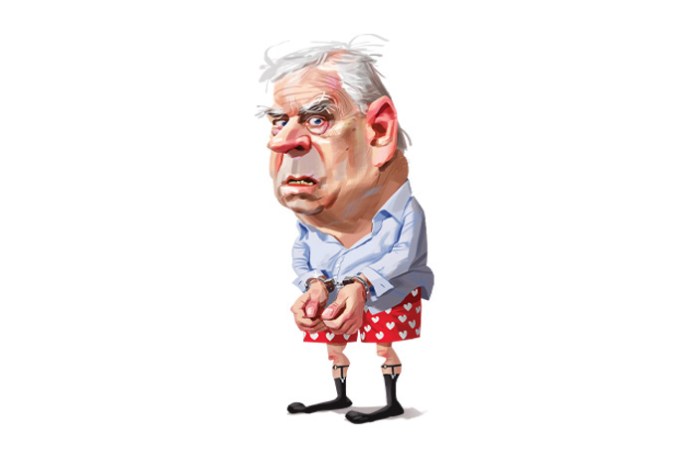
That dramatized moment from a recent Netflix show is now finding a stark real-world parallel in the current British royal family’s handling of another scandal — one involving the queen’s alleged favorite son, former Prince Andrew, and his ties to the convicted sex offender Jeffrey Epstein. The Andrew case has unfolded as the most severe crisis for the monarchy since the Duke of Windsor revelations, forcing King Charles III into difficult choices that echo his mother’s decision to protect the institution at the cost of a family member. Layered on top is the rapid downfall of Peter Mandelson, the veteran Labour Party politician and former U.K. ambassador to the United States, whose own Epstein connections led to his arrest on suspicion of misconduct in public office. Together, the stories read like a real-life fusion of The Crown and the Netflix thriller The Diplomat, where palace intrigue collides with high-stakes embassy maneuvering. The fallout raises pointed questions about accountability at the highest levels of British society and the resilience of the U.S.-U.K. special relationship. And — who knows? — it might even give Netflix an idea for a spinoff series.
Andrew’s Epstein scandal unfolds
Andrew’s association with Epstein dates back decades. Epstein, who died in jail in 2019 while awaiting trial on federal sex trafficking charges, cultivated relationships with powerful figures worldwide. Andrew, the second son of Queen Elizabeth II and the Duke of Edinburgh, met Epstein through mutual social circles. Court records and released documents later placed Andrew at Epstein’s properties, including his New York mansion and private island. In 2015, Virginia Giuffre filed a lawsuit in New York alleging that Epstein and Ghislaine Maxwell, Epstein’s convicted accomplice, trafficked her to Andrew for sexual abuse on three occasions when she was 17. Andrew has consistently and vigorously denied all allegations of sexual misconduct, stating that he has no recollection of meeting Giuffre and rejecting the allegation that he committed any improper conduct.
The public pressure intensified in November 2019 after Andrew’s disastrous BBC Newsnight interview, in which he defended his continued contact with Epstein after the financier’s 2008 conviction for procuring a minor for prostitution. Days later, Andrew announced he was stepping back from royal duties. In January 2022, Queen Elizabeth II stripped him of his military titles and royal patronages. That same month, a New York judge allowed Giuffre’s civil suit to proceed. In February 2022, Andrew and Giuffre reached an out-of-court settlement reported at around $16 million, with Andrew making a substantial donation to Giuffre’s chosen charity. The settlement included no admission of liability. Andrew expressed regret for his association with Epstein but maintained his denials.
Giuffre died by suicide in Australia on April 25, 2025, at age 41. Her posthumous memoir, Nobody’s Girl: A Memoir of Surviving Abuse and Fighting for Justice, published in October 2025, included detailed extracts recounting her allegations against Andrew and other powerful men. The memoir’s release coincided with renewed scrutiny. On Oct. 17, Andrew relinquished his Duke of York title and associated honors.
King Charles draws the line
On Oct. 30, Buckingham Palace announced that King Charles III had initiated the formal process to remove Andrew’s style, titles, and honors. Andrew would henceforth be known as Andrew Mountbatten-Windsor — still a rather regal-sounding name, except now he’d no longer be able to use the “Prince” title. He was also required to vacate Royal Lodge, his residence on the Windsor estate. The palace statement emphasized the king’s decision to distance the monarchy from the controversy.
The most dramatic turn came in February. On Feb. 19, Thames Valley Police arrested Andrew on suspicion of misconduct in public office. The arrest stemmed from allegations that, while serving as the United Kingdom’s special representative for international trade from 2001 to 2011, he shared confidential government information with Epstein. Released Epstein files include emails in which Andrew forwarded official reports from his 2010 trips to Singapore, Vietnam, Shenzhen, and Hong Kong, documents sent to him by his special assistant, directly to Epstein shortly after receiving them. Andrew has denied any wrongdoing in relation to these matters. He was released without charge after questioning, but the investigation continues. British lawmakers have since approved the release of additional confidential vetting documents related to his appointment as trade envoy.
Peter Mandelson’s Epstein fallout
The scandal’s reach extends beyond the palace. Mandelson, a central figure in Labour governments under former Prime Ministers Tony Blair and Gordon Brown, faced parallel scrutiny. Mandelson served as business secretary in 2009 and 2010 and later held senior European roles. In late 2024 or early 2025, Prime Minister Keir Starmer appointed him as U.K. ambassador to the U.S. — one of British diplomacy’s most prestigious posts. Mandelson’s long-standing social acquaintance with Epstein had been public knowledge for years, but fresh document releases altered the picture.
In September 2025, newly surfaced emails and notes showed Mandelson referring to Epstein as “my best pal” in a 2003 birthday tribute and maintaining supportive contact after Epstein’s 2008 conviction. One batch of messages suggested Mandelson encouraged Epstein during his legal troubles. Starmer sacked Mandelson on Sept. 11, 2025, citing the “reprehensible” nature of the communications and discrepancies in what Mandelson had disclosed. Mandelson resigned from the Labour Party and the House of Lords. He expressed deep regret for the friendship and apologized to Epstein’s victims.
Late January brought another wave of Epstein file releases from the U.S. Justice Department — more than 3 million pages. These included indications that Mandelson, while business secretary amid the 2008 financial crisis, passed market-sensitive or confidential government information to Epstein. On Feb. 23, Metropolitan Police arrested Mandelson at his London home on suspicion of misconduct in public office — the same offense under investigation in the case against Andrew. He was questioned for approximately 11 hours and released on bail. Mandelson’s lawyers described the arrest as based on a “baseless suggestion” regarding his intentions. The inquiry continues, with no charges filed. Starmer has faced intense criticism for the original appointment, with opposition figures calling the episode a defining failure of his premiership. Starmer has apologized to Epstein’s victims and said Mandelson “lied repeatedly” about the extent of the contacts.
The Crown collides with The Diplomat
The twin cases — one royal, one diplomatic — have created a narrative that feels ripped from prestige television. The Crown chronicled the monarchy’s internal reckonings with betrayal and duty. The Diplomat, Netflix’s political thriller, follows a fictional U.S. ambassador to the U.K. who navigates crises, intrigue, and trans-Atlantic tensions with her husband, a former ambassador and — spoiler alert! — eventual vice president. The Crown, my go-to choice for entertainment during the pandemic, was a dramatization of real events in the history of the monarchy. The Diplomat is entirely fictional.
The Epstein saga — or perhaps the eventual show will simply be called The Epstein Files, a la the famous sci-fi show? — is entirely real, even though it, at times, seems so unbelievable as to be fictional. In reality, the Epstein documents have entangled a former prince stripped of every royal marker and a former ambassador hauled from his home in handcuffs, both investigated for the same possible breach of public trust. British headlines have drawn the comparison explicitly: Palace walls and embassy cables now share the same toxic thread.
For the British monarchy, the consequences run deep. King Charles has moved decisively to isolate Andrew, removing his titles and evicting him from crown property — if The Crown ever comes back and does a Charles-Andrew episode, I’m envisioning his palace-eviction scene looking like the Better Call Saul episode when the repo men come to ransack Saul’s mansion. Public polling in early 2026 showed division: Roughly half of Britons believed the family should have acted more forcefully earlier, while others viewed the measures as sufficient. Parliament has opened debates on royal finances and has considered legislation to remove him from the line of succession. The monarchy has survived worse — abdications, divorces, deaths — but this episode tests its claim to represent national values at a time when public deference to inherited privilege faces growing skepticism.
Epstein’s shadow over US-UK ties
For Anglophiles such as myself, not only has this all been very sad to watch, but it may also have some real-world implications for the U.S.-U.K. relationship. Mandelson’s appointment and swift removal highlighted vetting lapses at the highest levels of British government. The arrests, triggered by U.S.-released files, have fueled domestic calls for accountability in London without triggering equivalent fallout in Washington. U.S. officials have offered no public comment on the British cases, maintaining a focus on bilateral cooperation in defense, trade, and intelligence. British commentators have noted the irony of a scandal born in American courts rippling into the heart of U.K. institutions. The special relationship, forged in shared wartime sacrifices and sustained through NATO and intelligence partnerships, has weathered greater storms. Still, the optics of a former ambassador under criminal suspicion and a royal stripped of status create an awkward backdrop for diplomatic engagements. Also kind of awkward — another semi-former royal who’s also at odds with his family is still living here in the U.S., though by now we’ve pretty much forgotten about him, right?
What these events ultimately signal is a broader reckoning with accountability among the powerful. The Marburg Files forced a mid-20th-century monarch to choose between blood and country. Today’s Epstein files have compelled a 21st-century king and prime minister to draw similar lines. Andrew Mountbatten-Windsor lives privately, his public role erased. Mandelson awaits the next steps of a police investigation that could stretch on for months. The monarchy continues its public schedule of engagements, emphasizing service and continuity. The Labour government under Starmer presses forward on domestic priorities amid opposition attacks. And the U.S.-U.K. alliance proceeds on autopilot — joint exercises, trade talks, and summits — largely untouched on the surface.
SPORTS TO PLAY BIG ROLE IN TRUMP’S CELEBRATION OF COUNTRY THIS YEAR
Yet beneath that surface, these scandals may linger as cautionary markers. They illustrate how personal failings at the top can erode public confidence in cherished institutions. They show that no title or posting shields anyone from scrutiny when evidence surfaces. And they remind observers on both sides of the Atlantic that the past, once buried, has a way of resurfacing at the worst times.
The Duke of Windsor never regained his footing after “Vergangenheit.” Andrew and Mandelson must now navigate their own versions of exile from influence. For the monarchy and the special relationship, the task ahead is the same one Elizabeth faced in that Crown episode: weigh compassion against duty, protect the core, and move forward. History suggests that both will endure. Whether they emerge stronger depends on how thoroughly the lessons of these files are absorbed.
Daniel Ross Goodman is a Washington Examiner contributing writer and the Allen and Joan Bildner Visiting Scholar at Rutgers University. Find him on X @DanRossGoodman.
