

The Godfather is quite possibly the greatest movie of all time. The Godfather Part II might be even better. The Godfather Part III? We’re better off pretending it never happened. The first Die Hard film might be the greatest action movie of all time. The second Die Hard was pretty good as well. The third? Let’s just say that by 1995, Bruce Willis was no longer exactly in his prime.
Whether it’s The Matrix, The Terminator, Lethal Weapon, or even Shrek, every great movie that’s aspired to become a trilogy (with the possible exceptions of The Lord of the Rings, Star Wars, and Austin Powers) ends up falling off. By the time the filmmakers get to a third movie, they’ve typically exhausted their original inspirations and are forced to rely on formulas and recycled material from their previous productions. If even great films suffer from this law of entropy, what happens when a studio tries to make a trilogy out of a movie that was far from great to begin with? Such is the case with Bad Boys For Life, billed by the film’s PR people as the “highly anticipated” return of Marcus Miles Burnett (Martin Lawrence) and Mike Lowrey (Will Smith). Highly anticipated by whom, exactly?
Recommended Stories
Unable to load sidebar stories right now.
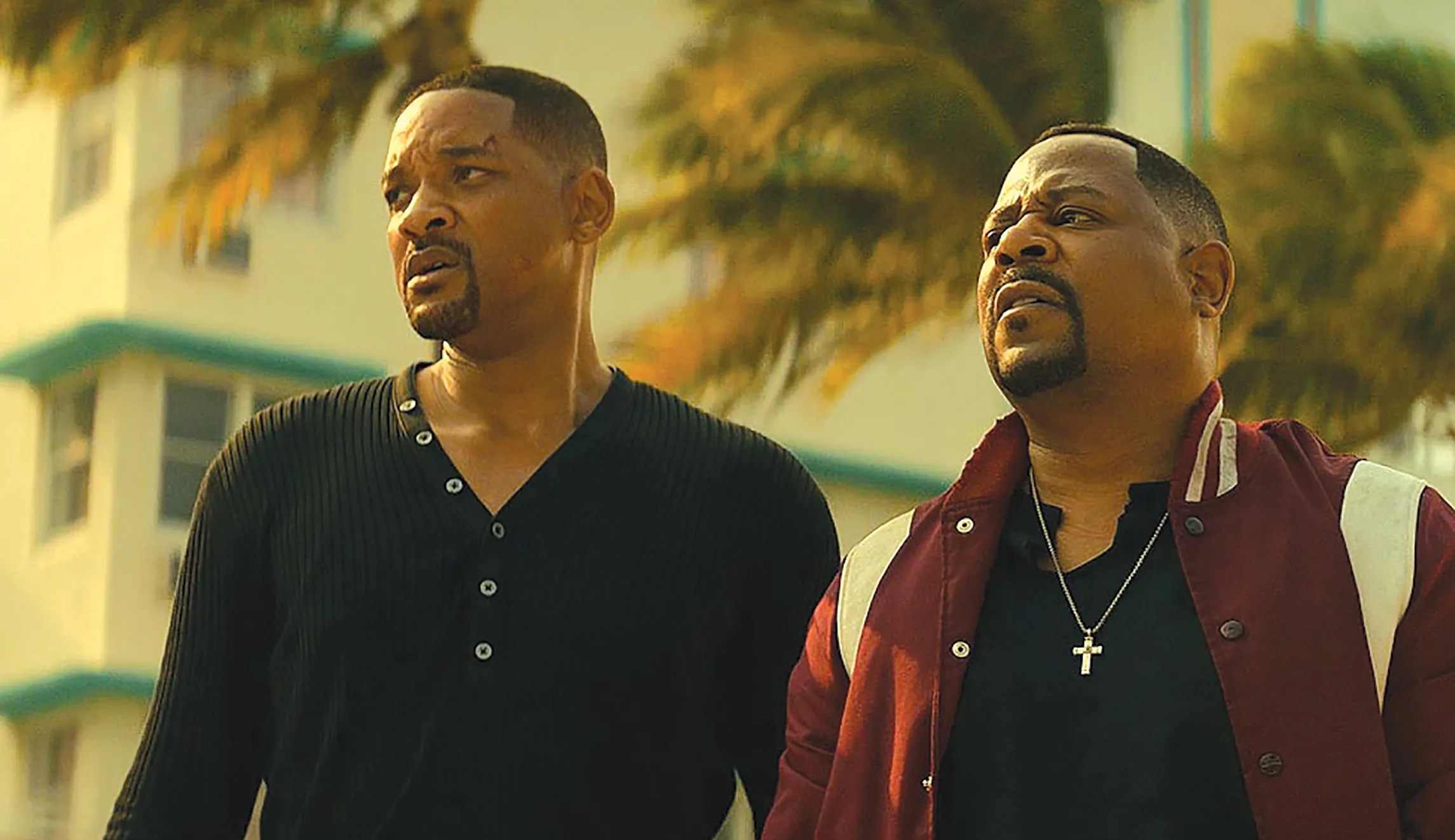
This third installment of the intermittently entertaining, frequently formulaic Bad Boys franchise brings the fast-talking undercover cops back to Miami for yet another spin down buddy-cop comedy lane before quickly cutting to Mexico City, where a mother, Isabel Aretas (Kate del Castillo) is preparing her son Armando (Jacob Scipio), Manchurian Candidate-style, to take revenge on Lowrey, who put her drug lord husband behind bars. “Todo para ti, papa,” Armando states with robotlike compliance.
This perfunctory introduction sets the film’s mostly predictable plot in motion. Armando makes his way to Miami, determined to assassinate Lowrey and recoup the drug money the Miami PD confiscated from his father. We get quite a jolt when Lowrey is shot during the first 15 minutes of the film by a masked motorcyclist who turns out to be Armando. Lowrey survives, of course, and begs his superior to let him and Burnett track down his would-be assassin. The real plot twist comes when Lowrey has to beg Burnett to come out of retirement to help him with the case, and Burnett says no — at first. “I thought we were bad boys for life?” Lowrey says to Burnett. Burnett pleads that he’s done being a bad boy. “’Good men, good men, whatcha gonna do? Whatcha gonna do when they come for you?’ Who the hell wanna sing that song?” Lowrey jokes. “Well, maybe if you sing it like that,” Burnett deadpans. And, just like that, they’re back.
There isn’t much originality here. Lawrence is a bit thicker, and Smith’s famous high top is a bit shorter, but otherwise, not much has changed. We get the same overreliance on shootouts and eye candy, the same gratuitous shots of bikini-clad women, the same strobe-lit scenes of flashy Miami nightlife, the same surfeit of guns, explosions, car chases, and party boats, the same jokes about Burnett’s sexless marriage, the same kinds of lines that would actually be funny if they hadn’t been delivered so earnestly (“That fool put holes in me.” “And you’re filling them with hate”). And, of course, the same Inner Circle “Bad Boys” theme song. The only indications that it’s 2020, not 1995, are that Burnett now has Alexa and a Dwyane Wade Miami Heat jersey instead of an Alonzo Mourning jersey and that the Miami PD has drones. There are a few humorous moments, but Bad Boys For Life mostly lacks the kind of fun, witty banter that lent the first installment of Bad Boys its occasional spark.
We could spend all day picking apart Bad Boys For Life’s absence of imagination — we even get a subplot ripped right out of Return of the Jedi — but even the original Bad Boys wasn’t very original. It was already rather derivative when it debuted in 1995, relying on buddy-cop film conventions that had already been mined nearly to exhaustion by Lethal Weapon and Starsky & Hutch. What made the first Bad Boys occasionally fun was the terrific chemistry between Lawrence, the committed family man, and Smith, the committed bachelor. Lawrence and Smith have always been great together and still are all these years later, but throughout this series they’ve lacked a director and a screenwriter capable of maximizing their talents. Watching Lawrence and Smith play off one another is like watching Michael Jordan and Scottie Pippen before Phil Jackson arrived on the scene to elevate the Chicago Bulls duo to greatness.
Watching Bad Boys for Life, one gets a sense that there is so much more that Lawrence and Smith could have done together if only they hadn’t been saddled with directors such as Michael Bay and screenwriters about whom the accusation of mailing in their scripts would be an insult to anyone who’s actually put in the effort to write out an address and lick an envelope. But then again, if this is what the people want, and it is, judging by the early box-office returns for Bad Boys For Life, then this is what they will keep getting. I’d love to see what a writer-director such as Jordan Peele or Adam McKay would do with Lawrence and Smith. Maybe they’ll give us that treat for Bad Boys IV. One can hope, right?
Daniel Ross Goodman is a writer living in New York, where he is a Ph.D. candidate at the Jewish Theological Seminary of America. He is the author of the forthcoming book Somewhere Over the Rainbow: Wonder and Religion in American Cinema.
