

When a novel is called a “must-read,” it often means that it has become an upper-class status symbol. It will be placed on coffee tables prior to cocktail parties or included in the “ask me about” sections of corporate bios. So it feels wrong to call Lee Durkee’s The Last Taxi Driver a must-read novel. This book is actively antagonistic to the soft-spoken literature that is pumped straight from academic writing programs into the upscale corners of Brooklyn. At the same time, it’s hard not to call The Last Taxi Driver a must-read — simply because it’s one of the best novels in recent memory.
The Last Taxi Driver follows a day in the life of Lou, a down-and-out driver in rural Mississippi who works for All Saints cab company. All Saints helps low-wage workers commute, chauffeurs the elderly on their errands, and functions as a “poor man’s ambulance,” ferrying those who can’t afford hospital bills. The company specializes in miscreants, alcoholics, junkies, and general lowlifes. Lou is a small step above his clientele: a failed novelist whose debut was good enough to land him international grants but who, having never published a second book, finds himself back in his home state helping his fares carry their groceries for dollar tips.
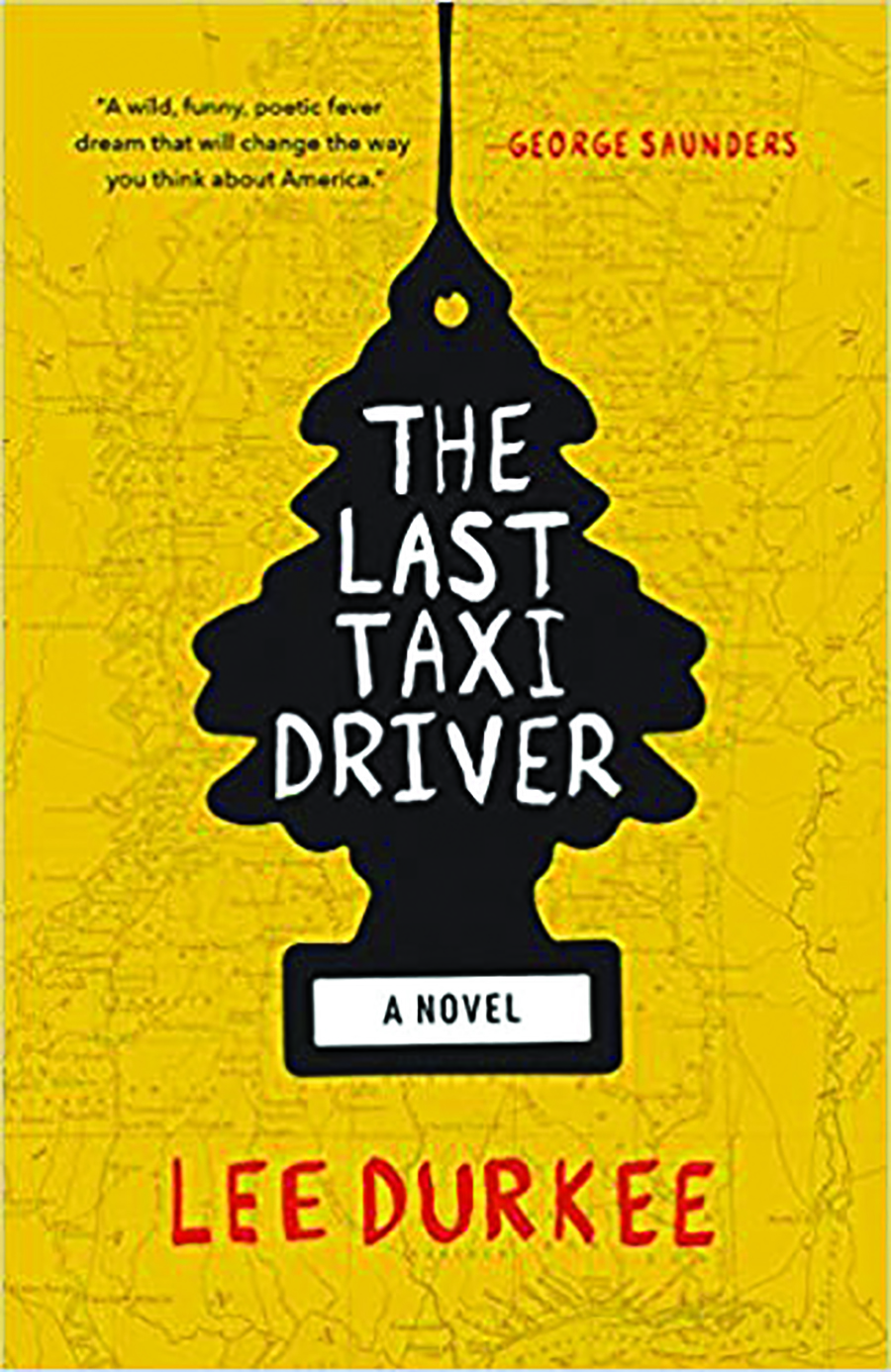
The story is structured around Lou’s fares and begins as a series of vignettes that gradually cohere into a whole as characters return. His poet girlfriend never gets out of bed. His boss’s son has recently cut off his ankle monitor. And the meth addicts he drove earlier in the day are being stalked by one of their abusive husbands, a mute giant with a mohawk. All of this sounds bleak, but the book is laugh-out-loud funny. A chapter on Lou’s driving tips includes wisdom such as, “Your main job as a driver in Mississippi is to anticipate stupidity,” or, “Don’t take selfies at redlights. It makes you look like a superfreak and is so dispiriting for others to behold that it shatters their view of God and humanity and makes them desire an alien invasion.” The story moves at a frenetic pace, and the introduction of a gun toward the third act creates a sense of urgency. But at heart, the novel is driven by Lou’s wildly compelling voice.
Lou draws the reader into the world of rural Mississippi because he is simultaneously a product of his surroundings and set apart from them. He grew up dreaming of teaching Shakespeare and sharing his love of literature. But he was fired from his teaching gig at a community college because of a bar fight — which he won with a head-butt. He references Flannery O’Connor, William Faulkner, and Yukio Mishima but also mocks fiction written by people who have never had a job other than teaching writing and sympathizes with how “regular people don’t read anymore.” (It’s worth noting that The Last Taxi Driver started out as a memoir about Durkee’s years as a taxi driver.) Despite being “that rare beast, a Mississippi Buddhist,” Lou develops a case of “yellow mind,” the unfortunate fate of taxi drivers who succumb to permanent road rage. In Lou’s case, the road rage threatens to transform him into his alter ego, “goat man,” who spends all day flipping off red lights he’s convinced are possessed by demons. The combination of highbrow references and lowlife characters is reminiscent of Cormac McCarthy’s Suttree and makes The Last Taxi Driver a comic masterpiece. But Durkee is after something bigger than laughs.
The Last Taxi Driver asks us to consider what level of kindness or compassion we owe to strangers — and to what extent we are obligated to get involved with other people. In the opening chapter, Lou wonders what makes “an accomplice an accomplice” as he drives a man just released from prison to his ex-girlfriend’s home. “At what moment do you stop being a taxi driver and start being a getaway driver?” he asks himself.
At one point, the police call Lou to pick up a young mother and her infant from a crime scene. The woman had been living in a drug den that was just busted, and now, she has nothing left. At the end of the cab ride, she pays in “balled up snotty bills.” Afterward, Lou realizes that he should have refused her money and bought her diapers for the baby. His guilt causes him to see himself in a “quick vision of a soul resembling a meth head mugshot” and to reminisce about all the other passengers he could have helped more. The various junkies, ex-cons, and elderly whom he failed to treat with true compassion haunt him “like some demented team photo.” Lou’s Buddhism is the source of his constant moral inventory, and when he revisits his failures of compassion, he labels himself the “worst Buddhist in the world.” As the story progresses, this statement accumulates deeper layers of meaning.
Throughout the novel, Lou reads from a book about the historical Buddha. In its unromantic version of Buddhism, the path to nirvana “does not seem particularly virtuous,” and “the idea of compassion doesn’t get much play.” Rather, the book emphasizes seeing past the flux of our thoughts and the conceptual categories we use to navigate the world. Today, most in the West view Buddhism through a humanistic lens and so forget that critics of the religion have always argued that it is a form of nihilism. Lou struggles to emulate a Buddha who doesn’t encourage virtue, an example that conflicts with his own desire to show other people compassion. At the end of the book, Lou has to give a ride to a particularly noxious customer. His Buddhism tells him to avoid both aversion and attraction — to simply drive in silence. But Lou weighs this counsel against the need to love your neighbor. The book ends with Lou, after the worst day of his life, once again making a sacrifice to help others.
The Last Taxi Driver is a wild and hilarious ride filled with dirty jokes. But it’s also a story about a truth we often forget: It’s hard to be a good person. We tend to think of being good as a state of being rather than as a series of strenuous actions and difficult choices. Behind the dark comedy, The Last Taxi Driver is a dead-serious reminder that virtue is a lifelong struggle. Which is why it’s such a wonderful book, one of the best to come along.
James McElroy is a novelist and essayist based in New York.
