

The college sports model has become more chaotic, more money-hungry, and more untenable as the years have gone by, a direct result of the NCAA‘s stubborn refusal to change.
NBA legend Charles Barkley was one of the latest to note this fact, remarking on how stupid (his words) it is that alumni are expected to spend millions on their college sports teams to ensure that they are good. The current model of the sport is athletes being paid by “NIL collectives,” organizations funded by alumni to funnel money to athletes at particular schools for particular sports.
Recommended Stories



ENJOY MARCH MADNESS NOW BEFORE GREED DESTROYS IT
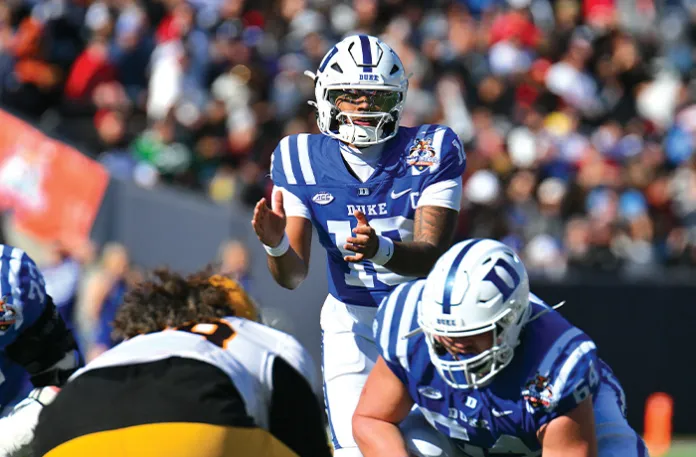
Look around the college football landscape, for example, and you see how ridiculous this all sounds. College football transfer season just ended, and it was littered with news of college football players “resigning” with their college teams, coming to agreements on new contracts as if it were NFL free agency. Worse still were the examples of athletes who resigned with their schools only to then try and transfer just days after signing on the dotted line, as Washington Huskies quarterback Demond Williams Jr. attempted to do and Duke QB Darian Mensah is attempting to do now.
How did we end up here? The NCAA failed to plan for a future in which its amateurism scam fell apart. The NCAA was raking in billions, which it distributed to NCAA bureaucrats, universities, athletic directors, and coaches, while denying any financial benefits to athletes. Athletes who sold an autograph or were given a free sandwich by someone were investigated for receiving “impermissible benefits,” while the NCAA president received a seven-digit salary. The NCAA could have responsibly set the stage for a future in which athletes earned money for their own name, image, and likeness. Instead, it fought change to the bitter end and was picked apart by the courts.
The eligibility rules have seen the same fate. In 2019, the NCAA denied a “hardship” waiver to Brock Hoffman, who wanted to transfer to a school closer to his mother, who was struggling after having a brain tumor removed. That same year, quarterback Tate Martell was granted a “hardship” transfer for no discernible hardship other than that he was not the starter at his current school.
As a result of these inconsistent standards, the NCAA has lost control of its transfer portal and eligibility rules. Quarterback T.J. Finley has transferred to his seventh university and still somehow has football eligibility. Multiple professional basketball players have now been given eligibility to play college basketball, a new problem the sport must handle.
The NCAA’s rules were inherently contradictory, and its standards didn’t exist at all. Once the courts got involved, college athletics turned into the Wild West, and fans are being left to pick up the pieces as their favorite college sports slowly become unrecognizable, governed by lawsuits and court rulings and patchwork rules that change at a moment’s notice.
