
Across the Middle East, there is concern about the nuclear deal with Iran. By releasing frozen assets and removing economic sanctions, the deal seems to facilitate renewed aggression. Won’t that encourage more violence from Iranian terror proxies, like Hezbollah and Hamas? The international community is preparing its response.
While the world’s attention is focused on the Western settlement with Iran, the International Criminal Court in The Hague announced a decision on July 16 that plants its own marker in the Middle East. The ruling by the Pre-Trial Chamber instructed the ICC prosecutor to reconsider her decision not to prosecute Israelis for the violence associated with Israel’s May 2010 seizure of the Mavi Marmara, when that ship sought to challenge Israel’s naval blockade of Gaza.
Recommended Stories
The case was “referred” to the ICC prosecutor in 2013—but not by “Palestine,” where the ship was bound, not even by Turkey, where the so-called Humanitarian Aid Flotilla for Gaza was organized and where many of the affected “passengers” held citizenship. Instead, the dispute was referred by the Union of Comoros, which happened to be where the ship was registered. This island state in the Indian Ocean, with less than a million people, offers a flag of convenience to much international shipping and apparently lends its flag to legal actions, too.
The case was remarkable and disturbing for many reasons. The prosecutor (currently Fatou Bensouda of Gambia) had decided that, even if Israeli actions were unlawful, they did not amount to such “grave breaches” of international standards as to warrant international prosecution. The court rejected the prosecutor’s reasoning and demanded a reconsideration of the decision not to prosecute.
The ICC statute does make provision for such appeals of decisions by the prosecutor. But if there has been a previous case where such an appeal was upheld, it was not noted by the court’s opinion. As the dissenting judge on the three-judge panel explained, the wording of the ICC statute seems to vest considerable discretion in the prosecutor, as is logical: Judgments about the “gravity” of an offense necessarily hinge on elements of context and circumstance not easily captured by abstract formulas. As the dissent also noted, past cases brought by the prosecutor had involved hundreds or thousands of deaths, while this episode involved 10 fatalities.
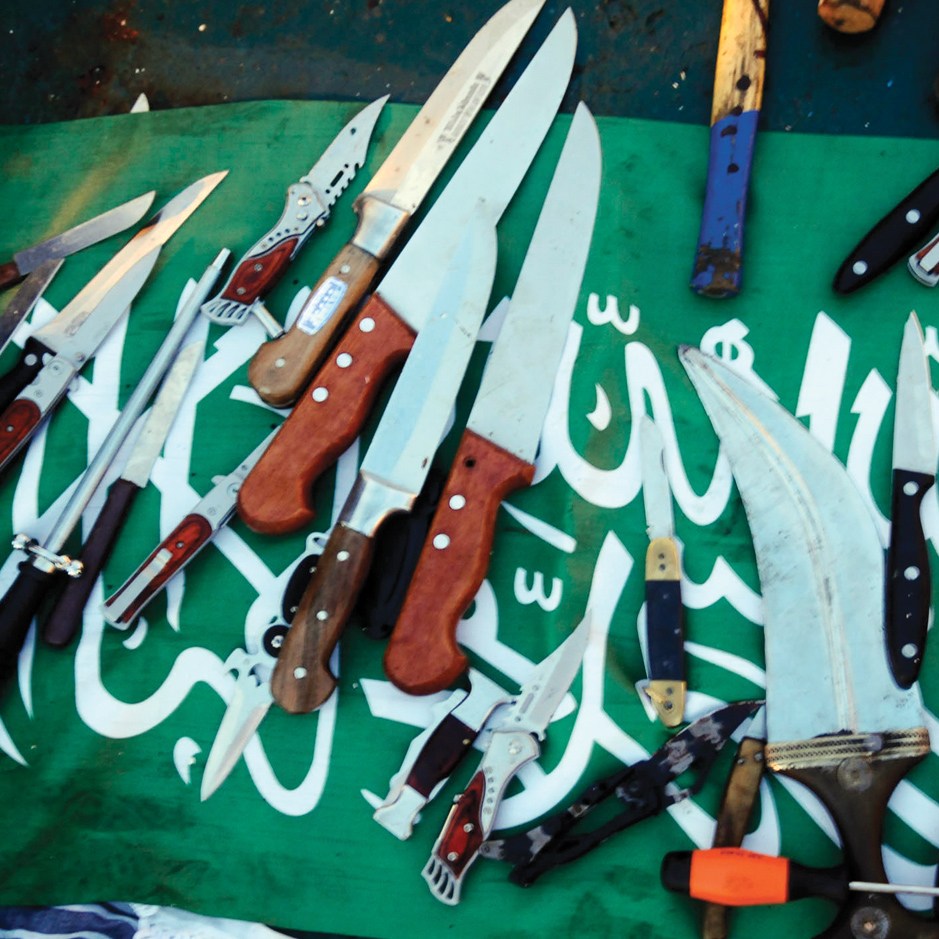
The second remarkable thing was the way the court’s majority dealt with the context of the episode—which was to ignore it. The dissent cited an array of authorities on blockade law, as well as a report for the secretary general of the United Nations prepared by the former prime minister of New Zealand. On these grounds, Judge Peter Kovacs concluded that “Israeli forces had a right to capture the vessel in protection of their blockade,” and in the circumstances “the IDF acted out of necessity.” He also noted that passengers on the Mavi Marmara “attempted to impede the [Israeli] soldiers with use of their fists, knives, chains, wooden clubs, iron rods, and slingshots with metal and glass projectiles” and initially “attacked” and “captured” three of the soldiers in the boarding party. The dissent cited for this finding the report of the Israeli judicial inquiry, which found that the force exercised by the IDF was not excessive in the circumstances.
The majority opinion found none of this background worthy of comment or even acknowledgment. It did not so much as mention the fact that Israel had conducted its own investigation. Yet the ICC statute indicates that the ICC has jurisdiction only where crimes have not been adequately investigated and appropriately punished by national authorities.
The most remarkable aspect of the opinion, however, was the court’s own analysis of “gravity.” The court argued that the prosecutor was wrong to minimize the “gravity” of the episode. It was “simplistic” for the prosecutor to claim that “the identified crimes” had “insufficient gravity” given “the international concern caused by the events at issue which . . . resulted in several fact-finding missions, including by the U.N. Human Rights Council.” In effect, the court argued that if Israel is denounced by the U.N. Human Rights Council, the ICC prosecutor should see herself as its designated enforcement arm.
It’s possible that the ruling simply reflects the idiosyncratic motivations of individual judges. The presiding judge, Joyce Aluoch of Kenya, may have been irked at the prosecutor for having previously pursued an overreaching case against Kenyan leaders—or for having subsequently abandoned it. Judge Cuno Tarfusser, from Italy, may have had ill feelings toward countries that use force at sea, when Italy is expending so much effort to intercept refugees at sea without violence. Judge Kovacs may have dissented because, as a Hungarian, he is distrustful of international interventions in general.
But it’s not possible to believe that ICC judges don’t exchange concerns with colleagues about the significance of their impending rulings. This case came to the Pre-Trial Chamber while the prosecutor was already investigating potential crimes connected with the IDF’s attacks on Gaza last summer. The ruling says to the prosecutor: Don’t dare abandon that case or you’ll have to answer to the judges.
This ruling is therefore a worrisome portent. It seems to say, give no benefit of the doubt to the actions of a democratic state, which operates under the rule of law. It seems to say, give no weight to the urgency of defending against rocket attacks and terror tunnels. It seems to say, don’t worry about seeming to side with angry mobs whipped up by Islamist demagogues—it’s the prosecutor’s job to give satisfaction to those mobs.
Maybe the prosecutor will resist these messages. Maybe later panels of judges will view things differently. But so far, this ruling confirms the longstanding prediction that the ICC would follow the path of most other U.N. organs in cases concerning Israel. At U.N. forums, one-sided denunciations of Israel are regarded as basic professional courtesy.
The government of Israel has been quietly lobbying European governments for the last few months, urging them to threaten the ICC with withdrawal of their support if it hurls itself against Israel. Good luck with that.
In July 2014, just after the latest round of fighting in Gaza had ended, the U.N. Human Rights Council commissioned an inquiry into possible Israeli war crimes. The council’s resolution on this subject was so one-sided that it did not even mention the terror attacks or the barrage of rockets from Gaza. The United States voted against the resolution, while the European states on the council merely abstained. The ensuing report, delivered in June 2015, predictably concluded that Israeli war measures should be investigated as war crimes. The report’s reasoning was severely criticized by British and American military commanders and by experts on the law of armed conflict.
Still, the Human Rights Council voted to endorse the report on July 3. The United States voted against the resolution. All the European states on the council—France, Germany, the Netherlands, and the United Kingdom—voted in favor. The resolution urged Israel to cooperate with the International Criminal Court to help resolve the allegations raised by the report.
Blaming Israel has become an engrained habit with European governments. Two weeks after the vote in the Human Rights Council, the U.N.’s Economic and Social Council voted on a resolution denouncing Israel for depriving Palestinians of their economic and social rights. The text was sponsored by Syria—that is, the Assad government, which has displayed some deficiencies of its own on human rights. The United States and Australia were the only member states to vote against the resolution, which passed overwhelmingly. All EU states voted with the majority.
There are many plausible explanations for this pattern. Surely one of the central ones is long-practiced facility with self-deluding rhetoric. In 2013, the then foreign minister of the Netherlands, socialist Frans Timmermans, gave a speech in Tel Aviv explaining that Europeans are more critical of Israel because they regard it as a European country, so they believe Israel should be held to European standards. As a comment on Israeli war measures from a Dutch official, it was astonishingly tone deaf. The Dutch military is best known for abandoning some 8,000 Bosnian civilians to Serb murder squads in 1995. An international tribunal subsequently described the massacre as “genocidal.” Might there be good reasons why the IDF is less passive than European armies when called on to defend people from terrorist forces with genocidal ambitions?
But if the Israelis were exasperated, Timmermans apparently displayed eloquence appropriate for European audiences. He was subsequently appointed vice-president of the European Commission. In that capacity, he delivered an emotional speech last January expressing dismay about terror attacks on Jewish sites in France and Belgium—without ever acknowledging any connection between those attacks and the official denunciations of Israel by European governments.
German leaders speak more earnestly about their concerns for Israel’s security. Vice-chancellor and economics minister Sigmar Gabriel recently admonished Iran that it could not expect improved trade relations with Germany unless it recognized Israel. The Iranian officials dismissed his remarks out of hand—understandably. Gabriel offered this advice in Tehran, which he was the first Western leader to visit after the nuclear deal was concluded. He took with him a whole contingent of German business representatives, eager to negotiate new deals of their own.
Soothing words are given a lot of weight in countries where foreign policy consists almost entirely of words. So the European Union offered its own follow-up to its endorsement of the Iran deal. On July 20, its council of foreign ministers announced that the EU condemns Israeli settlements and other abuses by Israel, demands that products of Israeli “settlements” be labeled as such for European consumers—and urges “an increased common international effort” to achieve “a just and lasting peace” between Israel and Palestine. Will that stop ISIS rampages in Iraq? Will it settle the endless civil war in Syria or the new one in Yemen? The ministers offered no advice on those issues. Perhaps they couldn’t agree on those harder challenges. They could readily agree on well-practiced rhetoric about Israel and Palestine.
That is another part of the pattern. Europeans now have a strong herd instinct when it comes to international affairs. The United States, and in recent years Canada and Australia, have repeatedly proved their willingness to resist the consensus at the U.N. European governments almost always vote together. In America, we are having an intense debate about whether our Congress should endorse the Iran deal. No European parliament has engaged in any debate on the deal, nor do concessions to Iran seem to have provoked much debate among European commentators. European leaders hailed it as a “step toward peace.” And the international consensus favors it. That’s enough.
The international consensus also favors a vigorous role for the International Criminal Court. At least, that’s what U.N. resolutions indicate. That’s what European governments and EU representatives say. Anyway, the trajectory of the ICC doesn’t affect Europeans, since their own forces are not engaged in combat operations.
But what if they decide down the road there should be a military response to further aggressions—in Ukraine or the Middle East or the Mediterranean . . . or in response to a massive civil insurrection mobilized by angry Islamists in a European city? It might be awkward to pursue military operations under the skeptical scrutiny of the ICC, incited, perhaps, by hostile resolutions at the U.N. It might be hard to recruit American involvement in a military mission that has to operate with the ICC as legal chaperone. But for now, Europe seems content to regard the ICC as Israel’s problem.
We may hope that the Obama administration will try to defend Israel from further demonization in international forums. Since the United States has never joined the ICC, it has little leverage there. All the EU member states have subscribed to the ICC but don’t seem inclined to urge restraint on the court. That is very sad but not at all surprising.
The whole point of the ICC was to hand off moral challenges like mass murder and monstrous brutality to a free-standing international institution—to someone else. European governments were the driving force in establishing the ICC and cajoling African clients and others to participate. Europe still likes to hand off challenges to others.
Jeremy Rabkin is professor of law at George Mason University.