

The local government in Washington, D.C., announced this past week that if the police find you smoking marijuana in public you will not be arrested but issued a citation to pay a nominal fine. How rigorously this not-very-rigorous policy will be enforced is an open question but I am pleased about it, and not for the usual reasons. I loathe pot—the aroma, its effect, the “culture” associated with habitual use—but cannot think of any plausible reason outside custom to criminalize it while tolerating, say, alcohol (which, admittedly, I do not loathe).
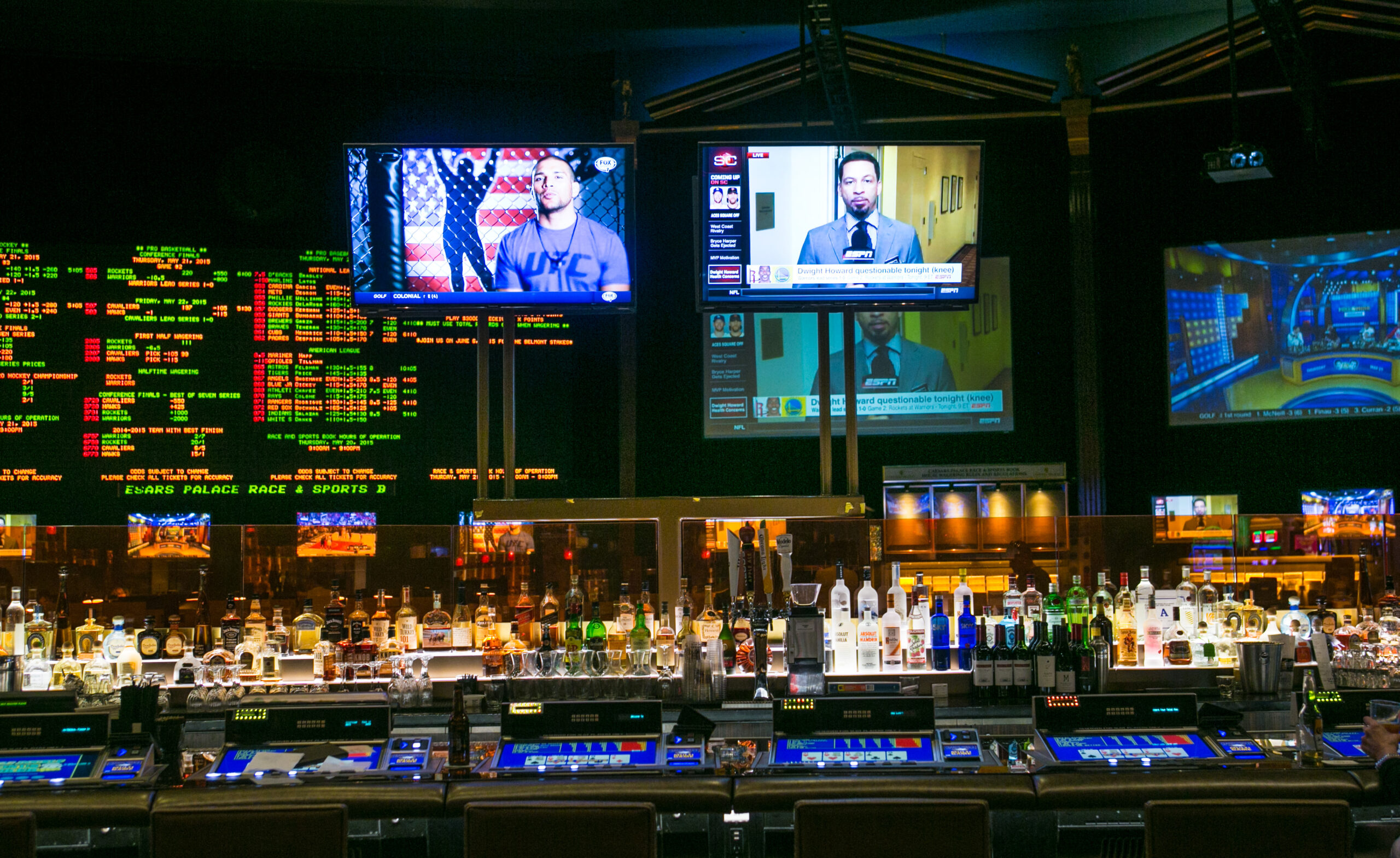
I thought of this last spring when the U.S. Supreme Court, in a stroke of clarity and good sense, struck down the 25-year-old federal Professional and Amateur Sports Protection Act (PASPA), which had been intended to ban states from legalizing gambling on athletic events.
Recommended Stories


To be sure, the Court’s argument in Murphy v. National Collegiate Athletic Association was strictly constitutional—PASPA violated New Jersey’s rights under the Tenth Amendment (“The powers not delegated to the United States . . . nor prohibited by it to the States, are reserved to the States respectively, or to the people”)—but it signified as well what we might call a cultural shift.
I have no doubt that if the social stigma attached to gambling were as potent today as it was, say, in the 19th century, the Court might easily have found a rationale to affirm the ban. But in a world where Congress grants a statutory advantage to Indian tribes by allowing them to own and operate casinos, and states depend to some degree on revenue from lotteries, the moral argument for PASPA is comparatively forlorn.
This is not to say that there isn’t a moral argument for outlawing sports betting, or that statutes aren’t rife with hypocrisy and inconsistencies. But it is to say that the Court reflects evolving social standards as readily as it follows the election returns. Nor is this necessarily a one-way street. The Court’s decision in Obergefell v. Hodges (2015) was clearly a reflection of society’s changing attitude toward homosexuality. But one might also argue that the Court’s affirmation of the Second Amendment in District of Columbia v. Heller (2008) was a step that gun-control advocates would not have expected a generation ago. From the progressive standpoint, one step forward and one back.
By contrast, from my standpoint, both decisions were steps forward. I happen to believe that the language of the Second Amendment isn’t the least bit ambiguous and was clearly intended to ensure the right of individuals to own firearms. By the same token, while marriage has been regarded throughout the centuries as the union of women and men—a view endorsed by Barack Obama himself until a few years ago—there is no particular legal principle involved other than custom. Custom, of course, is not a trivial consideration; but in a free society, just how much constitutional weight should it enjoy?
Similarly, with the District government’s newfound benevolence toward marijuana, custom has essentially given way to widespread practice. In my view, arguments against the use of any “recreational” drug apply as readily to booze as to pot, and we have the sad example of the 18th Amendment—“the manufacture, sale, or transportation of intoxicating liquors . . . for beverage purposes is hereby prohibited”—to see where that trail leads. The arguments against drugs like cannabis are indistinguishable from the (reasonable) prohibitionist case against liquor. Demon Rum was seen to imperil health, public order, and family life. But should the inability of some to tolerate drink be held against all those citizens who drink responsibly?
There are some social problems that legislation cannot solve.
In that sense, the future of sports and betting is an interesting one. The Constitution is entirely silent on both subjects but society is deeply invested in each. I like to think that I have an entirely disinterested perspective—I’m not much of a sports fan and am bored by gambling—but American society in particular feels otherwise. But in what way and for how long? The stigma attached to gambling has not entirely dissolved but is scarcely as ubiquitous as it once was. Moreover, certain practices are embedded in history—betting on horses and other creatures at tracks—or custom, such as World Series/Final Four office pools.
It is worth mentioning that the governing bodies of professional athletics were, in fact, opposed to New Jersey’s appeal against the ban on sports gambling. But their opposition, based on the fear of corruption, was tinctured with a certain inconsistency.
The National Football League, for example, worried that legal gambling on games—or point spreads, or yardage statistics, or whatever—would open the door to player malpractice of the kind that roiled pro baseball in 1919 (the “Black Sox” scandal) and college basketball in the 1950s. No doubt they have reason to be worried. But at the same time, the NFL is entirely comfortable with wagering on “fantasy” football, which exposes real players to real temptation.
The active ingredient in all of this, of course, is money. The NFL along with Major League Baseball and the National Basketball Association, among others, stand to earn billions of dollars annually from legalized wagering. Inasmuch as these institutions exist primarily for commercial purposes, I suspect they will swiftly and decisively come to terms with commercial betting. Which, by the grace of Murphy v. NCAA, is fine with me.
I have inherited few of my late father’s prejudices, but I confess that one of them is a certain snobbishness about professional sports. Although in his youth he was a fan of the Philadelphia Athletics and University of Pennsylvania football, in middle age my father believed that grown men playing boys’ games for a living was unseemly, and that there was an inverse relation between the distinction of an institution of higher learning and the size of its sports establishment.
I don’t entirely disagree, but my own view is more cynical. Americans tend to romanticize, not to say idealize, athletes and athletics, and gambling will inevitably complicate relations. Moreover, the romance tends to exaggerate the virtues and ignore the realities of professional sports. Accordingly, I may be one of the few Americans who failed to be moved by A. Bartlett Giamatti’s famous declaration when, citing “the integrity of the game,” the late commissioner in 1989 banned the Cincinnati Reds’ player-manager Pete Rose from baseball for betting on contests, including games involving his own team.
Eloquent words, even if applied to Major League Baseball. Yet now that some tantalizing mercenary fruit is dangling before this “enduring American institution,” it will be almost as fun as a well-played game to see how those ideals fare when coming into conflict with good old human frailty.
