

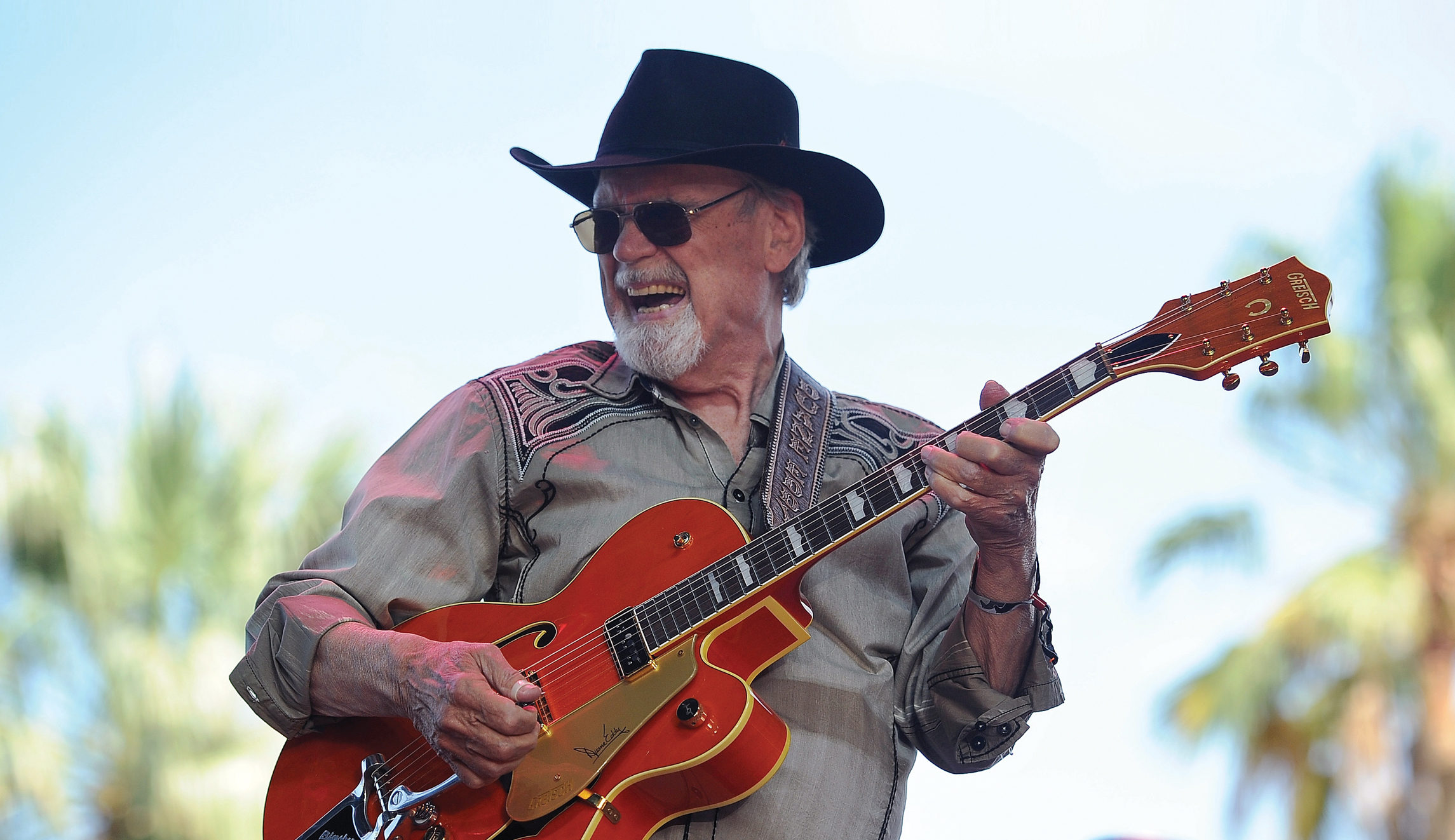
If you ask the proverbial man on the street to name the founding fathers of rock ‘n’ roll, chances are they’d first mention Elvis, and then Chuck Berry, and then maybe Little Richard, Jerry Lee Lewis, Fats Domino, and Buddy Holly, before working their way to the Beatles and the Rolling Stones. But no discussion of the pioneers of this great American music genre would be complete without a hat tip to Duane Eddy, the first solo rock ‘n’ roll guitar star — or, in the more immodest words of singer-songwriter John Fogerty, “the first rock ‘n’ roll guitar god.”
Duane Eddy, who died on April 30 in Franklin, Tennessee, at 86, may have single-handedly created the electric guitar craze in the United States. He can also be credited for having introduced the “twang” sound in rock ‘n’ roll that influenced generations of guitarists on both sides of the Atlantic, from George Harrison and Jimi Hendrix to Hank Marvin and Bruce Springsteen. Eddy was popular not only with rock ‘n’ roll’s elite but with multitudes of fans, as testified to by the over 100 million records he sold in his lifetime and by the 16 top-40 singles he recorded during a remarkably productive half-century-long musical career.
Stay informed.Stay ahead.
Join Washington Examiner for unlimited access to the news, analysis, and commentary that matter most.
Already a member? Log in
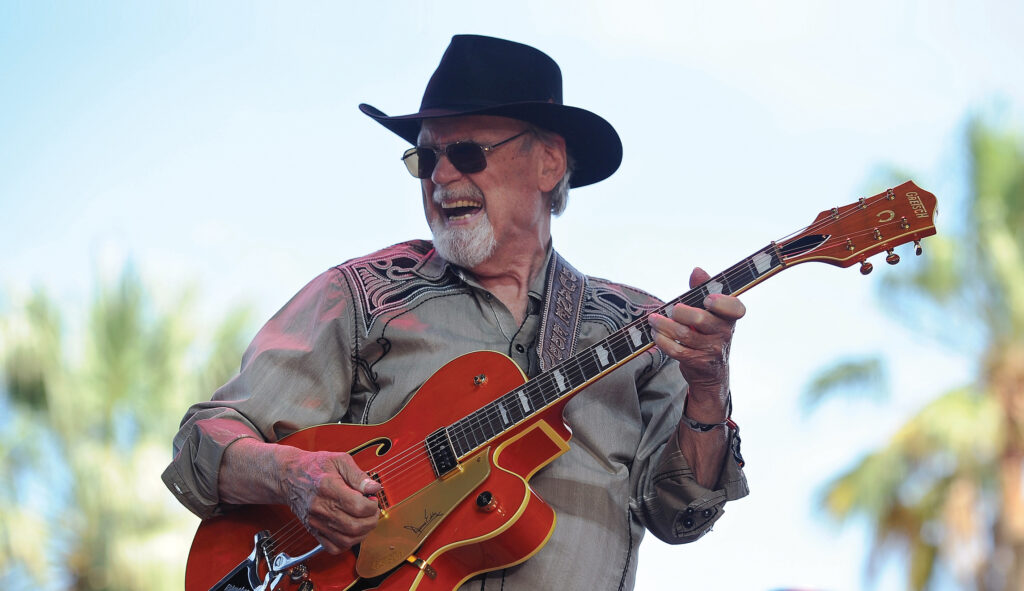
Even if you’ve never heard of Duane Eddy, you’ve probably heard Duane Eddy. His songs have been featured in over 30 movies and TV shows, including Oliver Stone’s Natural Born Killers and the much-loved baseball nostalgia movie The Sandlot (which, if you were anything like me growing up, you saw at least 500 times). Eddy’s twangy guitar chords were also a clear influence on Ennio Morricone’s legendary scores for Sergio Leone’s Dollars trilogy and (in my opinion) on the Breaking Bad and Better Call Saul themes. Nancy Sinatra’s evergreen ’60s ballad “These Boots Are Made for Walkin'” borrowed from Eddy’s signature “twang” style. And Springsteen was so indebted to the rock pioneer that The Boss stated that “without Duane, there’s no ‘Born to Run’ riff.”
It is rare that a child’s hobby at 5 years old becomes his or her lifelong pursuit. (I don’t know about you, but it’s been a while since I played with my Hulk Hogan and Ultimate Warrior action figures.) It’s even rarer still when that childhood hobby becomes a source of riches and fame. But such was the case for the sui generis Eddy, who took up the guitar at age 5 and never looked back. Eddy, who was born and raised in the small upstate New York town of Corning, grew up idolizing the singing cowboys like Gene Autry and Roy Rogers he’d see on TV. Later, he became taken with the Grand Ole Opry, a country music radio broadcast out of Nashville. The Western rhythms and country music cadences that he was fond of in his youth would later become elements in his unique variety of wordless, purely instrumental rock ‘n’ roll.
CLICK HERE TO READ MORE FROM THE WASHINGTON EXAMINER
Despite never having received formal music lessons, Eddy, by the time he moved with his family to Arizona in his early teenage years, was proficient enough on the guitar that he was able to form a credible band with his friend Jimmy Delbridge. Arizona DJ Lee Hazlewood’s discovery of Eddy led to the young rock impresario’s first album, Have ‘Twangy’ Guitar Will Travel, which soared to No. 5 on U.S. album charts in 1958. From then on, Eddy churned out hit after top-10 hit — until 1963, that is, when the stellar wonder that was the Beatles landed like a meteor in the U.S., leading to the extinction (at least for a few decades) of vocalless rock in favor of the Beatles’s new brand of lyrical expressionism. Eddy would never enjoy the same degree of success again, but he never ceased making music, nor did other rock guitarists ever cease admiring him. When Paul McCartney and George Harrison, both avowed acclaimers of Eddy, recorded with him in the ’80s, it was as if they were living out a rock version of Jurassic Park, resurrecting their rock-giant predecessor so that he could roam around our airwaves once more.
Anyone who has sold 100 million or more of anything, even paper clips, probably deserves some kind of recognition for their achievements. There were thus fewer more deserving inductees to the Rock & Roll Hall of Fame than Eddy, who was honored with a permanent place in Cleveland’s Rock Hall in 1994. Eddy’s place in Americans’ popular consciousness, though, is probably even more firmly established by the fact that every time anyone watches Forrest Gump, they hear him, too: His “Rebel Rouser” is the song playing during the famous “Run, Forrest, run!” scene. For as long as Forrest Gump will be running on our screens, Duane Eddy will be running right alongside him.
Daniel Ross Goodman is a Washington Examiner contributing writer and a postdoctoral fellow at Harvard Divinity School. His latest book, Soloveitchik’s Children: Irving Greenberg, David Hartman, Jonathan Sacks, and the Future of Jewish Theology in America, was published last summer by the University of Alabama Press.
