

In last week’s episode of The Pitt, an unhoused neurodivergent sex worker received physician-assisted suicide courtesy of Obamacare. And they say television has lost its values.
All right, I’m exaggerating, but not by much. Now in the middle of its second season, HBO Max’s Emmy-winning hospital drama is to progressives what Fox’s “War on Terror” white-knuckler 24 used to be to the Right: entertainment that scratched us exactly where we itched. In The Pitt’s enlightened universe, doctors are not just trustworthy but saintly, ever ready to intercede for you and me. Every failure is “systemic,” and few problems exist that can’t be solved with more and better government cheese. If In Treatment, HBO’s late-aughts psychotherapeutic procedural, made a certain kind of viewer yearn for the psychiatrist’s couch, expect The Pitt to do the same for the emergency room. No, we don’t really want to spend an afternoon in the care of Noah Wyle’s arch-compassionate team. On the other hand, maybe we actually kind of do?
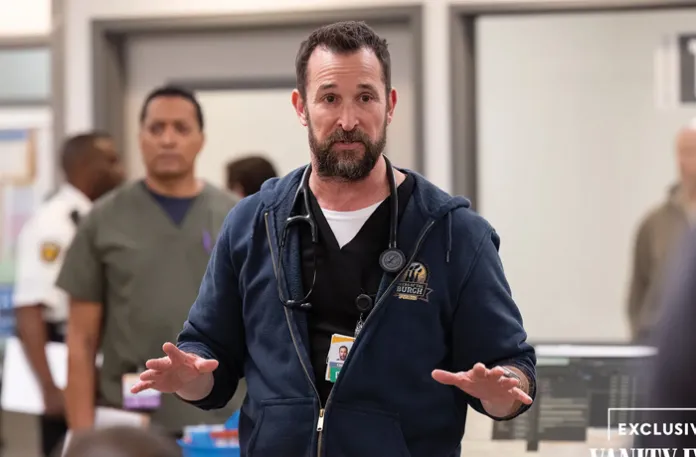
Wyle plays Dr. Michael “Robby” Robinavitch, a senior attending physician at an overcrowded Pittsburgh hospital. Along with his staff of residents, med students, and nurses, Robby patches up the Steel City’s working poor with an almost Mother Teresan goodheartedness and skill. In Season 1, confronted with overdoses, drownings, and a host of other crises great and small, the team nevertheless found time to deliver the soapiness that the best medical series have always brought. Dr. Cassie McKay (Fiona Dourif), then a second-year resident, spent the show’s opening hours in an ankle monitor, having assaulted her louche ex-husband’s latest squeeze. Dr. Heather Collins (Tracey Ifeachor), a more senior MD, had a miscarriage mid-shift. Need I even add that she continued to work?
Season 2’s prevailing tone is at once more serious and less sorrowful. Mostly gone are the staff’s personal foibles and follies, but vanished, too, is the post-COVID-19 despair that hung over the inaugural episodes like an aerosol haze. When viewers first met Robby, the man was a nervous wreck, lost in inescapable memories of the ER’s plague years. In the latest run, he is a font of tranquility and strength, a calming influence so powerful that one might hire him to wind down wars.
What both seasons have in common is the sense that their plotlines have been ripped from the “Policy” section of Democrats.org. Among Season 1’s medical triumphs were the alteration of pronouns on a chart and the awarding of an abortion to a prospective teen mom. Season 2 features a laughably didactic arc in which a family earns too much to qualify for Medicaid and too little to pay their bill. (“They should sign up for the Affordable Care Act,” a nurse brightly intones.) These gestures, shaped by the notion that doctors should be forces for “social justice,” are distracting only to the extent that one fails to take that axiom for granted. For the true believer, they are simply reflections of life, the kind of stories that naturally crop up when one dramatizes healthcare in this benighted, reactionary land.
Given its ham-fisted politics, The Pitt ought to be one of the worst shows on television. Will the reader believe me when I say instead that it is among the best? Beautifully cast and acted, as well-paced as any series in recent memory, HBO’s production is not just watchable but addictive, a weekly antidote to the flavorless crime sagas that now dominate streaming and network TV. As 24 did, The Pitt doles out its action in modulated “real time,” a presentation that captures the energy and chaos of the hospital’s busiest floor. Also like its forerunner, HBO’s latest ends each episode at a moment of peak tension. The canny viewer soon learns to let a few episodes pile up and watch them in an uninterrupted rush. The Pitt is the best “bingeing” show in 20 years.
Still, the series might have flopped were its actors not so likable. As Dana Evans, the ER’s leading day-shift nurse, journeywoman Katherine LaNasa strikes the perfect balance of professionalism and empathy, never more so than during a moving season-two arc in which she treats a victim of sexual assault. Gerran Howell (1917) and Isa Briones (Star Trek: Picard) shine as bickering, codependent interns who live as roommates when they aren’t patching up wounds. Best of all is Taylor Dearden (American Vandal) as Dr. Mel King, a lightly autistic resident and one of the most winning characters of the television year. Due to the show’s tumultuous nature, actors cycle in and out of the spotlight, leading the action for a scene or two, then disappearing into the wings. The ensemble is so well put together, however, that one’s interest never lags. Whoever is onscreen at the moment will do.
TV: WILL ‘SURVIVOR 50’ DE-WOKE-IFY?
Some audiences will find the tension I’m describing to be irreconcilable. If The Pitt is indeed leftist propaganda, then it cannot possibly be good TV. To those readers, I tip my hat respectfully and wish them the best of luck in finding anything to watch or read at all. Perhaps one day conservatives will see our values reflected in the cultural marketplace. Until then, we must either watch with one eye closed or shut the tube off altogether. I personally find it quite easy to enjoy The Pitt while voting against every policy it prefers.
A final point of interest deserves mention. In August 2024, mere months before the show’s premiere, the estate of novelist and ER creator Michael Crichton sued Warner Bros. for producing an unauthorized spinoff of that program. The complaint has not yet been resolved. Let the record show, however, that The Pitt is produced by ER veteran John Wells, is set in an ER, streams new episodes on Thursdays, and regularly sets doctors against annoying, cost-obsessed bureaucrats even as their personal lives bleed into the workplace. On the other side: Wyle’s character has a different name. If I were a lawyer representing HBO’s parent company, I would be concerned.
Graham Hillard is the TV critic for the Washington Examiner magazine and editor at the James G. Martin Center for Academic Renewal.
