
In 1967, as the Cold War still dominated the country’s collective consciousness, Gene Roddenberry added a young Russian navigator to the bridge of the USS Enterprise. The character cheerfully insisted that Scotch whisky, the Garden of Eden, and most other worthwhile inventions had originated in his homeland. Walter Koenig, who died Oct. 25 at 90, was cast in the role less for any deliberate geopolitical statement than because producers wanted someone who looked like Davy Jones of the Monkees.
Recommended Stories

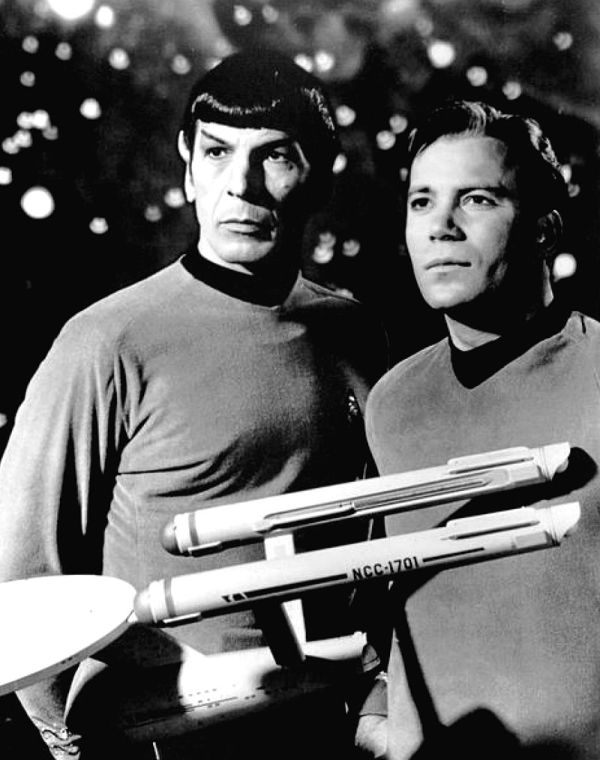
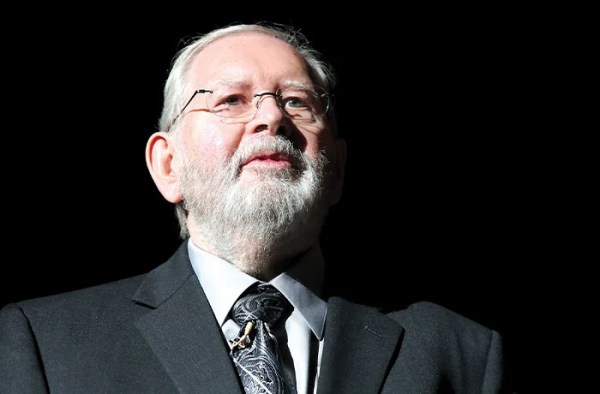
Koenig was born in Chicago in 1936 to Russian immigrants from Lithuania. The family soon moved to the Inwood section of Manhattan, where he grew up. He began college as a pre-med student at Grinnell College before transferring to UCLA. Drawn to acting, he trained at New York’s Neighborhood Playhouse, then took early television roles that included a Marine sergeant on The Lieutenant, Roddenberry’s first series, and a juvenile gang leader in an adaptation of a Harlan Ellison story for The Alfred Hitchcock Hour.

When Roddenberry wanted a character who might draw younger viewers to Star Trek, the physical resemblance to the Monkees singer settled the matter. The show’s producers had been looking for someone who could create the same kind of following that Jones enjoyed among teenagers. Koenig joined at the start of the second season in 1967 and appeared in 36 of the remaining episodes. The accent, with its distinctive substitution of “w” for “v,” was modeled on his father’s. Onscreen, Anton Chekov was the eager, slightly boastful junior officer who claimed Russian priority for every invention under the sun and who could, when the moment called for it, deliver a line like “And I am the tsar of all the Russias!” with deadpan conviction. Offscreen, the part tied Koenig to the franchise for the rest of his career. Fan mail poured in from children who liked the haircut (a wig at first) and paid little attention to the Cold War.
He reprised Chekov in the six films that reunited the original cast and in Star Trek Generations (1994). The movies gave him more to do than the series often had. He received Saturn Award nominations for Star Trek II: The Wrath of Khan (1982), in which a Ceti eel produces one of the franchise’s most memorable screams, and for Star Trek IV: The Voyage Home, in which Chekov wanders through 1986 San Francisco asking passersby where the “nuclear wessels” are kept and later faces an FBI interrogation about his accent and his phaser. Between the films and after the original series ended, work was uneven. The same recognition that filled convention halls also limited the roles he was offered elsewhere. “People are interested in Chekov, not me,” he observed. He wrote for television, including an episode of Star Trek: The Animated Series and episodes of Land of the Lost and The Powers of Matthew Star, published memoirs such as 1998’s Warped Factors: A Neurotic’s Guide to the Universe, and taught acting classes. He remained a regular presence at fan events for decades; in 2023, he posted a blunt invitation to one convention: “Come see me before I die.”
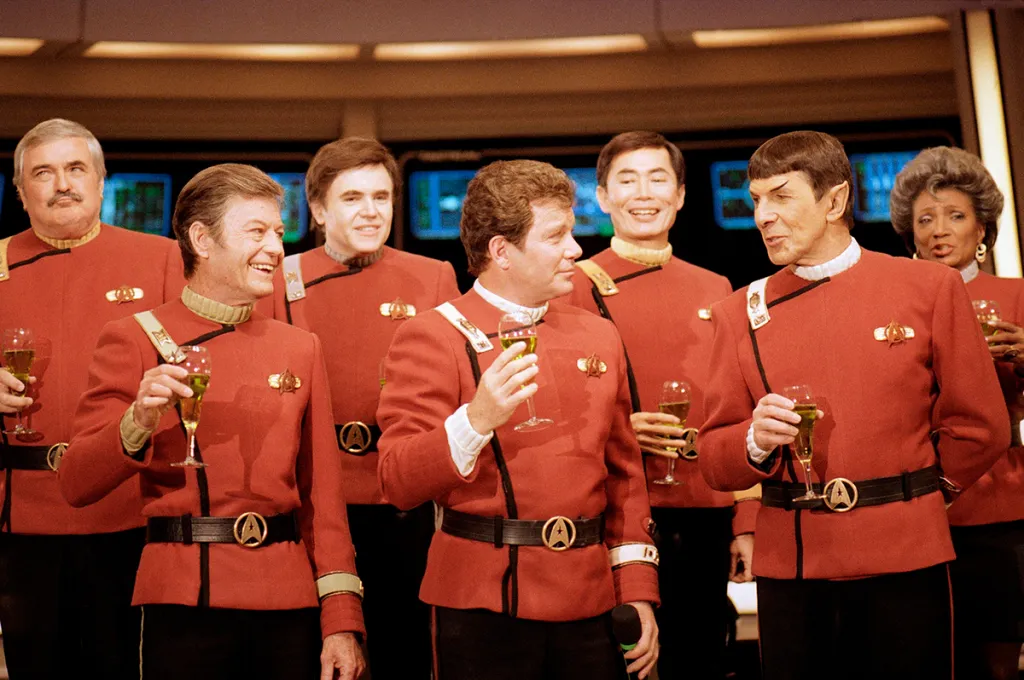
In the 1990s, he found a more substantial part as the calculating Psi Cop Alfred Bester on Babylon 5. The role, which he called the highlight of his acting career, gave him a character with his own agenda, dry humor, and capacity for menace rather than an ensign waiting to be told the next heading. Bester was meant to be a one-off appearance; it became a recurring part across 12 episodes. Koenig valued the chance to play someone who moved the story rather than simply reacting to it, and he later described the part as more exciting and challenging than Chekov. In 2023, he returned once more to the Star Trek universe, voicing Federation President Anton Chekov in the finale of Star Trek: Picard.
OBITUARY: MIKE DITKA, 1939-2026
Koenig received his star on the Hollywood Walk of Fame in 2012, the last of the original series principals to do so. The character introduced as youthful comic relief became an enduring piece of the series’ optimistic picture of the future. Of the famous “Khaaaaaan!” scream in The Wrath of Khan, he once mused that he was going to his grave with the epitaph, “Here lies Walter Koenig. He screamed good.”
He was candid about the limits of the part that defined him. “Sure, I complained here and there about Chekov not being given enough to do,” he said in a 2016 interview, “but if I’m going to be known at all after I’ve departed this mortal coil, it will be as Chekov and I’m happy with that.” Yes, you guessed right — that was a character named Chekov who was referencing Hamlet. Chekov — er, Koenig — added, “I was here for something truly wonderful that has garnered due respect and had something really significant to say about the way we human beings should be operating in this world. I am so very proud of that.”
Daniel Ross Goodman (@DanRossGoodman) is a Washington Examiner contributing writer and teaches theology and religious studies at St. John’s University. His next book, Dante’s Guide to Life: How The Divine Comedy Can Change Our Fortunes, Our World, and Ourselves, will be published this fall by Angelico Press.