

As Donald Trump has taken a commanding lead in the race for the Republican presidential nomination, many professional Republicans and conservative activists have pledged to do everything in their power to stop him.
“We have to deliver a sustained assault on him, on his values, on his business record,” said Tim Miller, a former Jeb Bush spokesman and one-time Republican National Committee staffer who has joined the anti-Trump Our Principles PAC as a communications adviser.
Miller said that in the week surrounding Super Tuesday, as Trump amassed victories, the group raised more money than it had since being formed in January. The group’s deep-pocketed donors include hedge fund billionaire Paul Singer, Hewlett-Packard CEO Meg Whitman and Chicago Cubs co-owner Todd Ricketts.
In addition to the big money donations, the anti-Trump movement has galvanized conservatives on social media, where the #NeverTrump hashtag campaign has gathered steam for those pledging never to vote for Trump even if he’s the nominee. The movement received a high profile endorsement when freshman Sen. Ben Sasse, R-Neb., vowed to seek a third-party option if Trump were the nominee.
The anti-Trump drive shifted into even higher gear on Thursday, when no less than Mitt Romney, the GOP’s nominee for president four years ago, laid out a blistering case for denying Trump that same nomination this time around, calling him, a “phony” and “a fraud.” That night, in a debate in Detroit, Trump came under fire like never before, drawing attention to his business record and new “flexibility” on immigration.
The question is whether this newly united resistance to the Trump phenomenon at such a late date can actually stop the celebrity businessman from completing his hostile takeover of the Republican Party, given the passion and dedication of his fan base.
Though Trump seems to be made of Teflon due to his ability to survive controversies that would have finished any other candidate, supporters of the anti-Trump rebellion note that at no point in the campaign has he been subjected to the bombardment of negative ads and aggressive attacks from rivals that he’ll see in the coming weeks.
They also point to signs that actual voters are mobilizing against Trump. The businessman underperformed in several states on Super Tuesday. On Saturday, Sen. Ted Cruz crushed Trump in Kansas and pulled off an upset in Maine. Though Trump won in Kentucky and Louisiana, the margins were significantly narrower than expected.
In Lousiana, further analysis revealed that Cruz actually carried voters who voted on election day, and that Trump was only able to win because he had banked early and absentee votes before the late Cruz surge. Regardless of how much one wants to read into these signs, at a minimum, it’s clear that voters aren’t coalescing around Trump like they typically do with candidates once they are seen as inevitable.
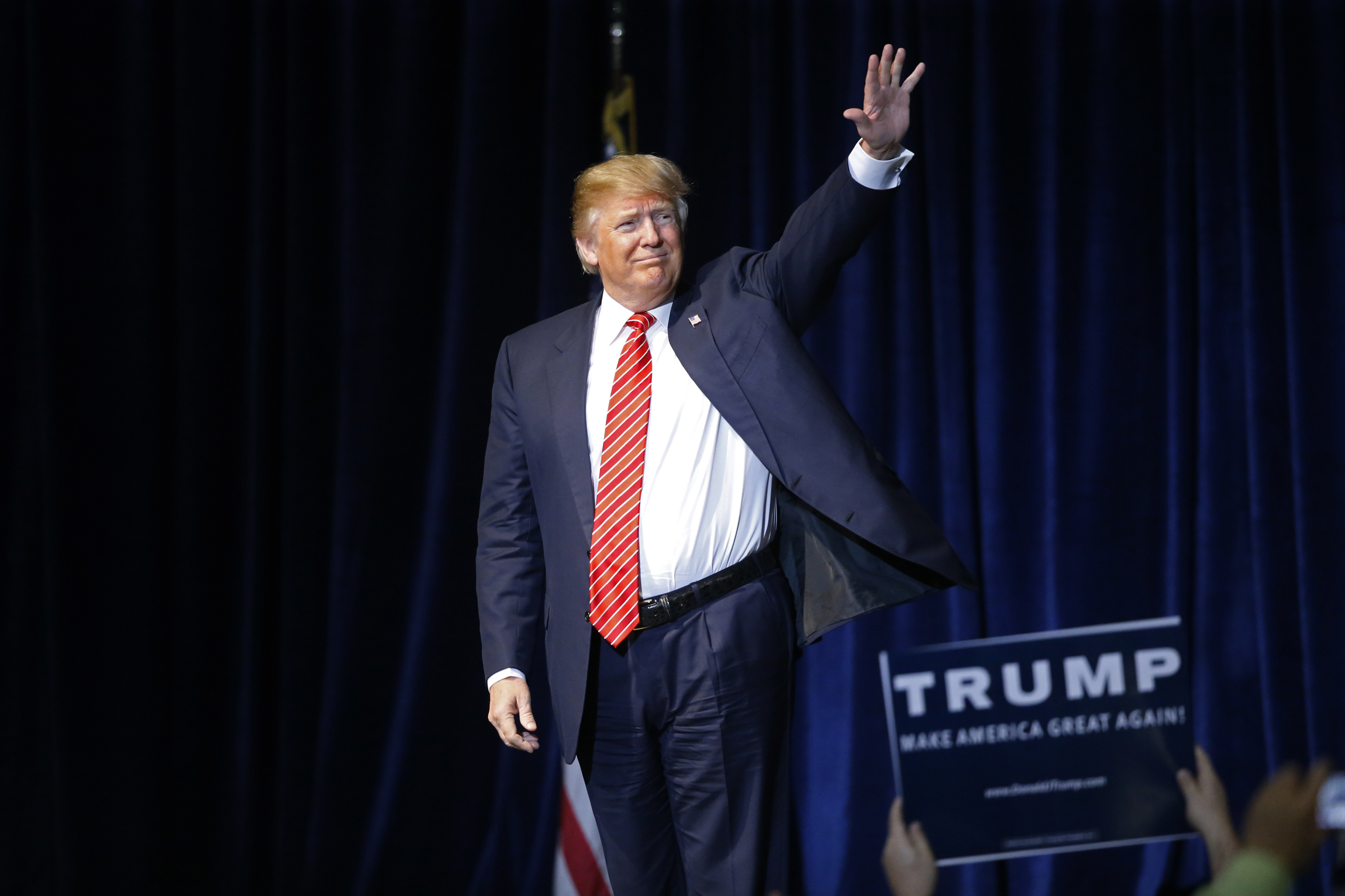
Donald Trump claimed seven victories in states holding voting contests on Super Tuesday. (AP Photo)
Anti-Trump forces are floating multiple ideas on how to thwart him, each of them challenging, and all of them likely to leave the GOP deeply fractured heading into the November election against likely Democratic nominee Hillary Clinton.
Though some of the scenarios being tossed around sound like the plot of a poorly written political TV drama, one thing political operatives kept emphasizing in conversations with the Washington Examiner is that the political world is dealing with something never seen before.
“If we’re in a weird enough political cycle that Donald Trump can be the Republican nominee, then we’re in a political cycle where anything can happen,” said Liz Mair, a Republican consultant and founder of Make America Awesome, an anti-Trump group.
At this point, there are three basic scenarios for opposing Trump:
1.) Defeat him outright by having another candidate win the 1,237 delegates needed to secure the nomination.
2.) Prevent Trump from winning a majority of delegates, forcing him into a floor fight in a contested Republican convention where another candidate could take the nomination.
3.) Rally behind a third-party candidate.
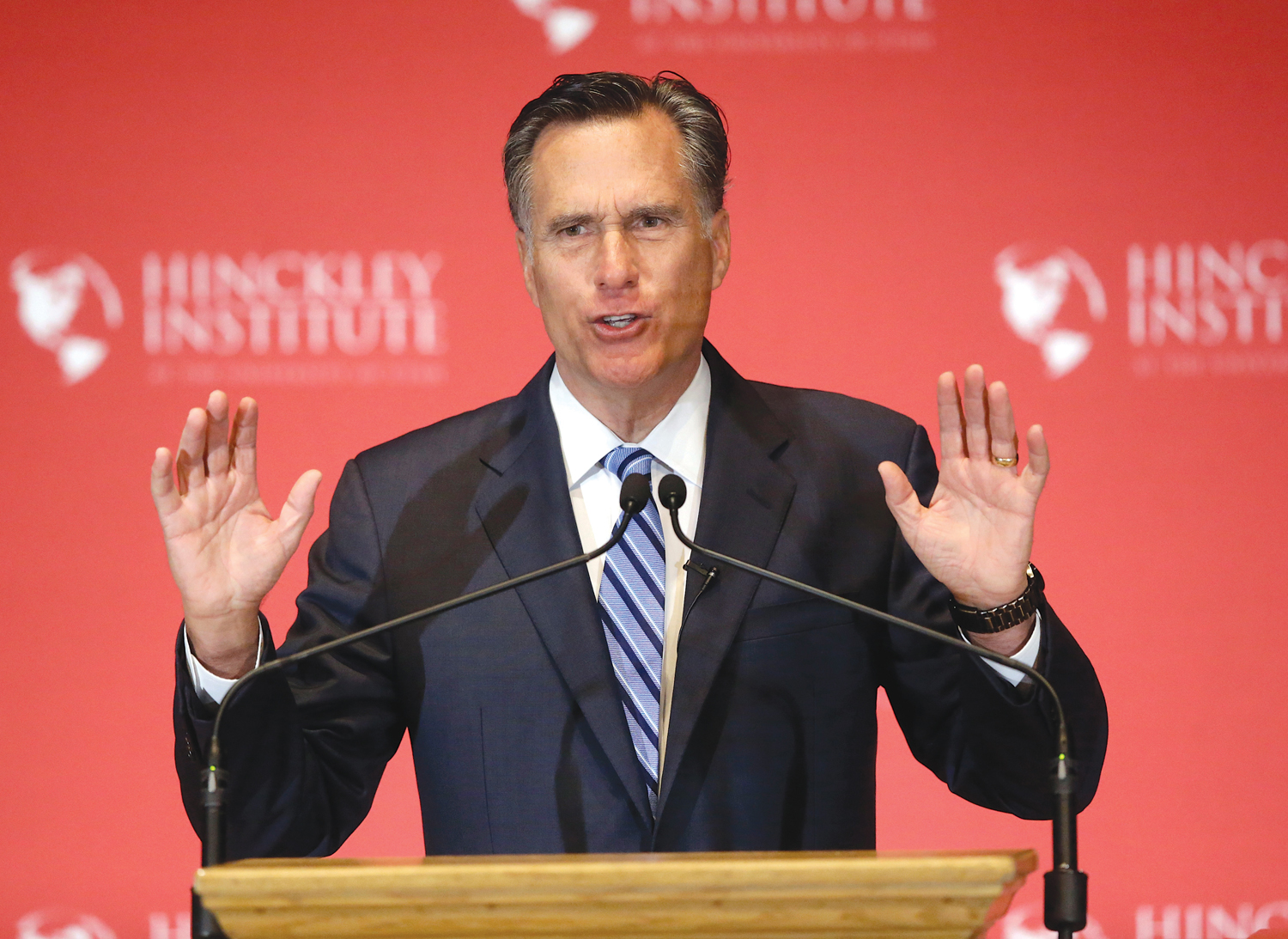
On Thursday, Mitt Romney, the GOP’s nominee for president four years ago, laid out a blistering case for denying Trump that same nomination this time around, calling him, a “phony” and “a fraud.” (AP Photo)
All of these scenarios will likely converge on March 15, when the winner-take-all states of Ohio and Florida vote.
The first option would be by far the cleanest and least fracturing to the Republican Party. But based on current math, and barring a sudden, major change in the race, it’s very unlikely that Cruz, Marco Rubio or John Kasich will overcome their deficits and secure enough delegates to win the nomination given that they all plan to stay in the race at least through the middle of the month.
That’s why some conservatives, including Erick Erickson and Glenn Beck, have suggested a unity ticket with Cruz as president and Rubio as vice president, putting aside their differences, pooling their delegates and focusing their fire on Trump.
This is difficult to implement. Though Cruz has won more states and collected more delegates, Rubio argues that the race has played out in territories more favorable to Cruz, including the South and delegate-rich Texas, his home state.
Upcoming contests, which include Rubio’s home state of Florida, are seen as relatively more favorable to Rubio. So, it’s unlikely that he would agree at this point to be Cruz’s No. 2, when he thinks he could be ahead of Cruz in the delegate count.
That brings us to the second option: a contested convention.
Typically, when a candidate achieves as many victories as Trump has, he gains a flood of endorsements and calls mount for the other candidates to drop out and rally around the nominee. This leads to more victories, and by wider margins. But with Trump, the opposite has happened.

John Kasich winning his home state of Ohio, along with a Rubio win in Florida, makes it increasingly difficult for Trump to secure the delegates necessary to win the nomination outright. Both are huge winner-take-all states. (AP Photo)
If Rubio wins Florida and he (or Kasich) wins Ohio, it becomes increasingly difficult for Trump to secure the delegates necessary to win the nomination outright. Both are huge winner-take-all states. The same day, Illinois, North Carolina and Missouri vote.
Following March 15, the race slows down considerably. As an example, 24 states and the District of Columbia will have voted in the first two weeks of March. But in the five weeks that follow, only four states will vote. It’s hard to see how Trump obtains a majority of delegates before May, at the earliest, and he could need until June 7, which is the last day of the primary season. That provides more time for the attacks on Trump to take hold.
The anti-Trump Our Principles will be focused on hammering Trump to prevent him from securing the necessary delegates.
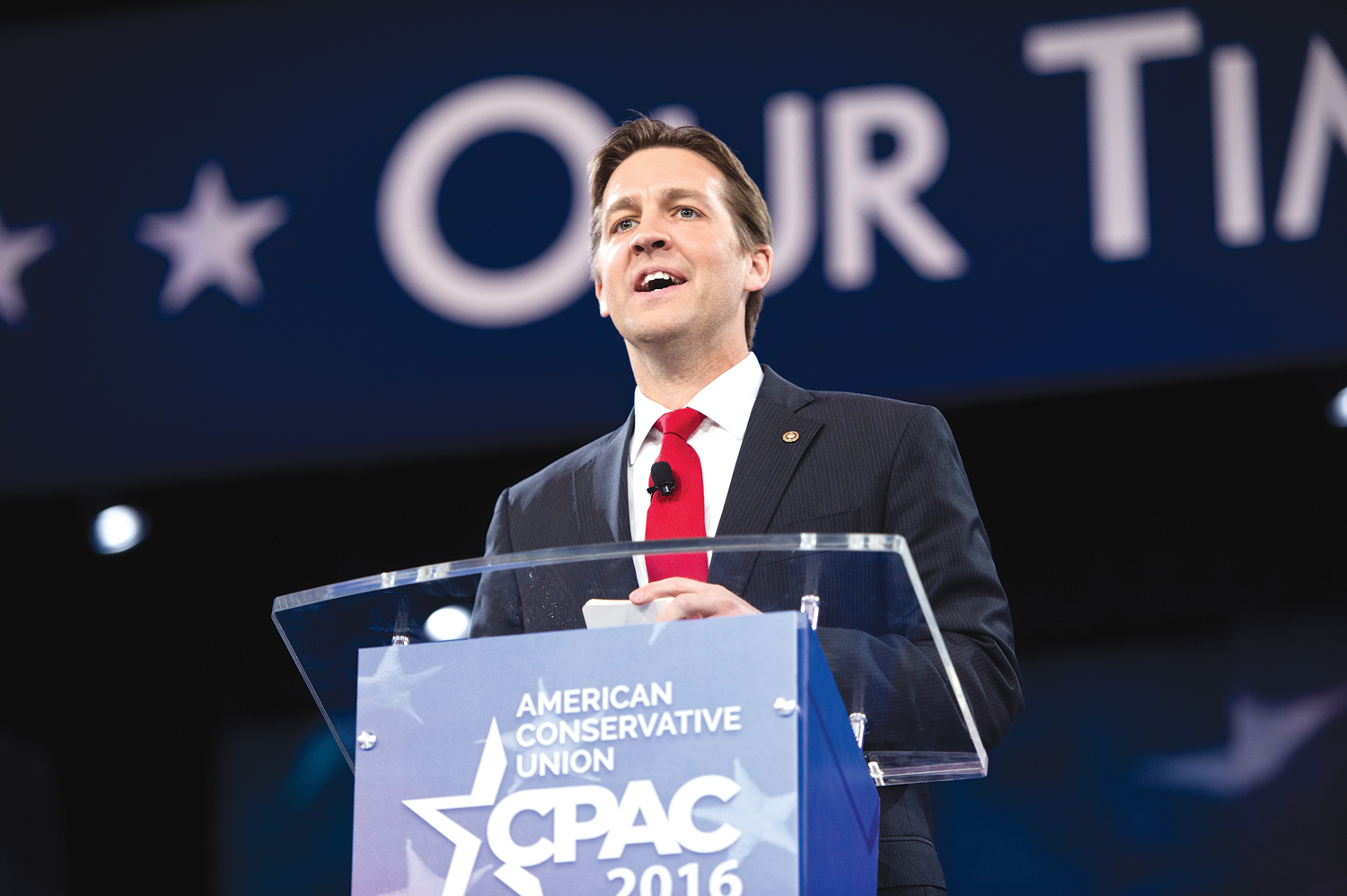
Freshman Sen. Ben Sasse, R-Neb., vowed to seek a third-party option if Donald Trump were the nominee. (AP Photo)
Miller said the campaign against Trump will focus on three basic lines of attack, aimed at his perceived strengths. One, it will attempt to puncture his image of being a truth-teller by portraying him as a phony. Two, it will attack the idea that Trump was a great businessman, and note that he’s a populist and failed businessman who “screwed over” the little guy, whether it was vendors who had supplied his bankrupt businesses or students of Trump University. Three, they’ll attack the idea that he’s a “winner” by pointing out that he’s unelectable in a general election.
Trump has won fewer than 50 percent of delegates thus far, Miller argued, and if that ratio could be maintained, he can’t capture a majority. He said this nomination battle is “unprecedented” and can’t be compared to any recent nomination battles, because a majority of the party still remains against Trump.
In addition to Our Principles, two conservative free market groups — American Future Fund and the Club for Growth — are running millions of anti-Trump adds.
If, after months of aerial bombardment, Trump is denied an outright victory, the nomination battle moves to the convention, which brings a whole separate set of issues.
At conventions, if nobody achieves a majority after the initial round of voting, most of the delegates won during the primaries and caucuses are no longer bound to any candidate. This provides an opening for other candidates in subsequent rounds of voting.
Complicating matters is that in 2012, as part of an effort to prevent an insurgent candidate such as Ron Paul from causing problems at a convention, the RNC changed its rules. In order to be considered for nomination, a candidate must have won a majority of delegates in at least eight states. Ironically, this rule could work to the advantage of Trump and against establishment Republicans trying to stop him.

Upcoming contests include Marco Rubio’s home state of Florida. (AP Photo)
The RNC has the power to change the rules before the convention. Alternatively, delegates can switch during the second ballot to give a non-Trump candidate the required support in eight states to be considered. But all of the convention scenarios bring their own set of problems.
Trump has run his campaign as a populist, arguing that he was looking out for the little guy, and that he’d take on the establishment and the special interests. If Trump wins the most states and delegates, but ends up losing the nomination due to arcane rule changes and parliamentary maneuvering by party elites, it would be seen as a vast betrayal of millions of voters. There would be a bitter battle on national television. A spurned Trump would almost certainly bolt the party with his loyal followers, running as an independent — even if it means as a write-in candidate. Were Trump to cost Republicans even a few points in some close states, it would be difficult for any GOP presidential candidate to beat Clinton.
That said, many would argue it would be worth it to take a stand against Trumpism. His nomination threatens to destroy the ideological makeup of the party that has endured for decades and taint House and Senate candidates with his racially-tinged rhetoric and bombastic statements.
If Trump opponents hold out for a contested convention and the gambit fails, it would also be impossible to run a credible third-party candidate because of ballot access deadlines. And it would be too late for short cuts to gaining ballot access, such as working through the Libertarian Party or Constitution Party, because by that time those parties will have already nominated their own candidates. Given this, the groundwork for any third-party bid would have to be laid long before the GOP convention.
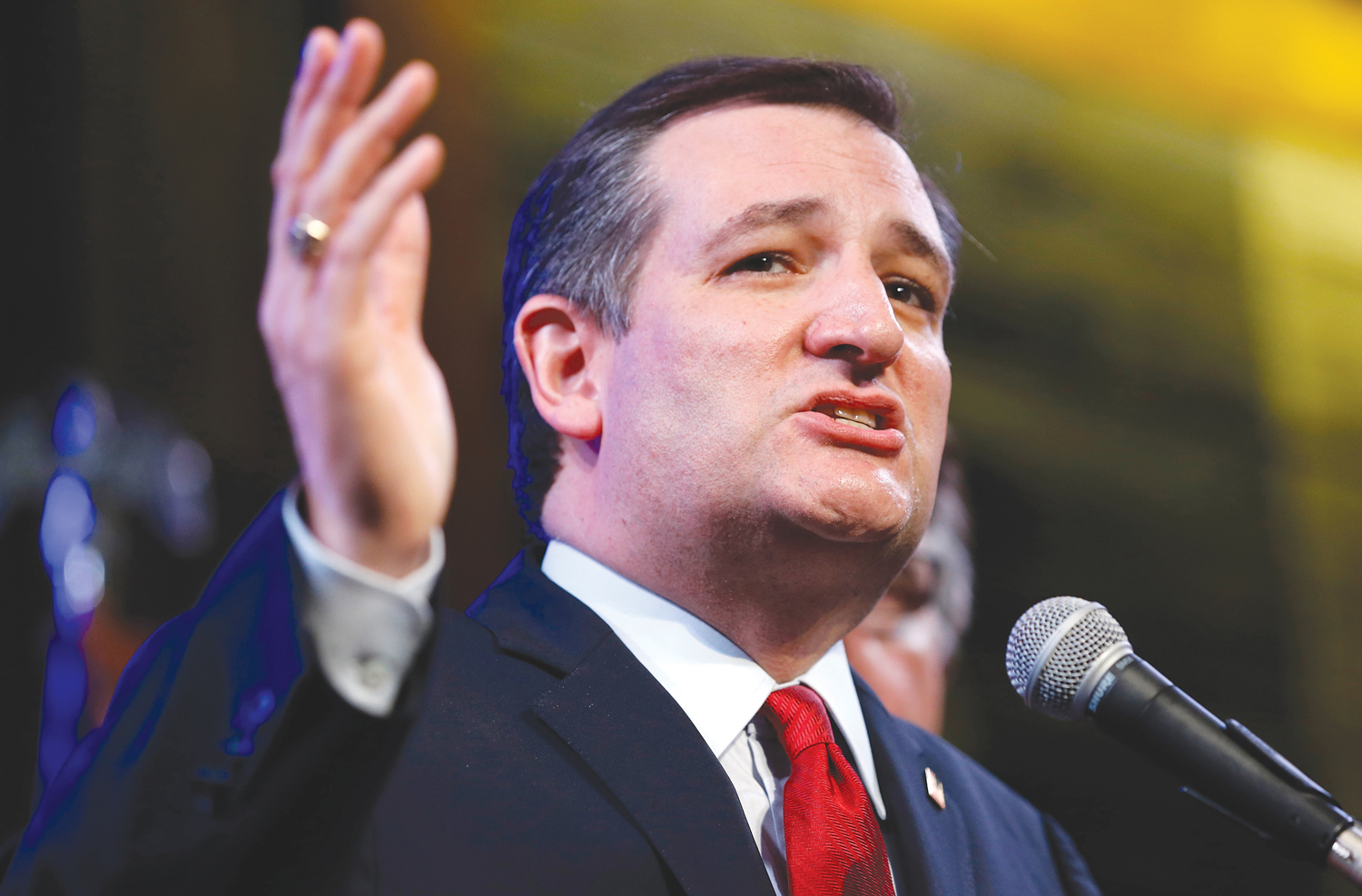
Ted Cruz has won more states and collected more delegates than any candidate other than Trump. (AP Photo)
Most Republicans would prefer to block Trump from winning the nomination than have to vote third party. So they don’t want to prematurely surrender the party to Trump. But since waiting too long carries risk, this is another reason that March 15 looms large. The contested convention scenario hinges on Trump losing Ohio and Florida on that day. If he wins both, the picture changes dramatically. Kasich and Rubio will be forced to drop out, having suffered embarrassing defeats in their own states, and Trump will be well on his way to gaining a majority of delegates as the race moves to states less favorable to Cruz.
At that point, conservatives in the #NeverTrump camp may start to turn their attention toward a third party. The idea would be two-fold. It would provide an outlet for people who just cannot stomach voting for Trump and want to take a moral stand against him. But more practically, it would give disillusioned Republican voters a reason to show up to the polls so GOP House and Senate candidates aren’t collateral damage of anti-Trump sentiment. Yet a third-party bid by a prominent conservative would also work to Clinton’s benefit.
Republicans entered the 2016 election confident that their deep bench of contenders would produce a formidable candidate to go up against a very vulnerable Clinton. But Trump benefited from the fact that the field was so crowded — boasting as many as 17 candidates — and that he was underestimated for so long. Instead of wasting resources on attacking somebody viewed as a joke candidate, the other Republicans spent hundreds of millions of dollars taking aim at each other.
It may be too late to change the outcome of the race, but Republicans who view Trump as an existential threat to the party aren’t ready to go down without giving him a tougher fight.
