

House Majority Leader Kevin McCarthy, R-Calif., thinks that some Republican leaders contributed to the anger fueling Donald Trump’s rise by raising “expectations higher than what we could achieve” in recent years, and by neglecting to tout the conservative priorities they have accomplished.
In 2016, McCarthy has a lead role in setting expectations in the House. He is overseeing the five congressional task forces that are developing what Speaker Paul Ryan hopes will be a conservative agenda for the next Republican president to enact in 2017. Trump’s rise might distract voters from that agenda — “I don’t know if it helps or hurts,” he says — but McCarthy says the House Republicans will try to rally public opinion around their agenda regardless of who emerges as the nominee.
First, though, the lawmakers have to settle an intraparty disagreement about spending. McCarthy touts capping discretionary spending as one of their major accomplishments since House Republicans took the majority, but former Speaker John Boehner’s final spending deal lifted those caps last year. With House conservatives trying to pull back that spending, at risk of derailing the appropriations process, McCarthy wants the conference to unite behind a budget that sticks with Boehner’s deal so they can pass appropriations bills that limit President Obama’s power during his final year in office.
Washington Examiner: Donald Trump’s rise in the field has been attributed pretty universally to voter anger at President Obama, but also the Republican Congress, especially leadership. Is there anything you can look back at in hindsight that, if Congress had handled differently or GOP leadership had handled differently, might have preempted this anger?
McCarthy: I think some people gave higher expectations — not higher expectations, but promised things that could not be achieved when we only had the House and not the Senate, for some of the things there. They made expectations higher than what we could achieve. The other thing I believe that we haven’t done as well is talk about the successes. I mean, when you look at discretionary spending, you look at what we’ve been able to cap, you look at some of those challenges [and] the successes, we’ve been pretty good. When you look back, you wish we could have handled some of the cliffs earlier. We would have been stronger, but now we’ve got them done.
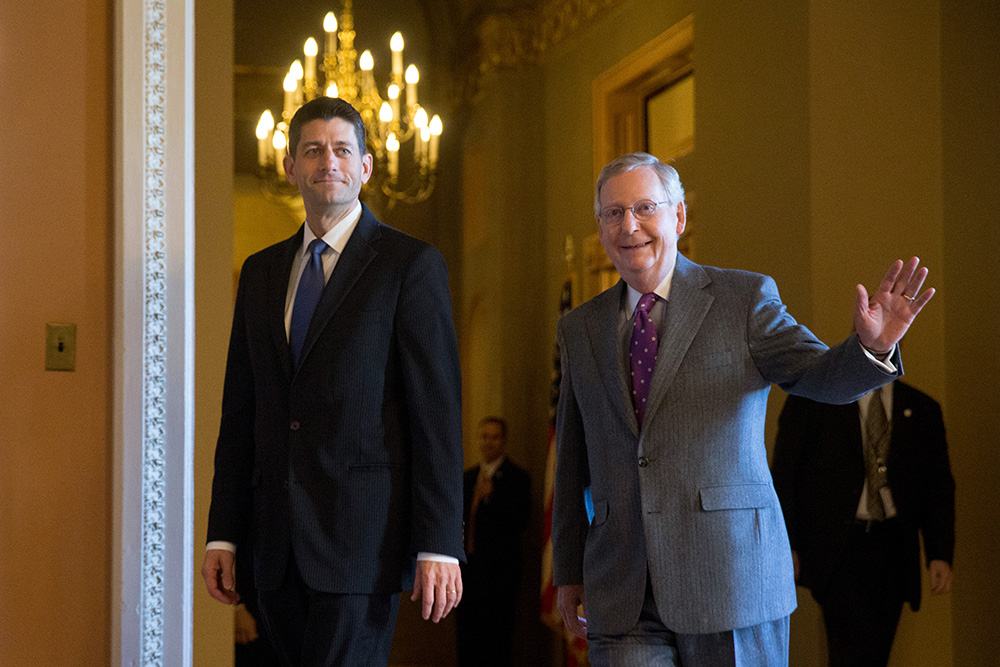
“I think some people gave higher expectations — not higher expectations, but promised things that could not be achieved when we only had the House and not the Senate, for some of the things there.” (AP)
And I actually believe the conference came together going through a lot of this to be even stronger. What the conference as a whole needs to learn is to utilize the strength of the 246 we have right now. Never [have the circumstance] where you have to go to [Democrats] for a vote or anything else. That’s why I think the Agenda Project is so important, from our tax reform bill, from our healthcare, national security, regulatory reform, Article One [bringing that power back to the House]. I think there’s a lot of successes out there, but the agenda project is going to be very clear of what we need to go out to the American public with.
Examiner: What do you think you can realistically hope to get on the floor this year?
McCarthy: Some of them, you might not be able to get on the floor this year. But even if you got it on the floor this year, could you pass it with the Senate or could you even get it signed by this president? Have we put together a healthcare bill where all Republicans unite behind? Have we put together a tax bill where all Republicans unite behind? What about rolling back the regulations? What about national defense?
Now, when you look at Ronald Reagan and the history, his tax reform bill came from Jack Kemp. So, you’re making the House be the party of the ideas. You’re making the American people be able to run and see that these are the ideas of what they want America to look like. So, I don’t think all of them will get passed this year, but you’re going to have them in legislative form. But I think there is going to be a number of them. And one of our biggest challenges here [is] they moved the conventions up, so they’re taking away a couple weeks of where we normally have session, we’re getting narrowed in that field, so we’ll pass as many as we can in the House, but we’re going through the process right now of writing them.
Examiner: Ryan, talking to Laura Ingraham last week, mentioned border security as part of the national security task force’s bailiwick. Are you looking for a bill like that to come up this year or is that too tied up in immigration to be able to gain steam?
McCarthy: That very possibly could come up this year. I don’t predetermine. The one thing we want to do here is bottom-up. We want everybody to have a voice and a say. That’s why you’ll find that we start this week with a lot of these sessions that are going to go on, where all members can participate. Now, we have passed border security out of this House. One of my very first days as leader, I kept us here another day just to pass the border bill, we could not leave on recess. So, that’s one of our biggest challenges and we want to make sure we get it right.

Now, we have passed border security out of this House. One of my very first days as leader, I kept us here another day just to pass the border bill, we could not leave on recess. (AP)
Examiner: So, do you think that immigration is one of those issues where the expectations were too high coming into this Congress, or based on that record was it other issues?
McCarthy: If I look at what the House has been able to pass, if everything became law that the House was able to pass, we’d probably have a base out there that was very happy. You’ve got rules in the Senate that are much different, where a minority party over there has a lot of say on what can be brought up and what can’t. Our challenge here in this time is making sure we pass all those approps bills so you don’t end up in an omni situation. And when you pass appropriation bills, you also get to put riders in there, give direction [and] accountability to these agencies, roll them back, and we’ve had some successes at that, but we need much more.
Examiner: The House Freedom Caucus wants basically to retain one of the successes you just mentioned, the discretionary spending caps. But that was erased somewhat or mitigated by the Boehner spending deal last year, raised those caps. And the Freedom Caucus wants to basically have the House budget at the lower spending level. Let’s say the Budget Committee passed a lower budget. Would the House appropriators appropriate at the lower spending level?
McCarthy: Well, the question is, could you get it through the Senate then? Remember what we’re talking about. We’re talking about discretionary money and then we’re also talking about mandatory. And the one thing we’ve always talked about [with] mandatory is where the big problem lies. Because we’ve been able to cap and bring discretionary [spending] down. So, if you do a new system with a new dollar figure, are you going to save more money or will you end up with a [continuing resolution] and that level is there already.
So what you want to have is a budget that can have an appropriation process, because then you can go after agencies, you can hold them accountable, and then you can do an approps process that actually gets through the Senate. One of the agreements we got during the last negotiation was, finally, that Harry Reid would not filibuster bringing up the approps bills. And that’s been a major problem for us. Now, whatever extra money was spent in discretionary was paid for with cuts in mandatory, and that’s where the money that we really need to get at to save our country. So, we want to have a process that we can do both.
And that’s why we’re, part of doing the budget right now, it lays out the framework of where we want to go. And remember, when we first started talking about doing a budget that changes the direction of this country, there wasn’t very many people who signed on to it. I’ll tell you, there were a lot of Republicans who said politically, “You shouldn’t do it, you might lose the majority.”

“One of the agreements we got during the last negotiation was, finally, that Harry Reid would not filibuster bringing up the approps bills. And that’s been a major problem for us.” (AP)
Well, in four months, we put [together] a budget, and the only one that balances. The president’s budget has only gotten two votes, and the president’s budget has never balanced. Our budget balances. The challenge is, we’ve been pretty successful with the discretionary. We need to go after the mandatory. That’s where the billions and the trillions and the problems lie.
Examiner: Andy Harris, the congressman from Maryland, has a proposal that’s circulating in the context of bridging this divide between the Freedom Caucus and the appropriators. Is that the kind of thing that you can do without Democrats saying you walked away from the deal?
McCarthy: The thing that we want to do, we want to make sure we bring a budget that will actually balance and have an approps process so we can hold these agencies accountable and not give this power back to the president. Andy’s brought up one idea. I just left a meeting talking about that just recently. We’re in the process of going through and listening to all the members. There’s a lot of bright members here. And I’ll tell you, you’re going to find a conference, any place that we can save money, that’s [going to] the core of this conference, we’re going to be able to do it.
Examiner: If for whatever reason Democrats try to filibuster debate on these appropriations bills like they did last year, is Senate Majority Leader Mitch McConnell prepared to have a protracted fight over trying to break those filibusters?
McCarthy: What I’ve seen from [McConnell], we did a joint retreat with the Senate and the House Republicans. And Leader McConnell, when he got up to speak, he spoke of the approps process and the focus of where they wanted to put the effort in to it. And he talked about putting all the effort into it, because if you don’t have an approps process, you end up into a continuing resolution, the power rests with the president, and his riders stay in instead of having a Republican House and a Republican Senate have a say in what these agencies should and should not be doing.
Examiner: Ryan has talked about trying to make this election a mandate year. I’ve heard it said that if Donald Trump weren’t in the field, then Jeb Bush, Ted Cruz and Marco Rubio would be arguing about tax policy, child tax credits and Obamacare replacements. Does his emergence make it more difficult to execute that mandate-gaining initiative that you’ve been trying to put together?
McCarthy: I don’t know if it helps or hurts, but the one thing is we need to do our job, regardless of who is the nominee. But if we do our job right with the agenda, whoever the nominee is can take this and actually put America into a better place. It would put us onto a path to prosperity. When Reagan grabbed Jack Kemp’s tax plan, it was known as the Reagan plan, but the House should be a place of ideas, conservative ideas.
You know, we talk about raising our gaze, looking further and beyond, and solving the big problems, so we start having debates about big problems. That’s why, when we have the Agenda Project out, we could have an election about the big issues and then when the election is solved, we could actually pass them.
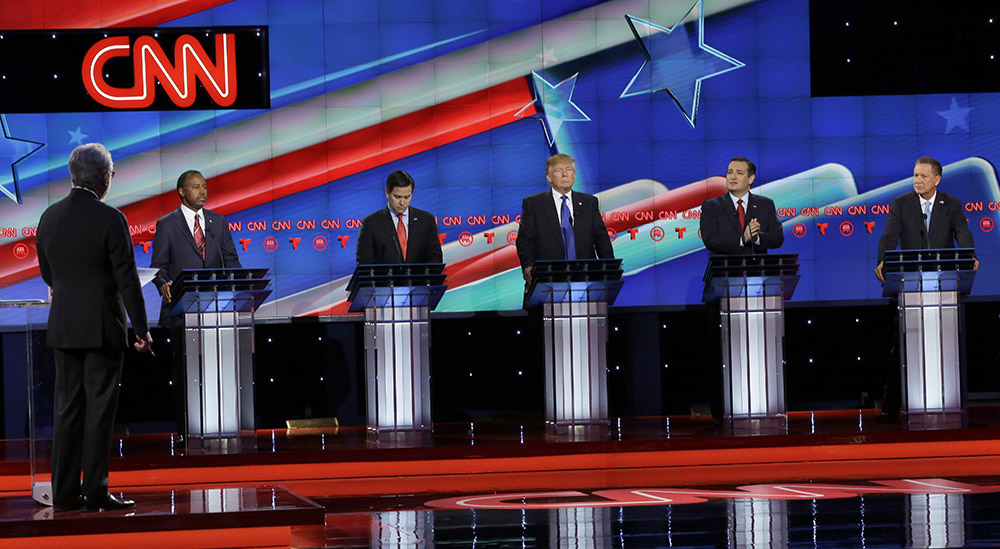
“I don’t know if it helps or hurts, but the one thing is we need to do our job, regardless of who is the nominee. But if we do our job right with the agenda, whoever the nominee is can take this and actually put America into a better place.” (AP)
Examiner: To that point, the way those past elections went, there was a lot of discussion about that agenda during the election year. And obviously you’re doing what you can on that point, but Trump hasn’t spent a lot of time working with reformocons over the years and a lot of attention is going to different things that he says.
McCarthy: I wish every presidential race talked about the issues. Tell me the vision of where you want to go. Because you know what? We’re right now working on our budget and a budget is a vision for where America goes. Our budget balances. But there is another responsibility and an important element to pass a budget: reconciliation. How did we ever get on the president’s desk the repeal of Obamacare? It’s only because we both passed a budget so we had the reconciliation, which gives you a better ability in the Senate where you don’t need 60 votes to get to his desk.
It also took the money away, when you looked at Planned Parenthood, of what they were doing. So, we’ve got to take every element we can. And that’s why it’s so important that we get a budget because it lets us hold in check the agency, put us on a path to balance, but it also gives us reconciliation. It gives us even more strength to even cut more.
Examiner: Have you been in touch with Donald Trump at all to say, hey, here’s an agenda that if it comes to that, we can be your Jack Kemp?
McCarthy: You know, we’re in the middle of putting the agenda together. I have not spoken to Donald Trump. What I’ve been doing is talking to the American public, but also to all the members, because we’re in the process of doing it. You know what, we don’t care at the end of the day who gets credit, we just think this place should be putting ideas out. And I think we’ve got a very strong conference, and a lot of smart people, [coming up with] some very good ideas because they’ve been listening across this country.
And a lot of people talk about, are the Republicans more excited or the Democrats? If you just look at the current primaries that have gone on, races, the Republicans have increased by 24 percent on the turnout, while the Democrats have decreased by 22 percent since 2008. That’s an interesting fact. So, who is more excited about changing the direction of this country? I think that’s a good sign, if we do a right agenda, we can win the White House and we can turn the country around.
