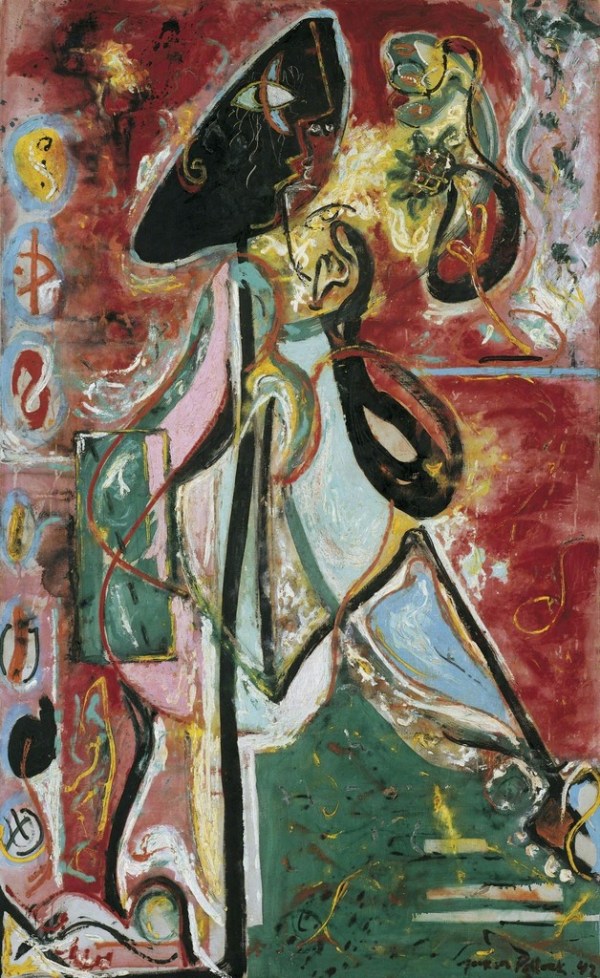
Yellow is the cruelest color. Seemingly extroverted and gay, it expects to be treated like a prima donna, or it will go to pieces. It is too easily corrupted. The barest touch of black or graphite turns it dirty, grudging green. The eye can distinguish a million bright reds, greens, and purples, but only a narrow band of clear yellows. And if you juxtapose any one of them with the wrong neighbors, it will shrivel and shriek. Painting with yellow is like planning a dinner party around a schizophrenic — or around a man like Jackson Pollock, half charmer, half drunken lout.
Pollock reaches for yellow repeatedly, but usually — as in the monumental, magnificent Blue Poles (1952) — his yellow comes out grim and soiled, subtracting and not adding serenity and brightness, reminding us of corruption. Reminding us that Pollock’s is a grim story: His best paintings are tragedies that leave a person shaken.